
BYD Export Strategy: The Brazil Surge Reshaping Global EV Markets (52K Units in 60 Days)
BYD Export Strategy: How Brazil Became the Epicenter of Chinese EV Expansion
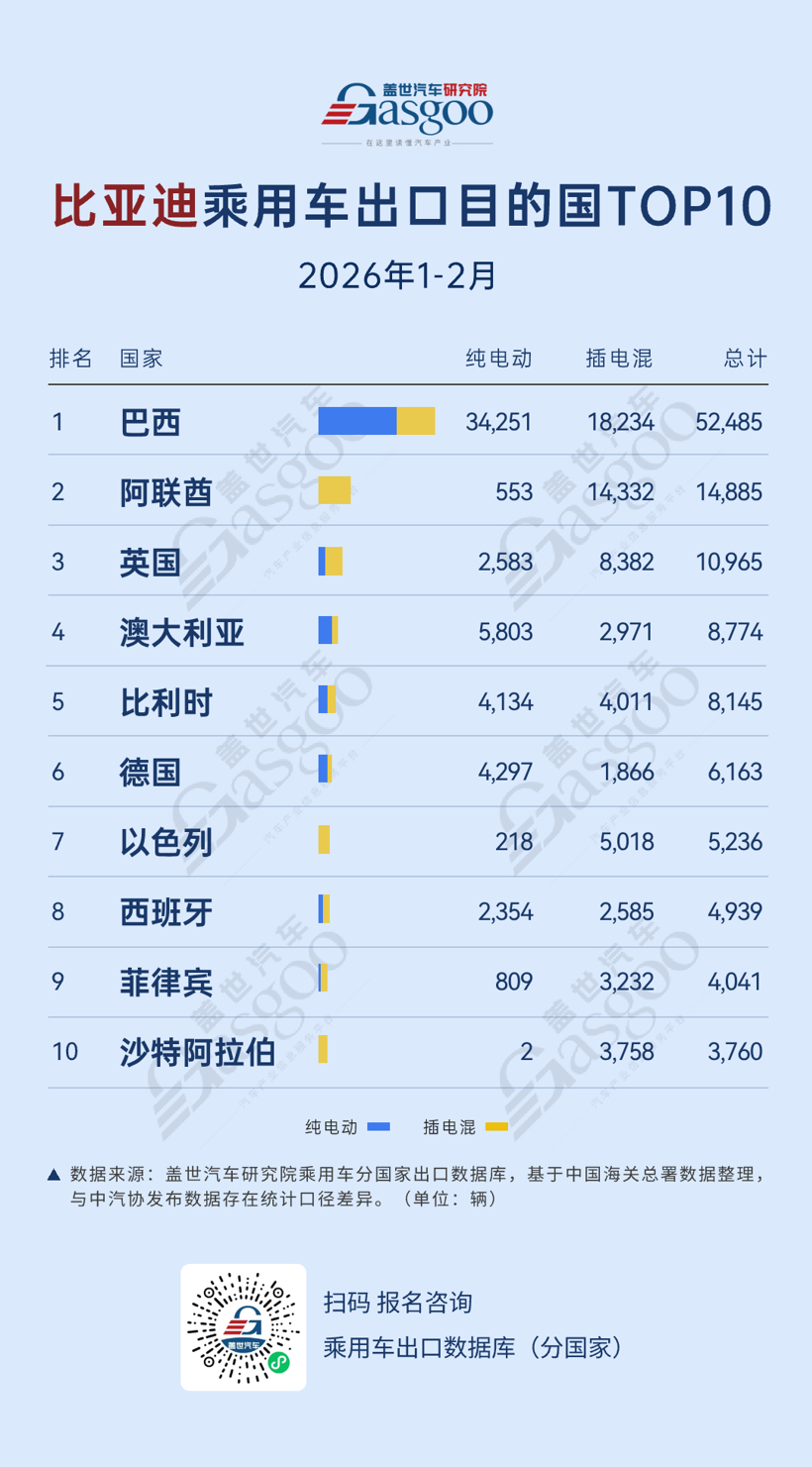
What if I told you that a single Chinese automaker shipped more electric vehicles to Brazil in two months than Volkswagen sells there in an entire quarter? The numbers are staggering: 52,485 BYD passenger vehicles hit Brazilian ports in January and February 2026 alone, establishing the Latin American giant as BYD’s undisputed export champion and sending shockwaves through boardrooms in Detroit, Stuttgart, and Tokyo.
This unprecedented surge—equivalent to an annualized run-rate exceeding 300,000 units—reveals a sophisticated BYD export strategy that goes far beyond simple volume dumping. For Western investors and automotive executives, understanding this data is not optional; it is survival intelligence. The latest figures from Gasgoo Auto Research Institute expose a carefully orchestrated campaign targeting specific regional vulnerabilities, with Brazil serving as the crown jewel of BYD’s overseas expansion.
The Brazil Phenomenon: Decoding the 52,000-Unit Tsunami
Brazil’s dominance in BYD’s export portfolio is absolute. The 52,485 units shipped represent a 3.5x multiple over the second-place market (UAE at 14,885 units) and account for roughly 35% of BYD’s total exports to its top ten destinations during this period.
Powertrain Preferences in the Brazilian Market
Interestingly, Brazil shows a balanced appetite for BYD’s dual-platform approach:
- Battery Electric (BEV): 34,251 units (65% of total)
- Plug-in Hybrid (PHEV): 18,234 units (35% of total)
This 2:1 BEV-to-PHEV ratio suggests Brazilian consumers are skipping the hybrid transition phase that characterized early EV adoption in Europe and North America. With BYD’s $620 million factory investment in Camaçari nearing completion, these import figures likely represent just the prelude to localized production that could flood the Mercosur trade bloc with zero-tariff Chinese EVs.
Regional Strategy: The Middle East’s PHEV Paradox
While Brazil leads in volume, the Middle East reveals BYD’s chameleon-like product adaptation. Examining the UAE (14,885 units), Israel (5,236 units), and Saudi Arabia (3,760 units) exposes a counterintuitive trend: despite abundant oil reserves and cheap gasoline, these markets show overwhelming preference for plug-in hybrids over pure electrics.
The Oil State Dilemma
The data reveals striking powertrain splits:
- UAE: 96% PHEV (14,332 units) vs 4% BEV
- Saudi Arabia: Nearly 100% PHEV (3,758 units) with only 2 pure electrics
- Israel: 96% PHEV preference
This suggests BYD’s export strategy recognizes a crucial nuance: in markets with limited charging infrastructure but high environmental consciousness among elites, PHEVs serve as the gateway drug to electrification. As noted in Bloomberg’s recent analysis of Chinese EV expansion, BYD is effectively using hybrid technology to normalize Chinese automotive brands before infrastructure catches up.
Europe Under Siege: The Fragmented Invasion
While Western media focuses on potential EU tariffs blocking Chinese EVs, BYD’s export strategy reveals a backdoor approach already underway. The UK (10,965 units), Belgium (8,145 units), Germany (6,163 units), and Spain (4,939 units) collectively represent a significant beachhead.
Notably, European markets show divergent preferences:
- Germany & Belgium: Balanced split favoring BEVs (roughly 50/50)
- UK: PHEV-heavy (76% of volume), suggesting range anxiety persists among British consumers
- Spain: Nearly even distribution, indicating market maturity
[See our analysis on European EV tariff loopholes and Chinese market penetration]
The Strategic Implications for Western Automakers
For investors in legacy automotive stocks, this data presents an uncomfortable reality. BYD’s export strategy is not random—it is a systematic dismantling of regional defenses. Brazil serves as the Southern Hemisphere manufacturing hub, the Middle East provides high-margin luxury sales with minimal competition, and Europe represents the long-term premium market penetration.
The 300,000+ unit annualized run-rate to Brazil alone surpasses Tesla’s entire annual sales in the country, positioning BYD to capture the Latin American EV market before Western competitors localize production. With Financial Times reporting on Chinese EVs’ Latin American threat, the window for competitive response is narrowing rapidly.
Recommended Reading
To understand the battery technology and geopolitical forces driving BYD’s global expansion, I recommend The Powerhouse: America, China, and the Great Battery War by Steve Levine. This deep dive into the lithium-ion battery race provides essential context for why Chinese EV makers now dominate global export charts.
Conclusion: The New Automotive World Order
BYD’s export strategy has evolved from exploratory to overwhelming. The 52,485 units shipped to Brazil in just 60 days represent not just commercial success, but a declaration of intent. For Western audiences, the question is no longer whether Chinese EVs will gain global market share, but whether legacy automakers can respond before BYD’s export infrastructure becomes self-reinforcing.
The data is clear: the global automotive landscape is being redrawn, and BYD is holding the pen.