Ford’s Graveyard, BYD’s Empire: Why The Chinese Giant’s ‘Domestic Crisis’ Is a Global Red Alert
“If you’re going to buy a car, buy a BYD.”
Imagine the CEO of Ford or Volkswagen hearing those words. Now, imagine they were spoken by the president of a G20 nation. That’s exactly what happened in Brazil, where President Lula not only praised the Chinese EV giant but also became a proud owner himself. This happened just as headlines were swirling about BYD’s “sales shock” back home, where it slashed its annual sales target by a staggering 900,000 units.
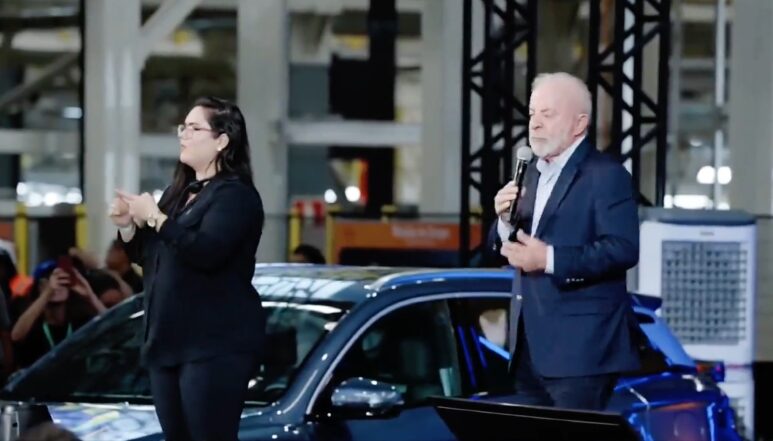
Is the company in crisis or conquering the world? The answer is both. And for Western automakers, this paradox signals a far more dangerous competitor than they ever imagined. What we’re witnessing is not a sign of weakness, but a terrifyingly smart strategic pivot from a domestic price war to global, geopolitical domination.
The ‘Crisis’ at Home: Not a Collapse, but a Calculated Escape
To understand why BYD is “fleeing” its home turf, you need to understand the brutal reality of the Chinese auto market—a phenomenon known as 내권 (nèijuǎn), or involution. It’s a hyper-competitive deathmatch where dozens of brands are locked in a suicidal price war, eroding profits to unsustainable levels.
As I analyzed in a previous post, BYD’s Financial Tightrope Act, even a giant like BYD isn’t immune. Continuing to fight for every last scrap of market share at home is a losing game.
Therefore, the decision to lower domestic targets isn’t a symptom of failure. It’s a calculated escape. BYD is consciously choosing to stop bleeding in the red ocean of its home market to fund its invasion of the blue oceans abroad.
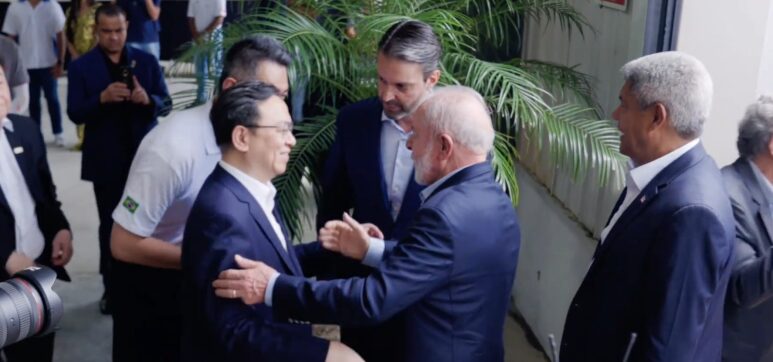
The BYD Playbook for Global Conquest: The Brazil Case Study
Brazil is the perfect blueprint for BYD’s chillingly effective global strategy. It’s a four-step formula for building an empire, not just a customer base.
- Exploit the Vacuum: When a Western giant retreats, advance. Last year, Ford abandoned its massive factory in Brazil, leaving 20,000 workers unemployed and a government in a bind. BYD didn’t just see a factory; it saw a political and industrial vacuum.
- Weaponize “China Speed”: While Western corporations might spend years in planning, BYD resurrected the dead factory in just 15 months—from acquisition to assembly line. This incredible speed demonstrated commitment and competence, delivering a tangible result for the local economy almost immediately.
- Sell Jobs, Not Just Cars: President Lula’s praise wasn’t for BYD’s battery technology. It was for resurrecting tens of thousands of livelihoods. BYD understood a fundamental truth: in developing economies, the most valuable product you can sell is employment and economic hope. This earns a level of political and social capital that no marketing budget can buy.
- Capture the Crown: By solving a national-level problem, BYD transformed the country’s leader into its biggest brand ambassador. President Lula’s public endorsement effectively makes BYD the new standard, a trusted partner for the nation’s future.
This isn’t a car company’s strategy; it’s a nation-builder’s strategy. BYD is competing on a geopolitical level, turning industrial assets into soft power.
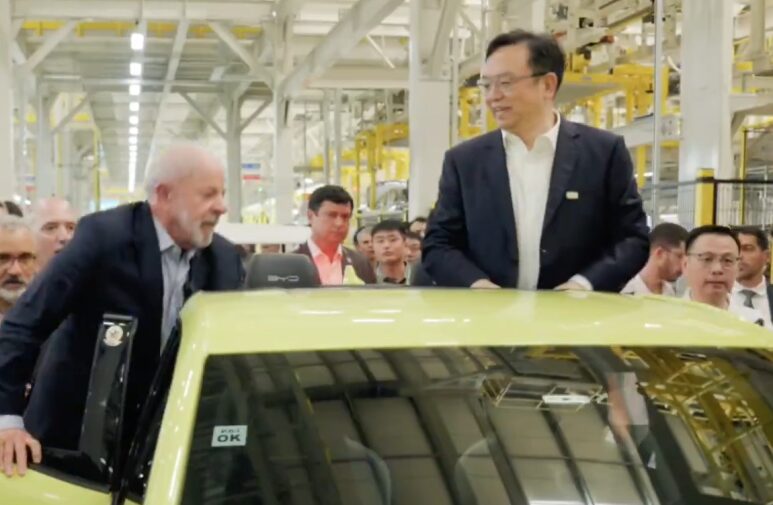
The West’s Nightmare: Competing Against a New Kind of Empire
For legacy automakers like Ford, GM, and Volkswagen, this presents a terrifying new reality. How do you compete with a company that doesn’t just play by market rules, but actively rewrites them with political and social leverage?
While the EU and US respond with tariffs—a classic, defensive move—BYD is playing offense. As detailed in The Russia Dilemma, this approach has risks, such as over-reliance on politically volatile markets. However, their strategy is fundamentally different.
They are not just exporting cars; they are exporting an entire industrial solution. This is a model that Western companies, bound by quarterly earnings and shareholder demands, will find incredibly difficult to replicate.
The story of BYD in Brazil is a stark warning. The battle for the future of the auto industry won’t be won in showrooms alone. It will be fought in abandoned factories, in presidential palaces, and in the hearts of nations looking for new partners. Ford’s graveyard in Brazil has become the cornerstone of BYD’s new empire. The question for every other Western automaker is: who’s next?