CALB Annual Report 2025: 148% Profit Surge Signals New Era for Chinese Battery Technology
CALB Annual Report 2025: 148% Profit Surge Signals New Era for Chinese Battery Technology
What happens when a so-called commodity battery manufacturer suddenly out-innovates Tesla’s suppliers? The CALB annual report 2025 reveals a startling transformation: China Aviation Lithium Battery Technology (CALB) has posted a 148.4% net profit surge while simultaneously cracking the code on next-generation solid-state batteries. For Western investors who’ve written off Chinese battery makers as mere CATL copycats, these numbers demand a fundamental reassessment of the global EV supply chain hierarchy.
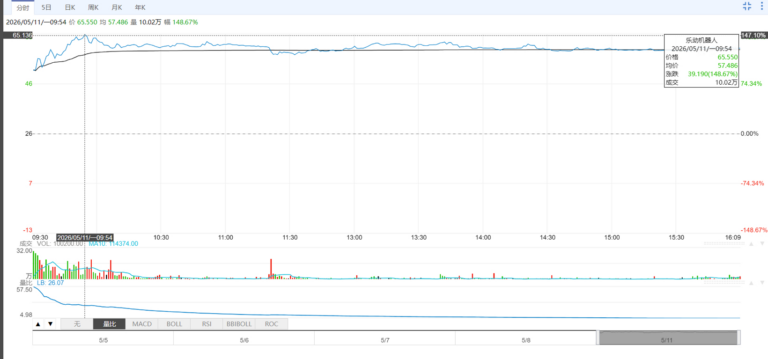
Published on March 30, 2026, CALB’s fiscal 2025 results don’t just represent financial growth—they signal a technological inflection point. With revenue hitting 44.4 billion yuan (up 60% year-over-year) and net profit reaching 2.095 billion yuan, CALB is proving that vertical integration and R&D aggression can rewrite the rules of battery economics.
The Financial Inflection Point: Beyond Commodity Margins
CALB’s profitability explosion challenges the Western narrative that Chinese battery manufacturers compete solely on price. The 148.4% profit growth significantly outpaces revenue expansion, indicating genuine margin expansion through technological differentiation rather than volume dumping.
- Revenue: 44.4 billion yuan (+60% YoY)
- Net Profit: 2.095 billion yuan (+148.4% YoY)
- Market Position: Monthly installations now rank global top three, according to company data
This performance comes amid what Reuters describes as an oversupplied Chinese battery market, making CALB’s margin expansion even more remarkable. While competitors slash prices to maintain volume, CALB has apparently found a premium niche.
Technology Breakthroughs: The Real Story Behind the Numbers
CALB’s financial success correlates directly with its ‘full-domain technology R&D’ strategy—a multi-pronged assault on battery physics that Western automakers can’t ignore.
Solid-State Battery Leadership
Most significantly, CALB announced completion of its 450Wh/kg ‘Boundless’ all-solid-state battery original system development, with first batch prototypes successfully validated. This isn’t laboratory curiosity; the company is actively transitioning solid-state technology from R&D to productization phases.
Simultaneously, CALB achieved mass production of 400Wh/kg semi-solid batteries, deploying them first in commercial vehicle applications. This dual-track approach—perfecting semi-solid for immediate commercialization while advancing true solid-state—mirrors strategies previously associated only with Toyota or QuantumScape, but with execution speed that dwarfs Western timelines.
Ultra-Fast Charging Infrastructure
CALB’s 5C ultra-fast charging batteries have already achieved mass production, powering XPeng’s bestselling models with monthly shipments exceeding 20,000 units. Meanwhile, 10C batteries—capable of adding hundreds of kilometers of range in minutes—have completed design development and entered vehicle-level validation.
According to Bloomberg’s analysis of China’s charging speed wars, this positions CALB approximately 18 months ahead of most European competitors in high-rate charging commercialization.
High-Power Gradient Strategy
CALB has constructed a tiered high-power product matrix:
- 20C batteries: Targeting HEV/PHEV hybrids, already scaling to Geely and Dongfeng
- 25C batteries: Delivering megawatt-level continuous discharge for luxury and supercar segments
This diversification insulates CALB from passenger EV demand fluctuations while capturing premium automotive segments.
Beyond Automotive: The eVTOL and Maritime Gambit
Perhaps most intriguing for long-term investors, CALB has begun mass production of high-energy cylindrical batteries for electric vertical take-off and landing (eVTOL) aircraft, securing partnerships with leading urban air mobility clients. Additionally, the company is penetrating marine electrification—markets where CATL has limited presence.
[Internal Link: See our analysis on eVTOL battery market opportunities and regulatory hurdles]
This ‘full matrix’ approach—covering passenger vehicles, commercial transport, energy storage, aviation, and maritime—creates multiple revenue streams that reduce dependence on any single automotive customer.
Investment Implications: A Genuine CATL Alternative
For Western portfolio managers, CALB’s 2025 results present a dilemma. The company trades at a significant valuation discount to CATL (0985.HK vs 300750.SZ), yet demonstrates comparable innovation velocity and superior profit growth rates.
The customer diversification is particularly notable. While CATL remains dependent on Tesla and dominant Chinese OEMs, CALB has strategically positioned itself as the alternative supplier for XPeng, Geely’s premium divisions, and emerging commercial vehicle players. This ‘second source’ status commands pricing power in an industry paranoid about supply chain concentration.
Risks remain, including geopolitical tensions affecting Hong Kong-listed Chinese equities and the capital intensity of solid-state battery scaling. However, Financial Times reporting on China’s battery technology lead suggests CALB’s IP portfolio is increasingly defensible.
Recommended Reading
To understand the geopolitical and technological context behind CALB’s rise, I recommend The Powerhouse: Inside the Making of the Battery That Will Change the World by Steve LeVine. This seminal work traces the global battery race through the 2010s, providing essential background on how Chinese firms like CALB leveraged national industrial policy to challenge American and Japanese incumbents. The book’s analysis of Envia Systems’ rise and fall offers particularly relevant cautionary tales for investors evaluating battery technology claims.
Available on: Amazon | Barnes & Noble