Everyone Said They Were Finished: How Global Auto Brands Are Staging a Shocking Comeback in China
The Comeback No One Saw Coming: Have Global Auto Brands Finally Cracked the China Code?
Let’s be honest: for the last few years, writing about global auto brands in China has felt like writing an obituary. Volkswagen was stumbling, and for GM and Nissan, withdrawal rumors were becoming deafening. It seemed inevitable that the “graveyard of global brands” would claim its next victims.
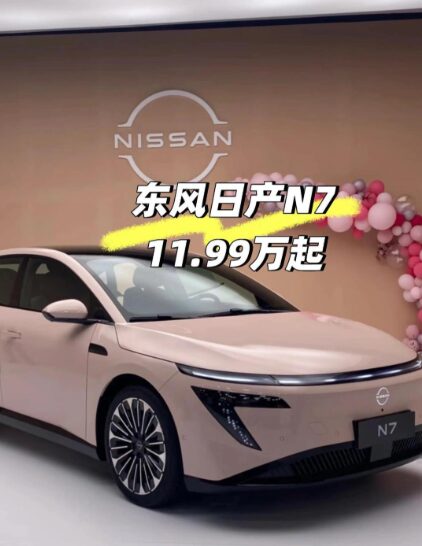
But then, the October 2025 sales data dropped, and the narrative shattered. Dongfeng-Nissan’s N7 became the first pure EV from a joint venture to smash the 10,000-unit monthly sales barrier. Buick’s new hybrid L7 sedan racked up 12,000 pre-orders in just 10 days.
This isn’t a dead cat bounce. As a market analyst on the ground in Shanghai, I see this as a calculated, brutal counter-offensive. The giants have woken up, and they’ve done so by burning their old playbook and stealing the enemy’s weapons.
The New Survival Formula: A 3-Part Counterattack
The comeback is not a fluke; it’s a multi-pronged strategy. After years of being outmaneuvered, JV brands have finally adopted a new approach.
1. Breaking the Price Taboo (The Nissan N7 Case) For decades, JV brands operated on a simple premise: our badge justifies a premium. That era is over. Dongfeng-Nissan’s N7 shattered this illusion by launching into the 150-200k RMB mid-size sedan segment with a jaw-dropping starting price of 119,900 RMB (approx. $16,500 USD). It came loaded with a 635km range, a premium interior, and Momenta’s advanced driving-assistance system. The message was clear: everything a Chinese brand can offer, we can offer at their price point. It proved that brand loyalty is dead; value is king.
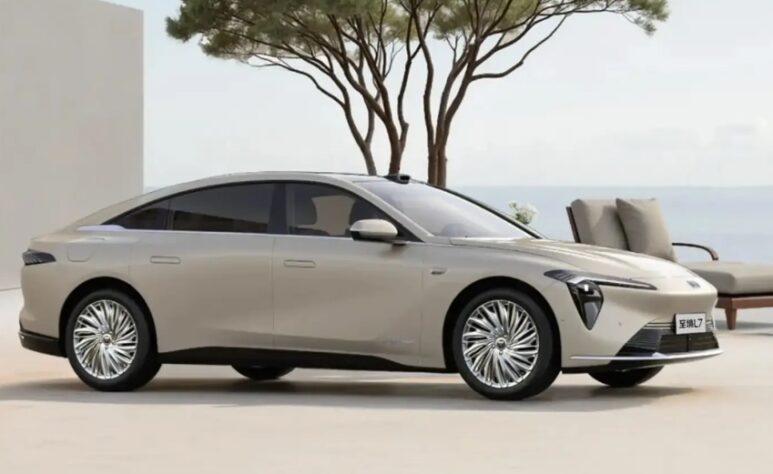
2. Wielding the Pragmatic Weapon of Hybrids (The Buick L7 Case) While the industry obsesses over pure EVs, a silent majority of consumers still harbor anxieties about range and charging. GM’s Buick targeted this group with surgical precision. Their new L7 is not a pure EV but an Extended-Range Electric Vehicle (EREV). It offers a remarkable 302km of pure electric range—enough for a week of city commuting—but also has a gasoline engine that extends its total range to a massive 1,420km. This strategy brilliantly neutralizes the biggest pain points of EV ownership and has been met with immediate market enthusiasm.
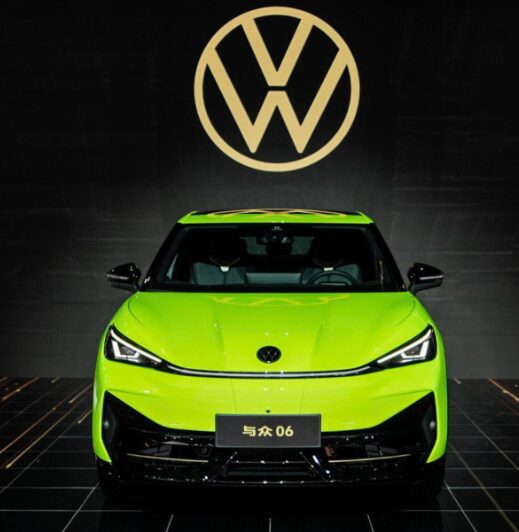
3. True Localization is More Than a Logo (The Volkswagen Yuzhong 07 Case) For years, “localization” meant little more than adding a longer wheelbase or a bigger screen. Volkswagen’s new Yuzhong 07, born from its ‘In China for China’ strategy, signifies a fundamental shift. The key feature is its China-specific E/E (Electrical/Electronic) architecture. This means the car’s central nervous system was designed from the ground up for the Chinese market’s demands for hyper-connectivity and advanced smart features. VW is no longer just assembling German cars in China; it is building Chinese cars with a German badge.
The Poisoned Chalice: The Hidden Costs of Victory
This tactical victory has been impressive, but it comes at a staggering price. The JV brands may have won the battle for sales, but they may be losing the war for profitability and identity.
Risk 1: The No-Win “Chicken Game” of Price Wars To compete, JVs have entered a brutal price war that is crushing the entire industry. The China Association of Automobile Manufacturers (CAAM) has issued warnings about “disorderly competition”. In April 2025, the industry’s average profit margin fell to a dangerously low 3.9%. Even market leader BYD saw its profits plummet despite rising sales. By matching these unsustainable prices, JV brands are trading future financial health for present-day market share—a dangerous gamble.
Risk 2: The Erosion of Brand Identity What does it mean to be a Volkswagen if its core software is from a Chinese tech firm? What makes a Nissan special if its pricing and feature strategy is identical to a dozen local competitors?
In the race to adopt “China Speed,” JVs are standardizing platforms and relying on the same pool of local tech suppliers (like Huawei and Momenta) as their rivals. The result is a growing homogenization of the user experience. The unique engineering philosophies and driving dynamics that once defined these brands are being overshadowed by a checklist of smart features. In the long run, this erodes the very brand equity they built over decades, making it impossible to justify any price premium. A low-price strategy can weaken a brand’s premium image over the long term.
Conclusion: Evolution or Extinction?
The comeback of global brands in China is real. They have proven they can adapt, survive, and even thrive by learning from their disruptors. They’ve abandoned their pride and started fighting like locals.
But this raises a crucial, soul-searching question: In becoming Chinese to survive in China, are they losing what made them global icons in the first place?
This strategic “Sinofication” has secured their short-term survival. However, whether this path leads to a sustainable, profitable future or simply turns them into better-imitating versions of their Chinese rivals is a question that will define the next chapter of the global auto industry. The war isn’t over; it has just entered a new, more treacherous phase.
Deeper Dive: Recommended Reading for Deeper Insights
For those who want to delve deeper into the strategic shifts discussed today, I recommend this essential book.
[Competitive Strategy: Techniques for Analyzing Industries and Competitors by Michael E. Porter]
- Why I Recommend It: Porter’s foundational work on competitive forces is more relevant than ever in China’s hyper-competitive auto market. It provides the perfect framework for understanding why JV brands are being forced to abandon differentiation strategies and compete aggressively on cost, and the long-term implications this has for industry structure and profitability.
- 👉 https://amzn.to/3L4lQT6
This post contains affiliate links. As an Amazon Associate, I may earn from qualifying purchases, which helps support this blog at no extra cost to you.