
Mass Market Highway Autopilot Arrives: Inside Geely’s $16.5k Boyue L ADAS Breakthrough
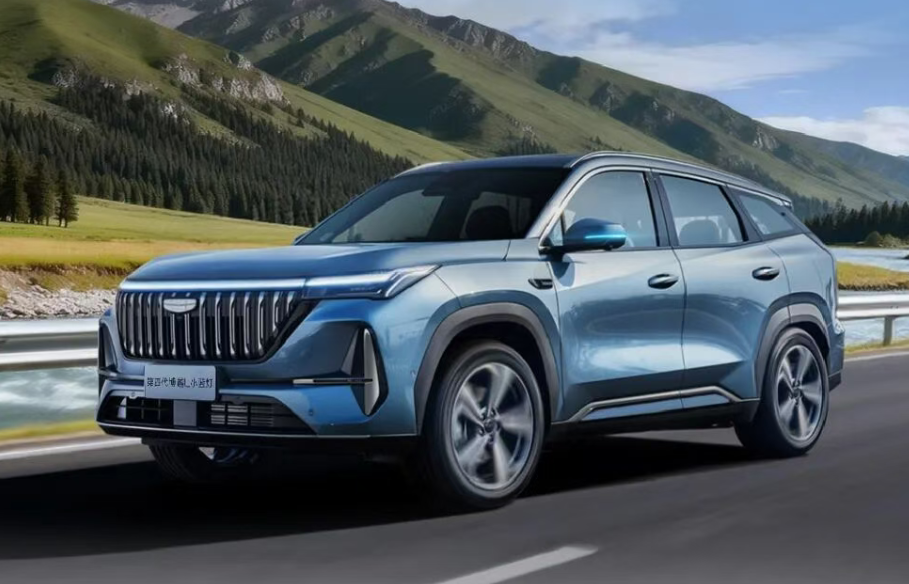
Mass Market Highway Autopilot Arrives: Inside Geely’s $16.5k Boyue L ADAS Breakthrough
What if highway autopilot wasn’t a $50,000 luxury? While Western automakers reserve advanced driver assistance for premium EVs costing twice the average household income, Geely just launched a gasoline-powered SUV in China with full Highway NOA capabilities—for just 119,900 yuan ($16,500). The fourth-generation Boyue L ‘Xiaolandeng’ (Little Blue Light) Edition isn’t merely a budget car with added tech; it represents a fundamental shift in the democratization of autonomous driving that Western investors and industry observers can no longer ignore. See our analysis on China’s Intelligent Vehicle Semiconductor Supply Chain for context on how domestic chip capabilities enable this aggressive pricing.
The $16.5k Question: Reimagining Mass Market Highway Autopilot
On April 3, Geely officially launched the Boyue L Xiaolandeng Edition, immediately disrupting the conventional wisdom that high-level autonomous driving requires electric drivetrains and luxury pricing. This compact SUV delivers what the industry calls ‘Highway NOA’ (Navigate on Autopilot)—functionality comparable to Tesla’s Enhanced Autopilot or GM’s Super Cruise—to China’s mass market.
- Price Point: 119,900 yuan ($16,500 USD) launch pricing
- Core Innovation: Qianli Haohan H3 ADAS solution on a pure ICE platform
- Market Position: First to achieve ‘Oil-Electric Intelligence Parity’ under 120k yuan
Deconstructing the Qianli Haohan H3 Architecture
Geely’s proprietary ‘Qianli Haohan’ (Thousand Li Vast Ocean) H3 system represents a sophisticated pure-vision approach to autonomous driving, deliberately engineered for cost efficiency without compromising capability.
Hardware Configuration
- Sensors: 3 millimeter-wave radars, 11 high-perception cameras, 12 ultrasonic sensors
- Computing: GEEA 3.0 electrical architecture—domain-controlled and OTA-capable
- Visual Identity: Signature ‘Little Blue Light’ indicator on side mirrors (illuminated during ADAS operation)
Functional Capabilities
Despite the aggressive pricing, the H3 system offers coverage across 380,000 kilometers of Chinese highways and 30,000 kilometers of elevated roads, including:
- Intelligent ramp merging and exiting (HNOA)
- Traffic congestion pilot with stop-and-go functionality
- Autonomous obstacle avoidance and lane changing
- 120km/h AEB (Automatic Emergency Braking) and 130km/h AES (Autonomous Emergency Steering)
- 300+ parking scenarios including remote and fingertip control
Why Western Markets Should Pay Attention
For US and European investors, the Boyue L launch signals a dangerous acceleration in China’s ADAS democratization. While Western OEMs struggle to package highway autopilot below $40,000, Chinese manufacturers are achieving comparable functionality at 60% lower price points—on internal combustion platforms that still dominate global sales.
This challenges two prevailing narratives:
- The EV-Only Fallacy: Western tier-1 suppliers have long associated autonomous driving with electric architectures, citing power requirements and data bandwidth. Geely’s GEEA 3.0 platform demonstrates that modern domain architectures enable sophisticated ADAS regardless of propulsion type.
- The Premium Pricing Paradigm: Tesla’s FSD commands $15,000 alone—nearly the entire price of the Boyue L. As Bloomberg Intelligence noted in recent coverage, Chinese ADAS cost curves are compressing faster than anticipated, threatening the profit margins Western automakers depend upon to fund their own transitions.
The ‘Oil-Electric Intelligence Parity’ Trend
Geely explicitly markets this vehicle as achieving ‘You Dian Tong Zhi’ (Oil-Electric Intelligence Parity)—a concept reflecting Chinese consumers’ refusal to accept technological downgrade when choosing ICE vehicles for range anxiety or charging infrastructure reasons.
The Boyue L addresses this demographic with:
- Flyme Auto intelligent cockpit (15.4-inch 2.5K display, AR-HUD)
- Four-zone voice recognition with dialect support
- 1.5T turbocharged engine with 7-speed DCT—familiar technology for conservative buyers
This strategy targets the millions of Chinese drivers in tier-3 and tier-4 cities where EV penetration remains limited but digital expectations are sky-high.
Strategic Implications for Global OEMs
The launch creates immediate competitive pressure. Volkswagen, Toyota, and Hyundai currently offer minimal ADAS in their sub-$25k Western market offerings. As Geely begins exporting these capabilities through brands like Lynk & Co and potentially Volvo’s lower tiers, Western mass-market segments face disruption.
According to Financial Times automotive analysis, the technology gap between Chinese domestic offerings and Western imports is narrowing from years to months. The Boyue L’s 5-year HNOA service inclusion for first owners further establishes a software-subscription model at hardware prices that legacy OEMs cannot currently match.
Recommended Reading
For deeper insight into how Chinese automotive technology is reshaping global mobility standards, consider AI Superpowers: China, Silicon Valley, and the New World Order by Kai-Fu Lee. While focused broadly on artificial intelligence, Lee’s analysis of China’s rapid commercialization of smart technologies provides essential context for understanding how ADAS features migrate from luxury to mass-market vehicles faster in the Chinese ecosystem than in Western markets.
Conclusion: The New Baseline
The Geely Boyue L Xiaolandeng Edition establishes a new baseline: mass market highway autopilot is no longer a premium feature. For Western audiences watching China’s automotive evolution, the message is clear—the democratization of autonomous driving will be driven by aggressive cost engineering and domain-specific architectures, not merely electrification. As this technology inevitably flows into export markets, the $16,500 ADAS benchmark will force a global repricing of driver assistance expectations.
