
Sodium Ion Battery Commercialization: China’s 2026 EV Breakthrough Threatens Lithium Dominance
Sodium Ion Battery Commercialization: China’s 2026 EV Breakthrough Threatens Lithium Dominance
While Western automakers pour billions into solid-state battery laboratories that remain years from commercial viability, China has already initiated mass production of sodium-ion batteries. This alternative chemistry promises to slash EV costs by 30%, eliminate dependence on nickel and cobalt, and deliver reliable performance in sub-zero temperatures that cripple conventional lithium-ion systems.
Welcome to 2026: the year sodium ion battery commercialization transitioned from pilot programs to profit-generating deployments, fundamentally altering the global electric vehicle supply chain calculus.
The 2026 Inflection Point: From Laboratory to Highway
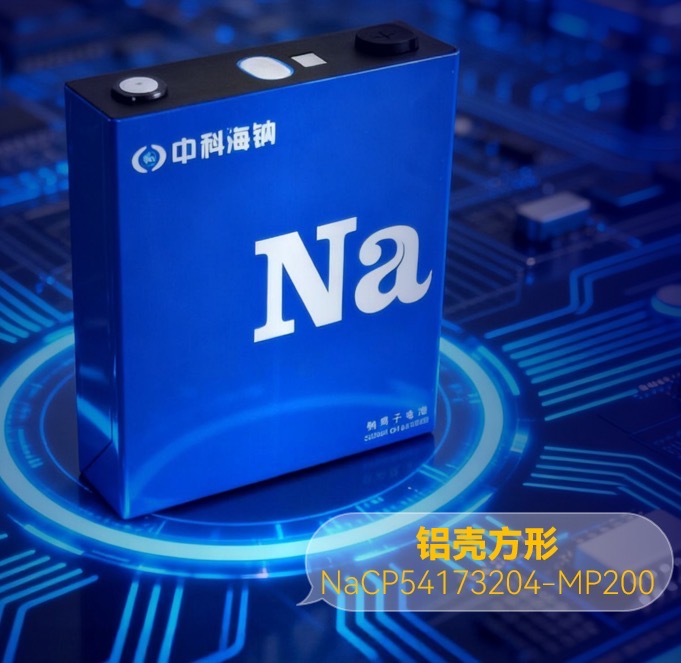
Recent validation data from Beijing-based Zhongke Haina (Zhongke Haina Battery Technology) confirms that sodium-ion technology has crossed the chasm from experimental curiosity to commercial reality. The company recently disclosed real-world performance metrics from heavy-duty truck deployments across three Chinese provinces, revealing capabilities that directly challenge Western assumptions about battery chemistry trade-offs.
This development aligns with Bloomberg reports from 2023 regarding CATL’s commitment to sodium-ion mass production, while confirming earlier skepticism from Western analysts who argued the technology would remain limited to stationary storage applications. The new data suggests those projections underestimated Chinese engineering advances in energy density optimization.
The Cold Weather Performance Advantage
Where lithium-ion systems suffer catastrophic range loss, sodium-ion cells demonstrate remarkable resilience. Zhongke Haina’s ‘Haixing’ series cells, specifically engineered for commercial vehicle applications, deliver specifications that address the primary barrier to EV adoption in Northern climates:
- Operational Range: Functional between -40°C and 60°C
- Winter Retention: 90% capacity maintenance at -20°C
- Cycle Durability: Over 8,000 fast-charge cycles validated
- Energy Efficiency: 15% lower per-kilometer consumption versus lithium-ion alternatives
- Range Extension: 20% greater effective range in complex terrain due to superior regenerative braking efficiency
For fleet operators in Minnesota, Canada, or Scandinavia, these specifications eliminate the winter range anxiety that has stalled commercial EV adoption.
CATL and Changan: Democratizing Sodium for Passenger Markets
The commercial vehicle breakthrough follows Changan Automobile’s strategic partnership with CATL, announced in February 2026, revealing the first mass-market sodium-ion passenger vehicle platform. The collaboration showcases CATL’s ‘Sodium New’ battery architecture achieving 175Wh/kg energy density—sufficient for urban mobility and suburban commuting applications.
Crucially, Changan has completed comprehensive winter calibration testing in Yakeshi, Inner Mongolia, where ambient temperatures regularly plunge below -30°C. This validation contradicts earlier Reuters analysis suggesting sodium-ion remained unsuitable for automotive traction applications, confirming instead that the chemistry is ready for markets experiencing extreme cold.
Strategic Implications for Western Investors
The acceleration of sodium ion battery commercialization presents a strategic paradox for Western markets. While U.S. and European manufacturers focus on next-generation solid-state lithium technologies projected for 2028-2030 deployment, Chinese firms are capturing today’s commercial vehicle and entry-level passenger markets with chemistry requiring no lithium, no cobalt, and no nickel—materials subject to volatile pricing and geopolitical supply constraints.
Supply Chain Disruption Alert
Sodium-ion batteries threaten to bifurcate the global EV market. High-nickel chemistries may retain dominance in premium long-range luxury vehicles, but sodium-ion is positioned to capture commercial trucking, grid storage, and budget-conscious passenger segments—markets representing approximately 60% of projected battery demand by 2030.
Internal Link Opportunity: See our analysis on Western lithium supply chain vulnerabilities and resource nationalism.
Recommended Reading
To understand the geopolitical dimensions of this technological shift, consider The Powerhouse: America, China, and the Great Battery War by Steve Levine. This investigation chronicles the strategic competition for battery dominance and provides essential context for why China’s sodium-ion breakthrough represents more than an engineering milestone—it signals a potential reordering of global energy storage economics.
Conclusion: The Chemistry Wars Have Begun
Sodium ion battery commercialization is no longer theoretical. With validated cold-weather performance exceeding 8,000 cycles, demonstrated viability in heavy-duty trucking applications, and major OEMs like Changan integrating the technology into 2026 model year vehicles, the question for Western stakeholders is no longer if sodium-ion will disrupt lithium markets, but how quickly supply chains can adapt to a chemistry that promises EV affordability without critical mineral dependency.
The race for next-generation batteries is no longer solely about maximizing energy density. It is increasingly about availability, temperature resilience, and supply chain security—and China’s 2026 sodium-ion rollout suggests they are playing a fundamentally different game than their Western competitors.
