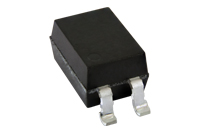
Vishay’s New Automotive Photovoltaic MOSFET Driver Redefines 800V EV Safety Standards
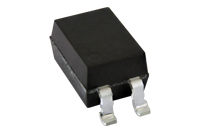
Vishay’s New Automotive Photovoltaic MOSFET Driver Redefines 800V EV Safety Standards
Did you know that the transition to 800-volt battery architectures—now standard in premium EVs from Porsche to Hyundai—creates lethal isolation challenges that traditional semiconductor solutions struggle to solve? As Western automakers race to match the charging speeds of their Chinese competitors, automotive photovoltaic MOSFET driver technology has emerged as the critical linchpin for high-voltage safety. Vishay Intertechnology’s latest release, the VODA1275, isn’t just another component; it represents a fundamental leap in how we protect next-generation electric vehicles.
The Technical Breakthrough: Why 80 Microseconds Changes Everything
Vishay’s VODA1275 enters the market with specifications that seem almost aggressively targeted at the pain points of 800V EV design. Classified as an enhanced isolation device, this automotive photovoltaic MOSFET driver delivers a typical open-circuit voltage of 20V and short-circuit current of 20μA—metrics that allow it to drive high-voltage MOSFETs and IGBTs with unprecedented reliability.
Speed That Eliminates Bottlenecks
With a turn-on time of just 80 microseconds, the VODA1275 operates three times faster than competing solutions. In pre-charge circuits—where milliseconds matter for protecting capacitors from inrush current—this speed translates directly to component longevity and system reliability. Recent analysis of EV power electronics suggests that switching speeds above 200μs create significant thermal stress in 800V architectures, making Vishay’s breakthrough particularly timely.
Isolation Ratings That Meet the 800V Challenge
The device boasts 1260 Vpeak working isolation voltage and 5300 VRMS isolation test voltage—specifications that make it ideal for 800V and above battery systems. Critically, Vishay achieved this in a compact SMD-4 package with just 8 millimeters creepage distance and a Comparative Tracking Index (CTI) of 600. For context, CTI 600 represents the highest insulation grade (Group I), meaning the material resists tracking (electrical breakdown) better than standard PCB materials used in most automotive applications.
Strategic Implications for Western Investors
See our analysis on 800V EV architecture adoption trends to understand how isolation technology fits into the broader electrification roadmap.
Supply Chain Resilience Through Integration
Perhaps the most economically significant innovation is architectural. Previously, engineers needed to cascade two separate MOSFET drivers to achieve sufficient voltage handling for 800V systems—a workaround that doubled component count and failure points. The VODA1275’s high open-circuit output voltage eliminates this requirement, reducing BOM costs and PCB real estate while improving mean time between failures (MTBF).
This integration arrives at a crucial moment. According to Bloomberg’s latest automotive semiconductor outlook, Tier 1 suppliers are aggressively consolidating component functions to mitigate supply chain risks exposed during the 2020-2022 chip shortage. Vishay’s solution aligns perfectly with this consolidation strategy.
Replacing Mechanical Relays: The Solid-State Transition
Beyond traditional gate driving, the VODA1275 enables custom solid-state relays (SSRs) to replace electromechanical relays in next-generation vehicles. SSRs offer no moving parts, silent operation, and microsecond-level switching versus millisecond mechanical delays—critical advantages for battery management systems that must isolate faults instantly. As EVs adopt 800V architectures capable of 350kW charging, the arcing and wear issues of mechanical relays become unacceptable liabilities.
Applications Driving Immediate Adoption
The VODA1275 targets three critical EV subsystems:
- Pre-Charge Circuits: Protecting high-voltage capacitors during system startup
- Battery Management Systems (BMS): Isolating battery modules during faults
- Onboard and Wall Chargers: Managing power factor correction (PFC) stages
Compliance with AEC-Q102 standards—the automotive reliability qualification for optoelectronic components—ensures these applications meet the stringent 15-year/300,000-kilometer lifetime expectations of Western OEMs.
Recommended Reading: Power Electronics for EV Infrastructure
For investors seeking deeper technical literacy on how isolation technologies enable high-voltage EV adoption, consider Automotive Power Electronics: Systems and Components for EV and HEV Applications by André Conde and Michael Braun. This text provides essential context on why creepage distances, CTI ratings, and photovoltaic isolation drivers matter for vehicle safety architecture—concepts that differentiate winning EV platforms from compromised designs.
Conclusion: A Signal of Market Maturation
Vishay’s VODA1275 automotive photovoltaic MOSFET driver represents more than incremental innovation; it signals the semiconductor industry’s adaptation to an 800V EV reality. For Western investors tracking the electrification transition, components that solve high-voltage isolation while reducing system complexity offer the dual benefits of improved margins and supply chain security. As Chinese OEMs like BYD and Xpeng push 800V platforms into mass-market segments, technologies like the VODA1275 ensure Western Tier 1 suppliers remain competitive in the safety-critical components that define vehicle reliability.
The VODA1275 is currently sampling with eight-week lead times for volume production.