Volkswagen China EV Strategy: How the CEA Architecture Signals a Software-Defined Comeback
Volkswagen China EV Strategy: How the CEA Architecture Signals a Software-Defined Comeback
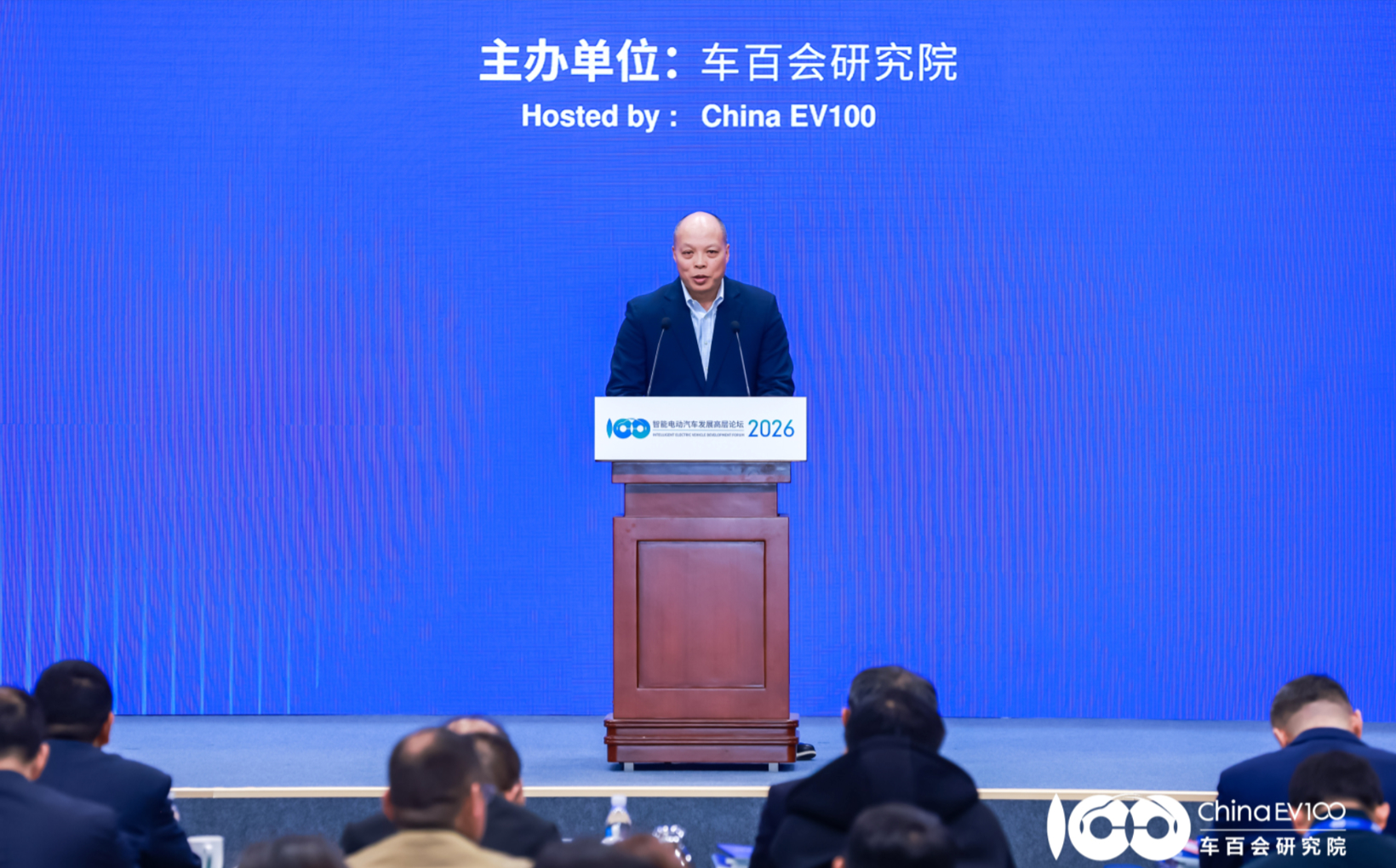
Can a legacy German automaker learn to code in Mandarin fast enough to survive? Volkswagen is betting $10 billion and 3,000 engineers that it can. At the recent Intelligent Electric Vehicle Development Forum, VW Group China EVP Han Sanchu revealed that the company’s first localized centralized electronic architecture, CEA 1.0, has entered mass production—a milestone that marks Volkswagen’s transition from a traditional manufacturer to a software-defined vehicle (SDV) player in the world’s most brutal EV market.
This is not merely a technical footnote. For Western investors watching Volkswagen’s market share in China collapse from 20% to below 14% over the past five years, the CEA architecture represents the company’s last credible defense against BYD and Tesla. Here is why VW’s Volkswagen China EV strategy just became the most important turnaround story in global automotive.
The Wake-Up Call: Why ‘In China, For China’ Became Existential
China’s NEV penetration has already breached 50% in 2025, with annual sales approaching 13 million units—leaving Europe’s 30% penetration rate looking stagnant. The complexity is staggering: Chinese consumers expect over-the-air updates every three months, AI-driven cockpits, and L2+ autonomy as standard features. VW’s old playbook—designing in Wolfsburg and adapting for Shanghai—was creating a 24-month lag behind local rivals.
Enter Phase Three. Since 2024, Volkswagen has operated under a new paradigm: local full-cycle development. The establishment of VCTC (Volkswagen China Technology Company) marks the first time in 87 years that VW has built a complete vehicle R&D center outside Germany. With 10,000 square meters of testing space and a 3,000-strong engineering corps, VCTC has slashed development cycles by 30% while targeting a 50% cost reduction potential.
CEA 1.0: The Architecture That Changes Everything
The Centralized Electronic Architecture (CEA) is Volkswagen’s technical answer to Tesla’s compute-centric vehicle design. Unlike the distributed ECU nightmare of legacy MEB platforms, CEA 1.0 consolidates vehicle intelligence into domain controllers, achieving true software-hardware decoupling.
- Unified Platform: Covers ICE, BEV, PHEV, and EREV powertrains—critical for China’s multi-powertrain transition period.
- Rapid Development: Built from zero to production in just 18 months, a timeline unheard of in traditional VW development cycles.
- Mass Production Status: CEA 1.0 began rolling off lines in late 2025 on new MEB platform variants, filling the critical gap between hardware capability and software delivery.
From MEB to CEA: Decoding the Technical Shift
Traditional MEB vehicles relied on over 70 individual ECUs. The CEA architecture collapses this into three high-performance computing clusters—body, cockpit, and autonomous driving—connected via high-speed Ethernet. This mirrors Tesla’s Model 3/Y architecture but adds the redundancy and quality gates demanded by European safety standards.
The implications are profound. By decoupling software from hardware, VW can now push OTA updates for autonomous driving features without hardware recalls—a capability that eluded CARIAD in Europe and caused billions in write-downs.
The CARIAD Factor: Software at China Speed
VW’s software division, CARIAD China, has undergone a radical localization transplant. With over 1,000 engineers and strategic JVs with Horizon Robotics (autonomous driving chips) and ThunderSoft (intelligent cockpit), CARIAD is no longer a bottleneck—it is the accelerator.
The CARIZON joint venture (VW-Horizon) has already delivered L2+ highway assist capabilities and is currently validating L2++ urban autonomous driving solutions. Critically, CARIZON is now designing proprietary autonomous driving SoC chips, giving Volkswagen a hardware-integrated software stack that rivals Huawei’s Intelligent Driving Solution or Tesla’s FSD computer.
2026: The Model Offensive Begins
Architecture without products is merely PowerPoint. Volkswagen’s Volkswagen China EV strategy enters its execution phase in 2026, when the group will launch over 20 new NEV models across its VW, Audi, and ID. brands. The roadmap escalates aggressively:
- 2027: Approximately 30 new energy models
- 2030: Portfolio expands to 50 NEV models
- Technology: L2++ systems powered by CARIZON silicon, not NVIDIA or Mobileye
This product tsunami is only possible because CEA 1.0 provides the scalable digital backbone. See our analysis on BYD’s vertical integration strategy to understand why controlling the stack matters in China’s price war.
What This Means for Western Investors
For portfolios heavy on European automotive stocks, VW’s China gambit offers a binary outcome. Success validates VW as a global SDV player capable of competing with Chinese giants; failure confirms the irreversible decline of Western OEMs in the world’s largest auto market.
The CEA architecture demonstrates that Volkswagen has learned a painful lesson: in China’s software-defined automotive economy, local R&D is not a cost center—it is the product itself. With development cycles now matching XPeng and NIO (24-30 months), and cost structures targeting 50% optimization, VW may have finally built the organizational antibodies needed to survive the Chinese onslaught.
Recommended Reading
For deeper context on the semiconductor and battery wars driving Volkswagen’s transformation, we recommend The Power Surge: Inside the Global Battle for Batteries, Cars, and the Future of Energy by Steve Levine. This book provides essential background on why centralized architectures like CEA represent the critical battleground for legacy automakers fighting Silicon Valley and Shenzhen simultaneously.
Sources: Reuters Automotive, Bloomberg Technology, Volkswagen Group China Communications.