Why Can’t Europe Get a $9,000 EV? China’s Arcfox T1 Reveals a Brutal Truth About the Small Car Market’s Collapse
As an automotive market analyst based in China, I’m often asked by my Western colleagues: “Where are all the affordable small EVs?” It’s a valid question. While Europe and the U.S. debate the feasibility of a sub-$25,000 electric car, a tectonic shift has already occurred here in China that provides a startling answer.
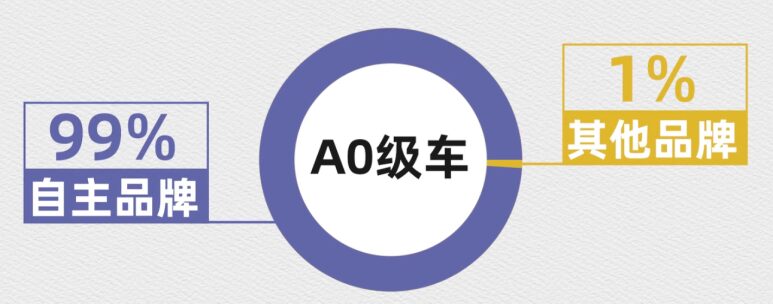
The A0-class (subcompact) segment, once a profitable stronghold for foreign brands like Peugeot and Suzuki, has been decimated. Today, over 99% of this market belongs to domestic Chinese brands. Legacy gasoline models that once sold by the thousands now struggle to move 100 units a month. This wasn’t a gradual decline; it was a market collapse, triggered by game-changers like the recently launched Arcfox T1.
This vehicle, from the relatively quiet state-owned giant Beijing Automotive Industry Corp (BAIC), isn’t just a new car. It’s a case study in how China’s industrial strategy is making entire vehicle segments uncompetitive for legacy automakers.
The New Value Equation: How EVs Made Gasoline Obsolete
The Arcfox T1 and its peers didn’t just compete with gasoline subcompacts; they made them fundamentally obsolete by changing the rules of value.
1. Redefining Space: Subcompact Footprint, Compact Interior Thanks to its dedicated EV platform, the Arcfox T1 pushes its wheels to the absolute corners. While its exterior dimensions are firmly in the A0-class, its wheelbase stretches to a remarkable 2,770mm. To put that in perspective, that’s longer than a Volkswagen Golf. The result is an interior space that shames its gasoline-powered rivals, offering a level of comfort previously unheard of in this class.
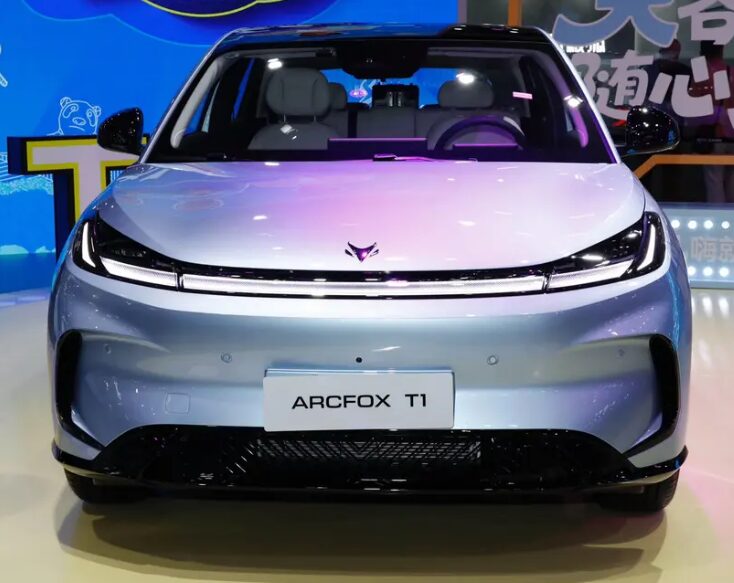
2. Revolutionizing Cost: Cheaper Than Public Transit The most potent weapon is the total cost of ownership (TCO). With a range of 425 km (approx. 264 miles), the T1 can be fully charged for just 13 RMB (about $1.80) using overnight electricity rates in China. For a city commuter, the monthly running cost is negligible, effectively undercutting not just gasoline cars but also the price of a monthly subway pass.
3. Democratizing Technology: Premium Features for an Entry-Level Price This is where the competition truly crumbles. The Arcfox T1, with a starting price of just 62,800 RMB (under $9,000), comes packed with features that were, until recently, the exclusive domain of premium vehicles:
- L2 Advanced Driver-Assistance Systems (ADAS), including automated parking.
- A massive panoramic glass roof with an integrated electric sunshade.
- Ventilated, heated, and memory-function front seats.
- A 15.6-inch central infotainment screen.
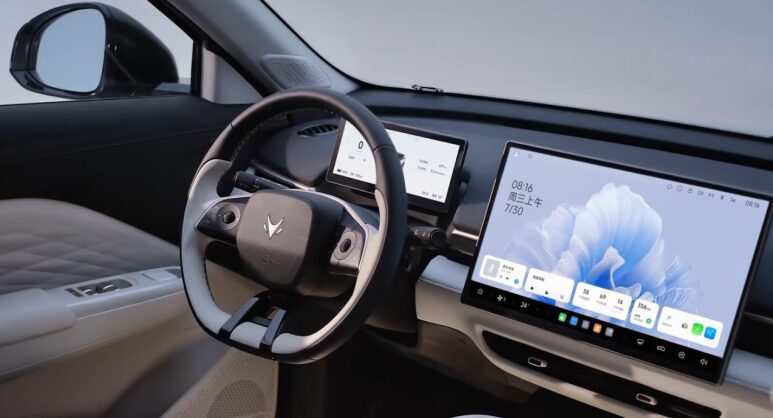
For the price of a basic, feature-stripped European or Japanese gasoline subcompact, consumers in China can now buy an EV that offers more space, near-zero running costs, and a full suite of luxury tech. It’s not a fair fight; it’s a different game entirely.
The Unseen Force: BAIC’s ‘Hybrid’ Supply Chain
How is this incredible value proposition possible? It’s not the magic of a single startup. The real answer lies behind the Arcfox brand: the immense, state-owned powerhouse of BAIC. Many observers are rightly puzzled; BAIC’s own-brand EV sales have been lackluster for years. So, where does this “mature supply chain” come from?
It’s a hybrid ecosystem, built from decades of experience:
- The Foundation (The “Mercedes-Benz” Effect): Through its long-standing joint venture with Mercedes-Benz, BAIC was forced to learn and master German standards of quality control, supplier management, and large-scale logistics. They have a pre-vetted pool of high-quality suppliers for chassis, interiors, and other fundamental components, providing a massive advantage in quality and cost.
- The Experience (The “EV Pioneer” Effect): As one of China’s earliest state-backed players in EVs (with its BJEV subsidiary), BAIC built a foundational network for EV-specific components like batteries and motors. While not premium, it was a high-volume, battle-tested supply chain.
- The Synthesis (The “Arcfox” Strategy): The Arcfox T1 is the result of fusing these two worlds. It leverages the quality and scale of the “Benz-level” supply chain for its core structure while using the established EV network for its powertrain. This hybrid approach allows it to achieve a level of quality and cost that is nearly impossible for newcomers or foreign brands to replicate in China.
Conclusion: A Warning Shot for Global Markets
The advent of the Arcfox T1 signals that the competitive paradigm for entry-level vehicles has fundamentally and permanently shifted in China. It’s no longer about brand heritage or engine efficiency; it’s about the raw value delivered through superior space, technology, and near-zero running costs—all made possible by a deeply integrated, state-backed industrial ecosystem.
For global automakers like Volkswagen, Stellantis, and Renault, who have long profited from the small car segment in Europe and other regions, the story of the A0-class collapse in China should serve as a chilling warning. The forces that enabled the Arcfox T1 are not confined to China’s borders; they are being prepared for export. The game has changed, and those who fail to understand the new rules risk being left behind.