World’s First ‘One-Chip’ 8775 Mass Production: Innovation or Supplier’s ‘Bleeding’?
Recently, a flashy piece of news hit the Chinese automotive industry. The world’s first mass production of a single-chip solution integrating ‘Cockpit’ and ‘Autonomous Driving’ has been announced. The protagonists are BAIC’s EV brand Arcfox (Alpha T5) and the supplier CarConnect (AutoLink).
On the surface, it looks like a massive technological leap. The concept of running both infotainment and ADAS simultaneously on Qualcomm’s latest Snapdragon 8775 chip is certainly attractive. However, listening to voices from the field, there’s an analysis that behind this “World’s First” title lies the desperate ‘bleeding orders’ of the supply chain and the cold calculations of OEMs.
In today’s post, we dig into the reality of the Chinese automotive semiconductor market hidden behind this news.
1. Fact Check: What is ‘World’s First’?
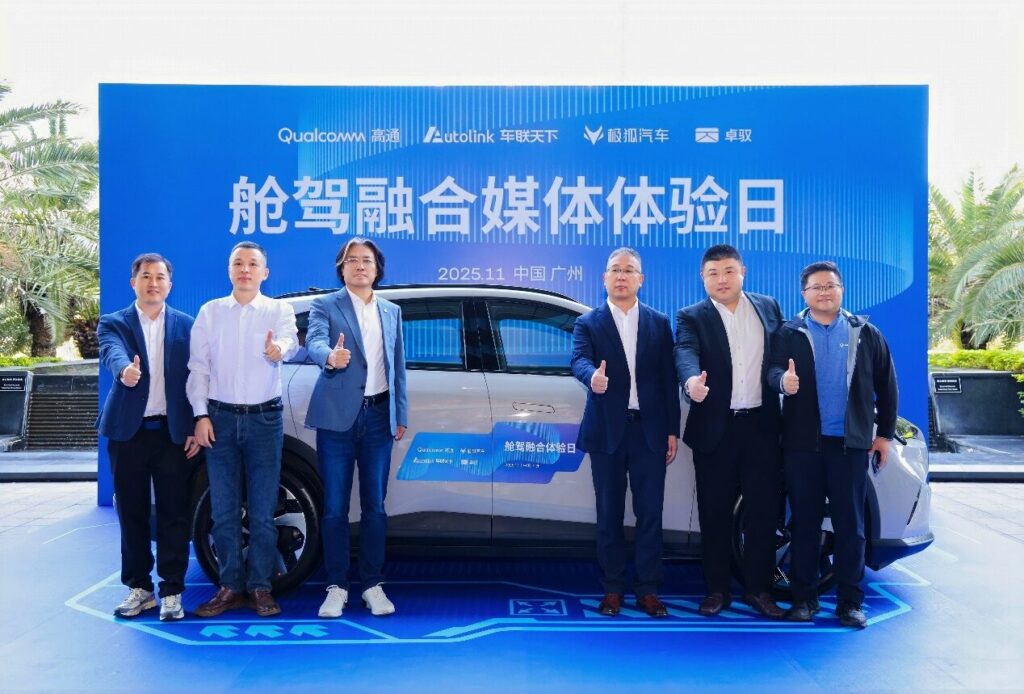
On November 22, during the Guangzhou Auto Show, CarConnect (AutoLink) held a media day with Qualcomm and Arcfox to officially announce the mass production of the ‘AL-A1 Cockpit-Driver Fusion Domain Controller.’
- Core Tech: Based on Qualcomm Snapdragon 8775 chipset.
- Performance: Processes Cockpit (Infotainment) and ADAS on a single chip with 144 TOPS AI computing power.
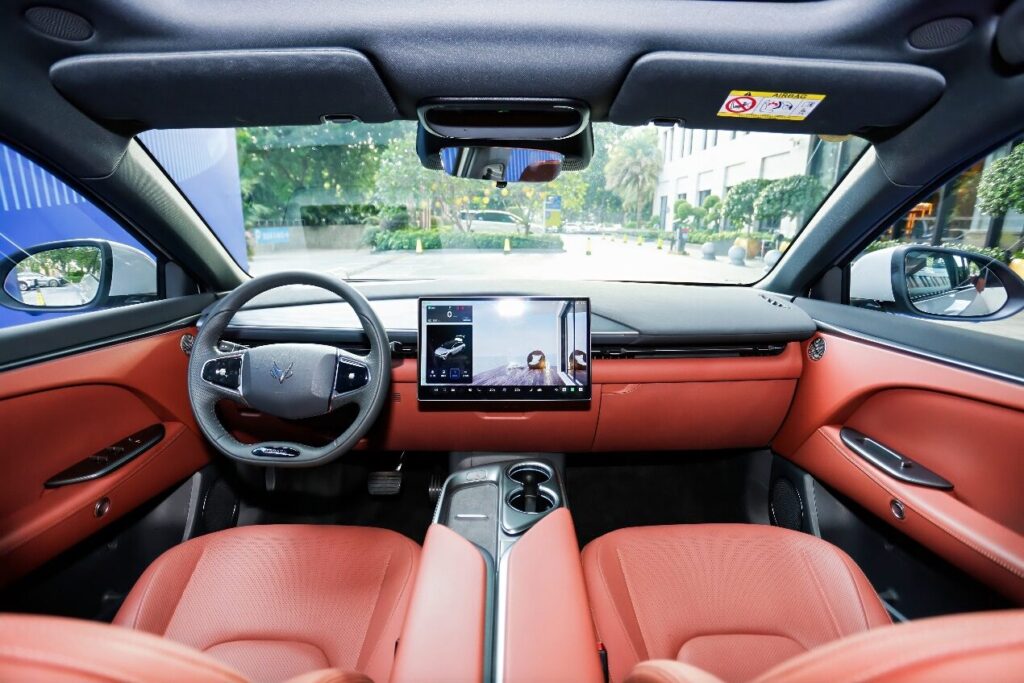
- Application: Arcfox Alpha T5.
- Key Features: Implementing Urban NOA (Navigation on Autopilot) and Highway NOA in a vehicle priced around 150,000 RMB (approx. $21,000).
At first glance, putting a high-performance one-chip solution into a $21k car seems like the ultimate “value for money” for consumers. But the industry sees it differently.
2. Why Do Other OEMs Hesitate on 8775? (The Trap of Economics)
The Snapdragon 8775 is undoubtedly a breakthrough chip. The attempt to integrate cockpit and driving (One-Chip Fusion) is the ultimate destination for SDVs (Software Defined Vehicles). However, in terms of ‘current’ market logic, the prevailing assessment is that it’s a dilemma.
A. The Paradox of “Cost-Effectiveness”: Is 8155 + @ Cheaper?
The current ‘winning formula’ in the Chinese market is the combination of [Qualcomm 8155 (for Cockpit) + Low-cost ADAS Chip (Horizon J3, etc.)].
- Proven Stability: The 8155 is already installed in countless vehicles, verifying its stability.
- Price Competitiveness: With massive volume, the unit cost has hit rock bottom.
- The Ambiguity of 8775: The 8775 is the latest chip, so it’s expensive. The ‘benefit of integration (cost reduction)’ does not yet offset the high price of the chip itself.
From an OEM’s perspective, there’s no need to use the expensive and difficult-to-develop 8775 when the cheaper and familiar ‘Two-Chip’ solution is much more economical. This is why most Chinese OEMs are holding back on adopting the 8775.
B. Bleeding for the “World’s First” Title?
So why did CarConnect (AutoLink) proceed with this project? The industry views this as ‘bleeding orders’ (taking orders at a loss).
- Lack of Volume: Since few OEMs are adopting the 8775, suppliers are forced to take projects even at a loss to build a reference case.
- Marketing Effect: The title “World’s First Mass Production” shows off technological prowess and is advantageous for future investments or winning other projects.
Ultimately, the case of the Arcfox Alpha T5 is likely ‘manufactured cost-effectiveness’ created by the supplier giving up margins to meet the OEM’s price demands, rather than a pure technological achievement.
3. Urban NOA in a $21k Car? Is it Sustainable?
The article promotes it as “the industry’s first SUV to lower Urban NOA features to the 150,000 RMB level.” But it is questionable whether this is a sustainable business model.
- Hardware Cost Pressure: Implementing vision-based urban autonomous driving without LiDAR using a 144 TOPS chip requires highly sophisticated software optimization.
- Profitability Doubts: With a car price in the $20k range, inserting the latest 8775 chip and integrated controller likely means either the manufacturer (BAIC) or the supplier (CarConnect) is making almost no profit.
4. Conclusion: The Direction is Right, But the Market Decides the Speed
Qualcomm’s statement that “Cockpit-Driver integration will lead the industry from ‘function redundancy’ to ‘capability integration'” is technically correct. The centralized architecture is an irresistible future.
However, ‘technological correctness’ does not always equal ‘commercial correctness.’ The Chinese market is currently in an extreme price war (“Involution” or Neijuan). In a situation where every penny counts, the expensive ‘One-Chip Solution’ might be premature. The case of the Arcfox Alpha T5 is a cross-section showing how much burden the supply chain is shouldering to implement future technology at current prices.
Global OEMs do not need to rush to adopt the 8775 just by looking at this news. Instead, it is crucial to calmly observe how Chinese companies mature this technology through ‘bleeding competition’ and when the chipset price will stabilize.