The Xiaomi SU7 Death Trap: The Driver Was Drunk, So Why Did the Electric Doors Turn a Crash into a Tragedy?
Another tragedy has struck the Chinese auto market. In the early hours of the morning in Chengdu, a Xiaomi SU7 was engulfed in flames after a crash, and the driver was killed. The police investigation has since revealed the driver is suspected of driving under the influence (DUI). On the surface, this looks like a clear-cut, albeit tragic, traffic accident.
But that’s not the story dominating public discourse in China. The national conversation has pivoted from the dangers of drunk driving to a furious debate about a “fatal flaw” in Xiaomi’s car. Why? Because horrified bystanders and first responders could do nothing but watch the car burn, completely unable to open the doors. The reason: the electric door handles.
This isn’t just one unfortunate incident. It’s a terrifying echo of the Huawei AITO M7 crash nightmare. It’s a moment that forces the entire industry to confront a dangerous dilemma hidden behind the sleek facade of the “smart car.”

Reconstructing the Incident: Just the Facts
Before diving into the analysis, let’s establish the objective facts of the Xiaomi SU7 accident:
- Time of Crash: 3:18 AM, July 28.
- Crash Sequence: The SU7, driven by a Mr. Deng, collided with another vehicle, careened over the central reservation, overturned, and caught fire.
- Outcome: The driver, Mr. Deng, died. Police analysis of a blood sample indicates suspected DUI.
- The Core Issue: Immediately following the impact, the vehicle’s power was cut, rendering the external door handles completely inoperable.
Videos from the scene are harrowing. Onlookers can be heard screaming, “It won’t open!” as they kick the car and try to smash windows, helpless to reach the driver inside.
The Heart of the Controversy: A Fatal Flaw in Modern Design?
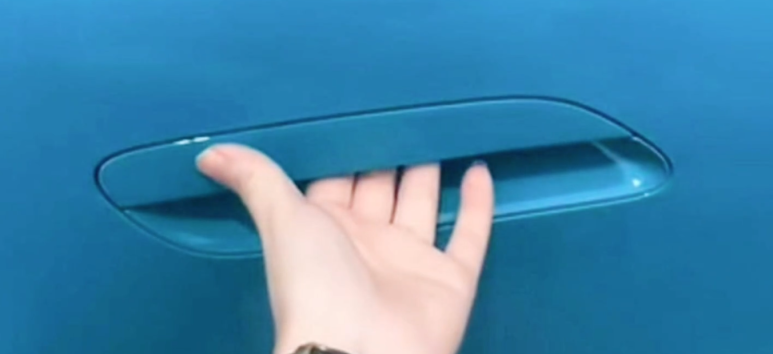
The essence of this controversy is not the cause of the crash, but the failure to rescue the occupant during the critical “golden hour” immediately after. The culprit being singled out is the flush, electronic door handle—a design trend sweeping the EV industry.

- How They Fail: The SU7’s external handles are electronic buttons with no physical linkage. While aesthetically pleasing, they become useless bricks the moment a crash severs the car’s power supply.
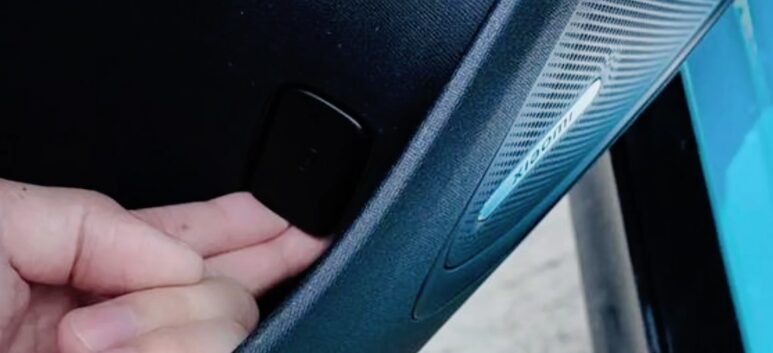
- The Emergency Latch That Isn’t Enough: Yes, there is an internal mechanical release lever located at the bottom of the door. However, expecting a driver who is disoriented from a violent crash—let alone unconscious or panicked by a fire—to calmly locate and operate this lever is dangerously unrealistic.
- The Rescuer’s Dilemma: Most critically, from the outside, there is no mechanical way in. Without a physical handle to pull, first responders have no leverage to pry the door open, even if the door frame itself isn’t deformed. The car effectively becomes a sealed steel coffin.
This tragedy brings to mind a previous analysis I wrote concerning the Xpeng P7’s steering failure controversy, which also highlighted the “fatal weaknesses of smart cars.” It’s another stark reminder of how vulnerable these advanced electronics can be in unpredictable, “black swan” events when they replace time-tested mechanical redundancy.
Does History Repeat? The Recurring Nightmare of the AITO M7
This accident has sent a particular shockwave through Chinese society because we have seen this horror film before. Not long ago, a similar tragedy involved a Huawei-backed AITO M7, where occupants were killed after a collision because the car’s pop-out electric handles failed to deploy, trapping them inside.
That incident sparked a fierce debate about post-crash safety and electric doors. As a market newcomer, Xiaomi should have learned from this precedent and engineered a more robust, fail-safe solution. Instead, the SU7 has exposed the very same vulnerability, repeating the tragedy. It begs the question I explored in the Li Auto i8 crash test controversy: in this hyper-competitive market, are fundamental safety principles being sacrificed for marketing glitz?
Xiaomi’s Double-Edged Sword: The Price of Being the “King of Hype”
Immediately after the news broke, Xiaomi’s stock plummeted by nearly 8.7%. This is the inescapable fate of being the “King of Hype.” The immense fandom and media buzz are a powerful engine for a product launch, but they become a massive amplifier for criticism and controversy in a crisis.
The bigger test is yet to come. Xiaomi’s second model, the YU7 SUV, is slated for mass delivery soon and is reported to feature a door handle with a mechanical component. If a similar accident were to happen with a YU7, and the doors still failed to open, that is when the true “winter” will arrive for Xiaomi’s auto division.
Conclusion: This Isn’t a Xiaomi Problem. It’s an Industry Reckoning.
Let’s be clear: the primary cause of this crash was the driver’s decision to get behind the wheel while allegedly intoxicated. However, the failure to rescue him is a clear and direct result of the car’s design. The argument that “mechanical doors can also get jammed in a severe crash” misses the point entirely. A design that reduces the probability of rescue to zero is fundamentally different from one that leaves even a 1% chance.
The Xiaomi SU7 accident is a brutal wake-up call not just for one company, but for the entire industry’s obsession with flush, electronic door handles in the name of aesthetics and aerodynamics. In fact, regulators in both China and the U.S. have begun investigating the safety of these systems, signaling a potential global crackdown. Every automaker must now answer a simple, terrifying question: can you guarantee, in the worst-case scenario when outside help is desperately needed, that your car will not turn into an impenetrable tomb?
To regain public trust, Xiaomi’s next move must be to dedicate itself to building the world’s safest door handle. It is the only way forward.
Deeper Dive: Recommended Reading for Deeper Insights
For those who wish to gain a deeper understanding of the topics discussed today, here is a professional book I have personally reviewed and recommend.
[Normal Accidents: Living with High-Risk Technologies by Charles Perrow]
- Why I Recommend It: This tragic incident wasn’t just a component failure; it was a system failure where a design choice had unforeseen consequences in an emergency. This book is a classic for a reason. It masterfully explains how tightly-coupled, complex systems—like a modern EV—can lead to catastrophic, ‘normal’ accidents. It forces us to think beyond individual blame and look at the inherent risks in the design philosophies we choose.
- 👉 Find it on Amazon
As an Amazon Associate, I may earn from qualifying purchases. This post may also contain other affiliate links, from which I may earn a commission.