XPeng MONA M03 Profitability Strategy: Escaping China’s Volume Trap
XPeng MONA M03 Profitability Strategy: Escaping China’s Volume Trap
What happens when a single budget sedan becomes responsible for 40% of your entire company’s sales volume, and then the market turns? For XPeng, the MONA M03 profitability strategy has become a high-stakes experiment in balancing scale and margins, transforming the vehicle from a desperate lifeline into a case study for China’s brutal EV consolidation.
The Forty Percent Problem: When Market Dominance Becomes a Liability
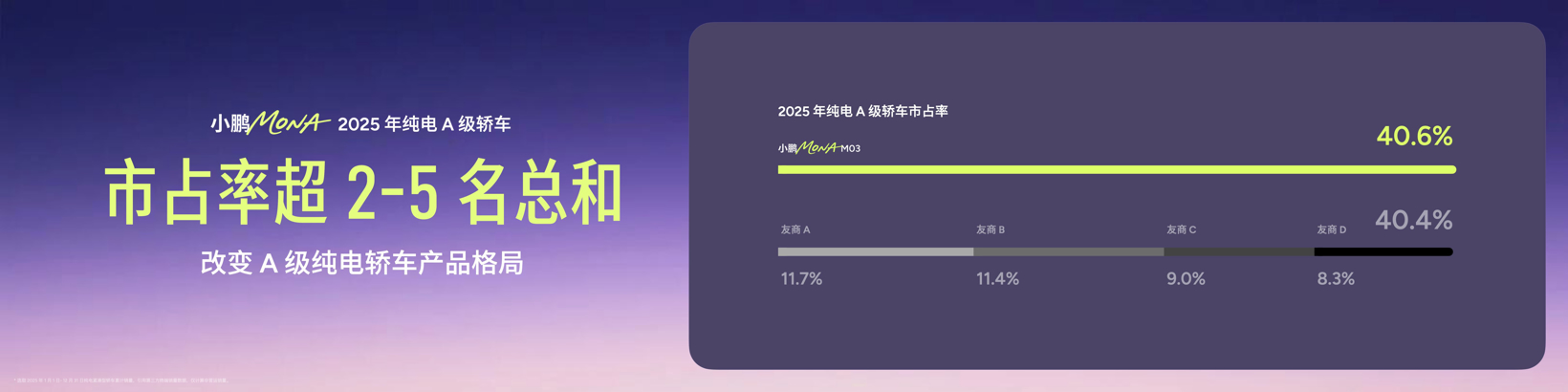
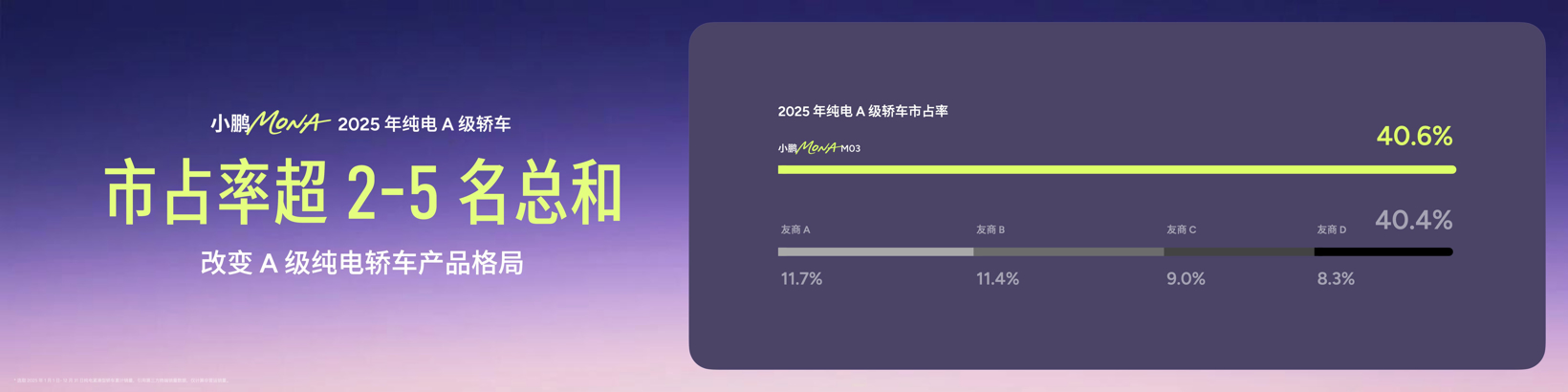
In just 583 days since its debut, the MONA M03 has rewritten XPeng’s corporate trajectory. The numbers are staggering: 175,300 units sold in 2025 alone, representing 40% of XPeng’s total annual volume of 430,000 vehicles. According to China Passenger Car Association data cited by Reuters, the model now commands a 40.6% share of China’s A-class pure electric sedan segment, more than competitors ranked second through fifth combined.
But in the auto industry, this level of single-model dependency is a double-edged sword. When sales dipped in early 2026 under pressure from Leapmotor’s B01 and BYD’s upgraded offerings, XPeng faced an existential question: how do you refresh a volume leader without igniting a profit-killing price war?
From Corporate Lifesaver to Strategic Anchor
Originally conceived as a stopgap measure to reverse XPeng’s 2023 sales slump, the MONA M03, priced between 119,800 and 151,800 yuan ($16,500-$20,800 USD), found unexpected resonance with China’s youngest EV buyers. The demographic data reveals why: average age 28.5, predominantly unmarried, and seeking tech-forward transportation without premium pricing.
However, as Bloomberg reported, this demographic is precisely where competition has become most ferocious. With over 100 new EV models launched in China last year, the A-class segment, analogous to compact sedans in Western markets, has become a battleground of razor-thin margins.
The A-Class Battleground: Volume Versus Value
To understand XPeng’s dilemma, Western investors must grasp the peculiar dynamics of China’s A-class market. These vehicles represent 36.32% of total passenger car sales, yet EV penetration here languishes at just 24% compared to 62.1% in the premium B-class segment, per CPCA February 2026 data. This suggests massive growth potential, but one constrained by brutal economics.
The Profitability Paradox
The 100,000-150,000 yuan price bracket represents China’s largest sales volume but its smallest profit pools. CEO He Xiaopeng drew a hard line during the April 2026 launch of the refreshed MONA M03: We will not produce vehicles priced below 100,000 yuan. Scale is important, but low-profit scale creates no value.
This statement marks a decisive pivot from XPeng’s previous growth-at-all-costs strategy. It reflects lessons learned from the Financial Times analysis of China’s ongoing EV consolidation, where dozens of brands collapsed despite impressive delivery numbers.
The 2026 Model Strategy: Engineering Profit into a Budget Chassis
The 2026 MONA M03 arrives with a more-for-same pricing strategy, enhanced autonomous driving capabilities and interior refinements at unchanged entry pricing of 119,800 yuan. But behind this consumer-friendly stance lies sophisticated cost engineering.
- Platform Consolidation: Shared components with XPeng’s higher-margin G6 SUV reduce per-unit engineering amortization
- Battery Chemistry: Shift toward lithium iron phosphate cells from CATL, reducing costs by an estimated 15% versus previous lithium-ion packs
- Software Monetization: Enhanced XNGP autonomous driving subscriptions aim to capture lifetime value beyond the initial sale
He Xiaopeng claims the 2026 model achieves significantly better margins than its predecessor, a critical claim as XPeng seeks to prove to NYSE investors that it can achieve sustainable profitability before cash reserves deplete.
Competitive Squeeze: The Leapmotor and BYD Pincer Movement
XPeng’s margin recovery faces immediate threats. Leapmotor’s B01, launched in Q1 2026, undercuts the MONA M03 by roughly 8,000 yuan while offering comparable range. Meanwhile, BYD’s upgraded Qin Plus EV leverages the company’s vertical integration, particularly in-house battery production, to absorb price cuts that XPeng cannot match.
This dynamic creates a strategic inflection point. As noted in Bloomberg’s China Auto Outlook, the A-class segment is experiencing the earliest and most severe consolidation, with market share concentrating among the top three players.
Why Western Markets Should Watch Carefully
For US and European observers, XPeng’s MONA experiment offers crucial intelligence on the future of affordable electrification. If XPeng succeeds in maintaining 40% market share while improving margins, it validates a business model that Western automakers desperately need: profitable, tech-rich EVs under $25,000.
However, the risks are equally instructive. XPeng’s dependency on a single model exposes the volatility of China’s youth-driven consumer market. When economic headwinds force budget-conscious buyers to delay purchases, companies lacking diversified portfolios face existential cash flow crises. [Internal Link: See our analysis on European EV Cost Parity Challenges]
Furthermore, XPeng’s refusal to compete below 100,000 yuan suggests that the global floor for sustainable EV manufacturing, accounting for battery costs, software development, and safety standards, may be higher than the $10,000-$12,000 figures often floated by Western analysts.
Recommended Reading
To understand the broader context of China’s battery supply chain dominance and its implications for global automotive competition, we recommend The Powerhouse: America, China, and the Great Battery War by Steve Levine. This meticulously researched account reveals how Chinese manufacturers achieved cost advantages that now threaten to lock Western automakers out of the profitable budget EV segment entirely.
Conclusion: The High-Stakes Gamble
The 2026 MONA M03 represents more than a mid-cycle refresh. It is XPeng’s attempt to prove that Chinese EV makers can escape the volume trap that destroyed traditional automakers’ profitability in the 2010s. By holding pricing firm while demanding better unit economics, He Xiaopeng is betting that technology differentiation, not price wars, will determine the winners in China’s EV consolidation.
For Western investors, the message is clear: when evaluating Chinese EV stocks, look beyond delivery numbers. Ask instead whether these companies can maintain the delicate balance between the scale necessary to survive and the margins necessary to thrive. XPeng’s next two quarters will provide the answer.