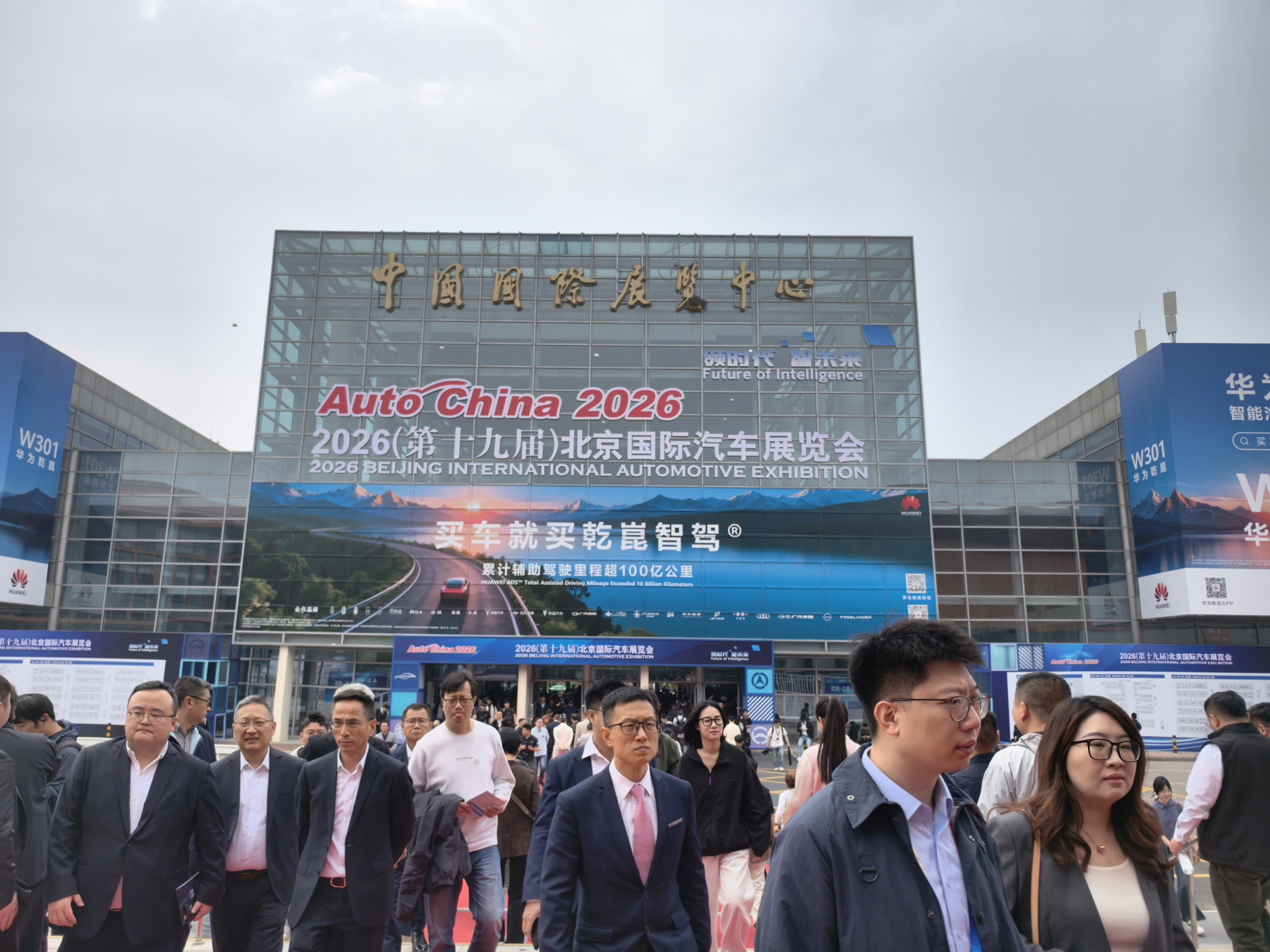
Is China’s new L2 ADAS standard about to redefine the global automotive landscape? The 2026 Beijing Auto Show is a clear indicator that the next generation of automotive technology is already here, and it’s being driven by advancements in physical AI, central computing, and high-tier autonomous driving.
Key Highlights from the 2026 Beijing Auto Show
The 2026 Beijing Auto Show has marked a significant shift in the automotive industry. While previous shows focused on vehicle design and specifications, this year’s event highlighted the core technologies that will define the future of cars. From physical AI and world models to cabin integration and central computing, the show was a showcase of cutting-edge innovations.
Physical AI: The New Frontier in Autonomous Driving
One of the most prominent trends at the show was the emergence of physical AI. Unlike traditional autonomous driving systems that rely heavily on rules, data, and end-to-end training, physical AI emphasizes the AI’s ability to understand the real physical world. This includes not just recognizing objects like roads, vehicles, and pedestrians, but also understanding the dynamics of movement, causal relationships, and complex scenarios.
-
QCraft: QCraft, a leading autonomous driving company, unveiled its physical AI model at the show. The company announced a strategic shift from focusing solely on autonomous driving to developing a more general physical AI. Their model, built on a unified ‘world model + reinforcement learning’ architecture, was showcased with both cloud and in-vehicle engines. They also introduced the ‘QCraft WindMAX,’ a 500TOPS computing platform, which aims to provide a more human-like decision-making capability.
-
Momenta: Momenta, another key player, launched the R7 reinforcement learning world model, moving from a conceptual stage to mass production. Their world model can simulate long-tail scenarios in virtual environments and continuously evolve through reinforcement learning, enabling autonomous driving to move from imitation to autonomous exploration.
Advancements in High-Tier Autonomous Driving
Beyond the advancements in AI, the show also featured significant progress in high-tier autonomous driving solutions. Companies like WeRide are pushing the boundaries of what’s possible with their WRD 3.0 one-shot end-to-end autonomous driving solution. This solution is designed to be adaptable across multiple chip platforms, including Qualcomm, NVIDIA, and Xingchen, making it more accessible and cost-effective for a wider range of vehicles.
Reimagining the Boundaries of Autonomous Driving
Several companies are rethinking the scope of autonomous driving. For example, EHang Intelligent, known for its Robotaxi prototypes, is expanding its focus to include broader AI applications. This shift reflects a growing trend in the industry, where the boundaries between autonomous driving and general AI are becoming increasingly blurred.
Why This Matters to Western Investors and Car Buyers
The 2026 Beijing Auto Show is a clear signal that the competitive landscape in the automotive industry is rapidly evolving. As the focus shifts from vehicle features to underlying technologies, Western investors and car buyers need to stay informed about these developments. The advancements in physical AI, central computing, and high-tier autonomous driving are not just technological milestones; they are strategic pivots that will shape the future of the industry.
For Western investors, understanding these trends is crucial for making informed decisions. For car buyers, these technologies will soon be available in the market, offering safer, more intelligent, and more efficient driving experiences.
See our analysis on Advancements in Chinese EV Battery Technology for more insights into the latest innovations in the Chinese EV market.