What if the decoupling narrative is fundamentally wrong? While Washington tightens export controls and Brussels debates supply chain resilience, Arizona-based Onsemi just made its most consequential bet in decades: doubling down on Shanghai.
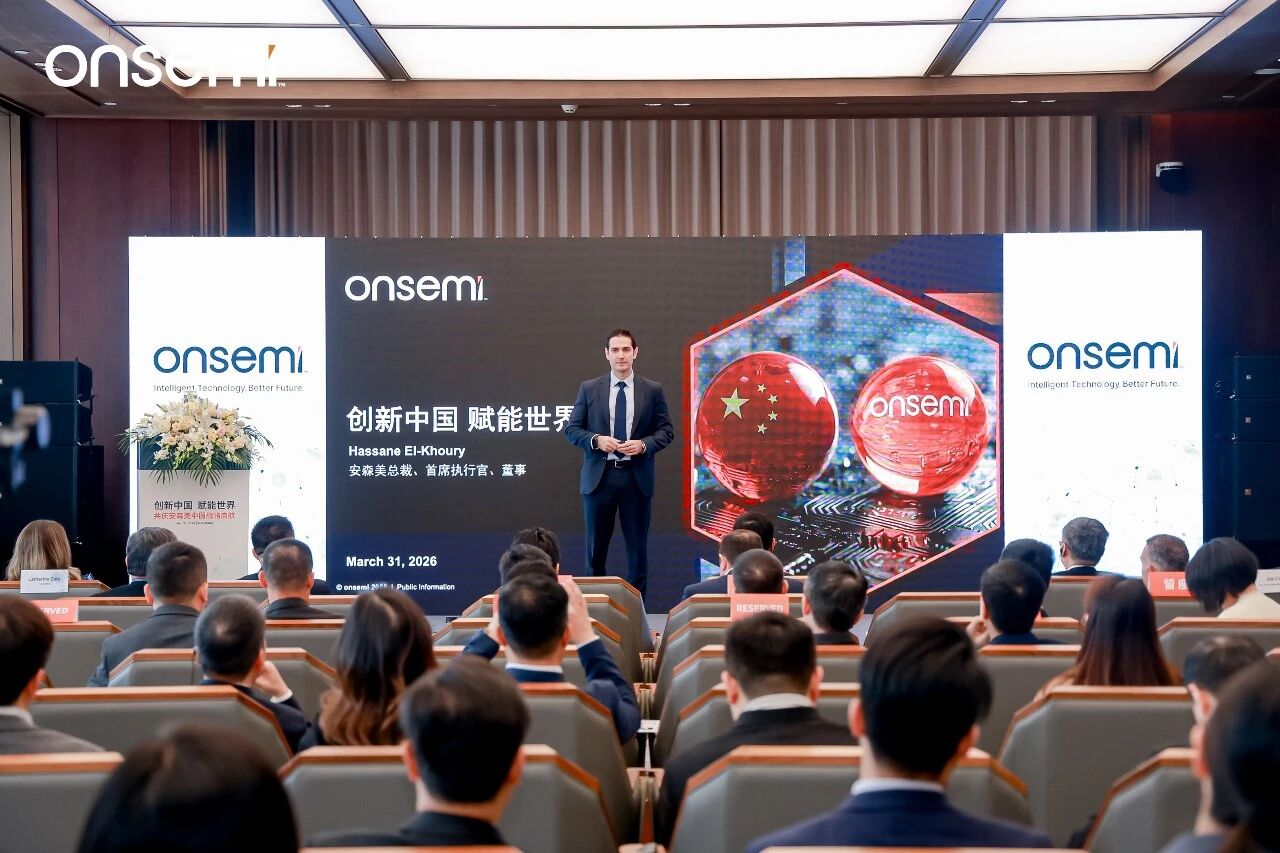
On March 31, 2024, Onsemi (NASDAQ: ON) unveiled a sweeping automotive chip localization China strategy that transforms its relationship with the world’s largest EV market. By establishing Shanghai as its Greater China headquarters and appointing a dual-role managing director with direct engineering oversight, the chip giant signaled that “in China, for China” is no longer a hedge—it is the primary growth thesis.
See our analysis on how Texas Instruments and Infineon are navigating the China chip dilemma.
Breaking the Headquarters Barrier
Onsemi’s structural innovation lies in its organizational design. The new China General Manager simultaneously serves as Head of System Engineering China—a fusion of commercial and technical authority rarely seen in multinational semiconductor firms.
Traditionally, Western chip companies maintained a firewall between decision-making (Phoenix, Dallas, Munich) and execution (Shanghai, Shenzhen). This created fatal latency. When Chinese EV manufacturers like BYD and Xpeng iterate battery management systems in 12-week cycles, waiting for Arizona approval to tweak a gate driver specification means disqualification from the bill of materials.
The Four Pillars Explained
CEO Hassane El-Khoury framed the strategy around four pillars:
- Designed in China: Expanding Shanghai R&D to focus on automotive, industrial, and AI data center power management
- Made in China: Partnering with Innoscience (英诺赛科) to accelerate GaN (Gallium Nitride) production using domestic manufacturing ecosystems
- Deeply Rooted in China: Increasing local procurement and expanding from 8 to 11 joint application laboratories
- Going Global: Exporting China-validated solutions to Southeast Asia and European markets
This represents a shift from “global platform, local sales” to “local innovation, global scale.”
The GaN Manufacturing Calculus
Most Western coverage focused on the headquarters relocation. Investors should focus instead on the Innoscience partnership. Gallium Nitride semiconductors are critical for next-generation 800V EV architectures, enabling smaller onboard chargers and more efficient DC-DC converters than traditional Silicon Carbide (SiC) alternatives in certain power ranges.
By manufacturing GaN devices within China’s ecosystem while maintaining proprietary design IP, Onsemi attempts a delicate balance: capturing the cost and speed advantages of localization without triggering full technology transfer requirements. This mirrors strategies reportedly pursued by Texas Instruments and Infineon, as noted by Reuters in recent coverage of foreign chipmakers expanding Chengdu and Shanghai facilities despite CHIPS Act incentives.
Why Western Investors Should Care
For US and European portfolios, Onsemi’s move crystallizes an uncomfortable arithmetic. China currently consumes approximately 35% of global automotive semiconductors by revenue, but over 60% by volume—a disparity explained by the concentration of EV manufacturing capacity. As Bloomberg reported in March, Chinese EV production now exceeds 9 million units annually, creating insatiable demand for power discretes, MCUs, and sensor fusion chips.
Companies without localization strategies face margin compression. Tariffs, logistics volatility, and the risk of sudden procurement preference shifts toward domestic suppliers make the “import from Phoenix” model economically unviable for high-volume EV platforms.
The Decoupling Paradox
Here lies the strategic tension. The US CHIPS Act allocates $52 billion to reshore semiconductor manufacturing, yet Onsemi—and competitors like NXP and ST Microelectronics—are simultaneously increasing China-specific R&D headcount. According to Financial Times analysis, foreign semiconductor firms announced $6.2 billion in China-specific expansion investments in Q1 2024 alone.
This suggests market access is overriding geopolitical risk. For investors, this creates a bifurcation risk: semiconductor firms with viable China localization strategies may trade at premiums to those facing exclusion from the world’s largest automotive market, regardless of technological superiority.
Recommended Reading
To understand the historical context of how semiconductor supply chains became the central battleground in US-China competition, I recommend Chip War: The Fight for the World’s Most Critical Technology by Chris Miller. This Pulitzer Prize finalist provides essential background on why control over automotive chip manufacturing has become inseparable from national industrial policy—and why companies like Onsemi face impossible choices between market access and geopolitical alignment.
Conclusion: Localization as Strategy, Not Compromise
Onsemi’s China pivot is not a retreat but an acknowledgment of reality. In an automotive industry where 60% of global EVs carry Chinese VINs, semiconductor localization is not about cost reduction—it is about qualification for the supply chain.
Western investors must recalibrate their decoupling assumptions. The question is no longer whether automotive semiconductor firms will localize in China, but whether they can do so while maintaining technological differentiation and IP security. Onsemi’s bet is that integrated headquarters, deep GaN manufacturing partnerships, and 11 joint laboratories provide sufficient moats. The market will judge whether that bet pays off before the next geopolitical shock.