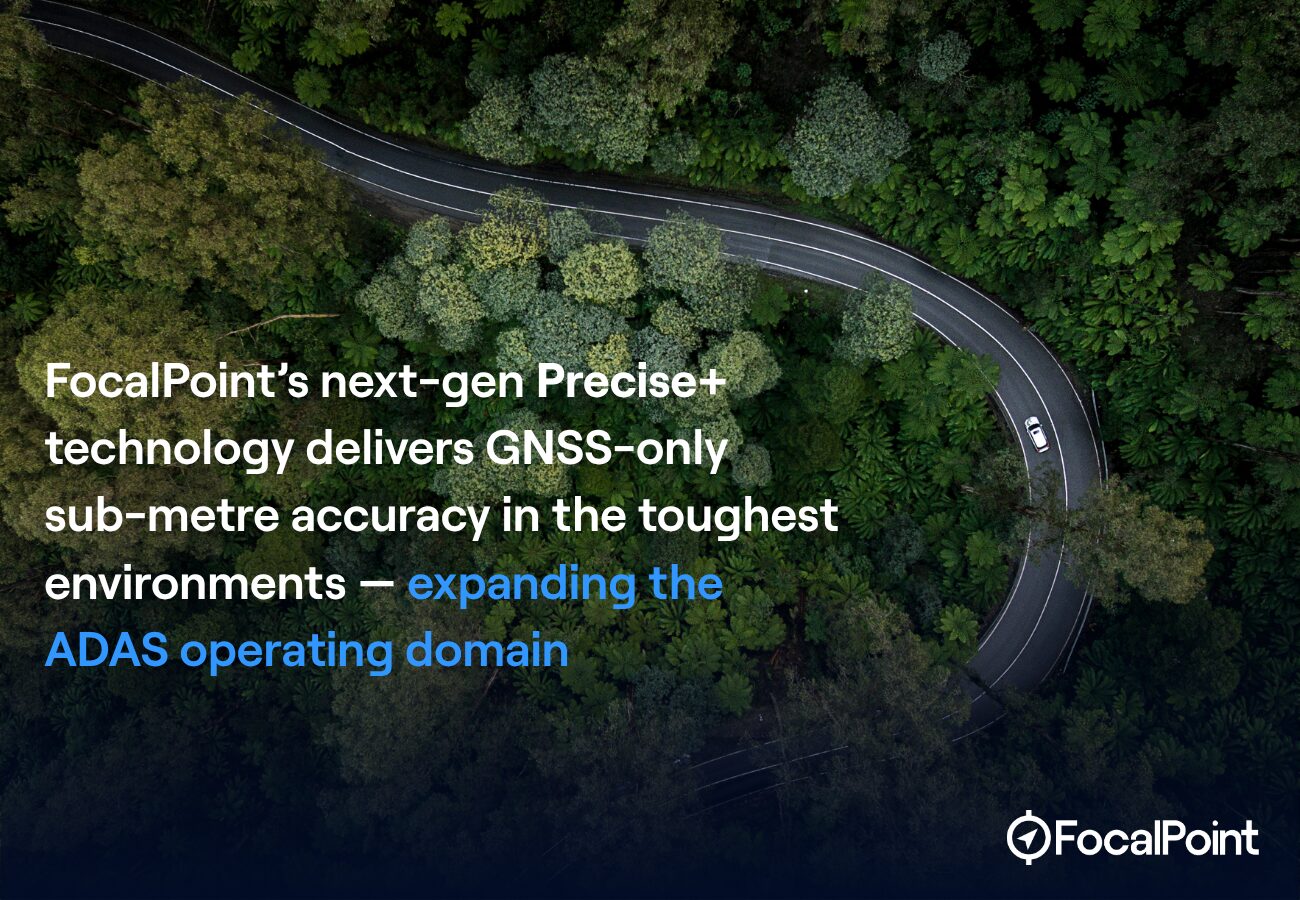
FocalPoint’s Precise+ Technology: A Game-Changer for ADAS in Harsh Environments
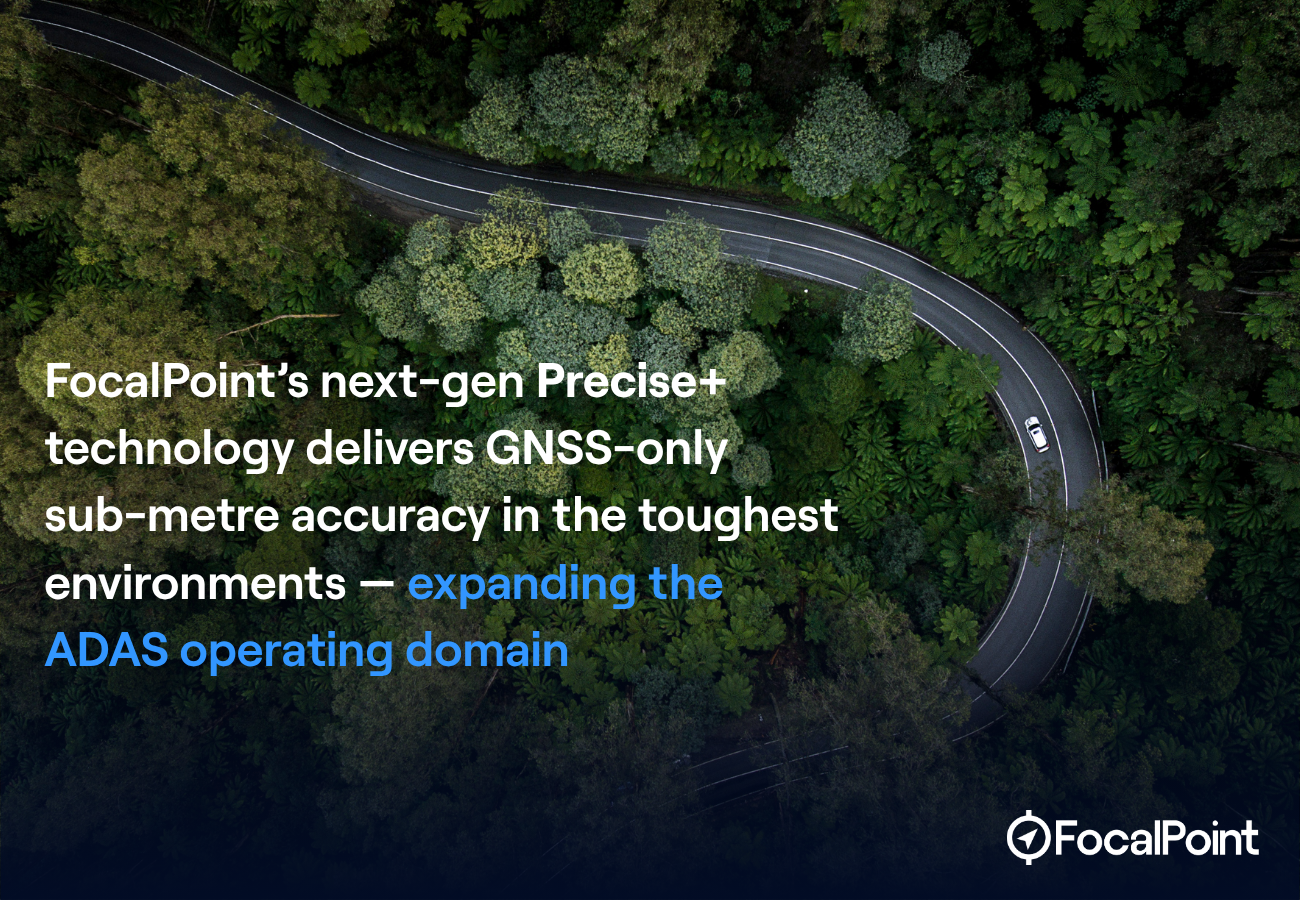
FocalPoint’s Precise+ Technology: A Game-Changer for ADAS in Harsh Environments
Is China’s new L2 ADAS standard about to wipe out Western Tier 1 suppliers? The introduction of FocalPoint’s Precise+ technology, which achieves sub-meter accuracy in harsh environments using only GNSS, is a significant advancement for autonomous driving and vehicle navigation.
Introduction
On April 26, 2026, FocalPoint, a UK-based GNSS enhancement software developer, unveiled its groundbreaking Precise+ technology at the European Navigation Conference 2026 in Vienna. This innovative solution addresses a critical issue in high-precision positioning: maintaining sub-meter accuracy in challenging environments where traditional carrier phase tracking often fails.
The Problem with Traditional GNSS Systems
Traditional GNSS (Global Navigation Satellite System) solutions, such as RTK (Real-Time Kinematic) and PPP (Precise Point Positioning), rely on continuous carrier phase locking. However, in densely populated urban areas, under tree cover, or in environments with severe multipath effects, this lock can be easily disrupted. When the lock is lost, the receiver experiences cycle slips, forcing the system to reinitialize. For applications like autonomous driving, ADAS, and robotics, these interruptions are a major barrier to widespread deployment.
How Precise+ Solves the Issue
Precise+ leverages FocalPoint’s patented Supercorrelation® platform to extend its advantages into the carrier phase domain. This technology fundamentally changes the achievable precision in complex environments. Even in the most advanced commercial receivers, real-time correction features can still result in errors of several meters. In contrast, Precise+ consistently maintains sub-meter accuracy, even in the harshest conditions.
Benchmark Testing in Thetford Forest
To validate its performance, Precise+ was tested in the dense canopy of Thetford Forest, a standard reference environment for GNSS performance. The results were impressive: at the 99th percentile, Precise+ achieved 80 cm accuracy, meaning that 99% of measurements had a positioning error below 80 cm, even in the most challenging conditions.
Pure GNSS Performance
The test results represent pure receiver performance, as no inertial sensors, dead reckoning, or sensor fusion technologies were used. This makes Precise+ a direct comparison to other GNSS solutions, and its benefits can be further enhanced by integrating it with additional technologies like sensor fusion, RTK, or PPP corrections.
Implications for the Automotive Industry
For automotive OEMs, the implications are profound. High-precision GNSS signals are essential for the safe deployment of autonomous driving and ADAS features. With Precise+, these features can be reliably deployed in a wider range of environments, not just in open skies. This breakthrough could significantly accelerate the adoption of autonomous vehicles and ADAS systems, making them more robust and reliable in diverse and challenging conditions.
Conclusion
FocalPoint’s Precise+ technology represents a significant leap forward in GNSS positioning, addressing a long-standing challenge in the industry. By providing consistent sub-meter accuracy in harsh environments, it opens up new possibilities for the automotive, robotics, and other industries that rely on precise location data. As the global market for ADAS and autonomous vehicles continues to grow, innovations like Precise+ will play a crucial role in shaping the future of mobility.
See our analysis on ADAS Technologies and the Future of Autonomous Driving.