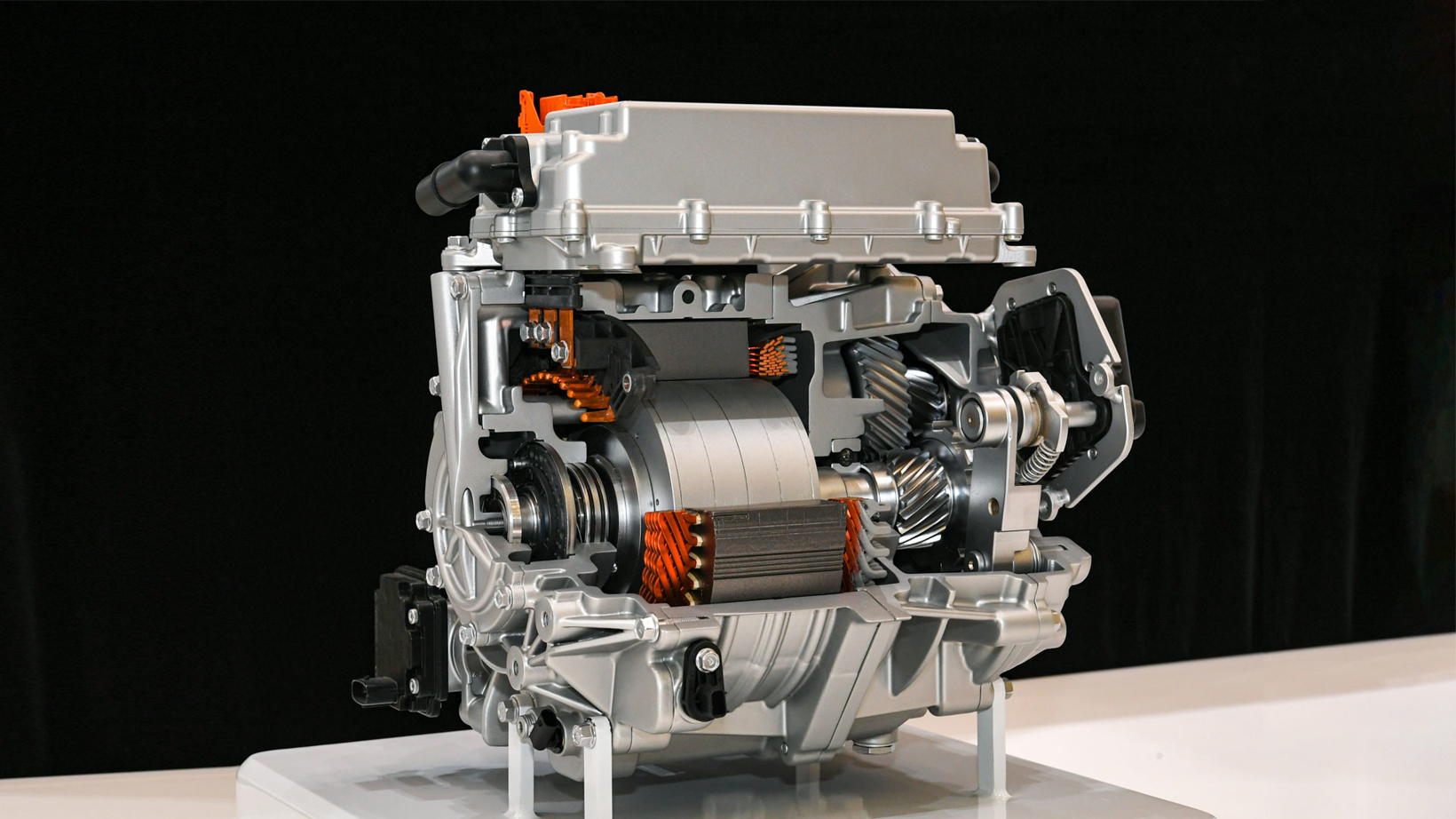
Hyundai Mobis 160 kW PE System: Standardizing EV Powertrains for Global Scale

Is a Standardized EV Motor Platform About to Reshape the Global Supply Chain?
When a Tier 1 supplier like Hyundai Mobis announces a 160 kW PE system designed as a universal platform, it signals more than just a new product — it hints at a strategic shift in how electric vehicles will be built at scale. For Western investors and auto executives tracking EV powertrain cost breakthroughs, this development deserves close attention.
Hyundai Mobis has successfully developed a 160 kW Power Electric (PE) system that can be adapted across multiple EV models, following its earlier 250 kW high-performance system. The company plans to complete a 120 kW system for small mobility platforms by the first half of 2026, creating a full lineup covering all EV segments. This modular approach could significantly reduce development costs and time-to-market for automakers — a key concern for Western OEMs racing to compete with Chinese EV leaders.
What Is the PE System and Why Does It Matter?
The PE system is the EV equivalent of an internal combustion powertrain, comprising an electric motor, inverter, and reduction gear. Hyundai Mobis has focused on standardizing and modularizing critical components such as the stator, inverter, and power module (semiconductor assembly). This allows the same basic platform to be scaled across different vehicle types — from compact cars to high-performance sedans — without costly re-engineering.
Key Performance Metrics
- Power output: 160 kW (215 hp) — suitable for most current mass-production EVs.
- Weight efficiency: Power per unit weight improved by ~16%.
- Volume reduction: Overall system size cut by nearly 20%.
- Dual-axle configuration: Installing systems on both front and rear axles doubles total power to 320 kW.
Engineering Innovations
- New cooling technology enhances motor structure and thermal management.
- Proprietary power module using advanced power semiconductors maximizes energy efficiency.
- Modular design allows easy adaptation across vehicle platforms.
This contrasts with the traditional approach where automakers collaborate with multiple suppliers to develop unique components for each model. Hyundai Mobis claims its platform-based method is more efficient and will be particularly advantageous in high-volume production as EV model proliferation accelerates.
Strategic Implications for Western Investors and OEMs
Hyundai Mobis is positioning itself as a one-stop supplier for EV powertrains, potentially disrupting the current supply chain where automakers often integrate components from various vendors. For Western OEMs like Ford, VW, or Tesla, this could offer a cost-effective path to electrification — especially if they seek to reduce reliance on Chinese battery and motor suppliers.
Recent reports from Reuters confirm that Hyundai Motor Group is accelerating its EV platform sharing strategy, and the Mobis PE system aligns with this push. Meanwhile, Bloomberg has noted that standardized EV platforms could cut development costs by up to 30% — a critical factor as price competition intensifies, particularly against Chinese OEMs like BYD and Xiaomi.
However, some analysts caution that standardization may limit differentiation between brands. As noted by Automotive News, the success of this approach depends on whether automakers are willing to adopt a ‘one-size-fits-most’ strategy for their EV lineups.
Timeline and Future Outlook
Hyundai Mobis has already completed development of the 250 kW system (2025) and the 160 kW system. The 120 kW system for small EVs is expected by mid-2026. This will give the company a complete product range covering high-performance, mainstream, and entry-level segments.
For Western investors, the key takeaway is that Hyundai Mobis is betting on platform standardization as a competitive advantage — a move that could lower barriers for new EV entrants and pressure traditional suppliers who rely on custom-engineered components. Those tracking the EV supply chain efficiency should watch for adoption by global automakers outside the Hyundai Motor Group.
See our analysis on How Platform Standardization Is Driving Down EV Costs.