New Kevlar-Based Composite for EV Battery Enclosures: A Game-Changer in Structural and Functional Integration

New Kevlar-Based Composite for EV Battery Enclosures: A Game-Changer in Structural and Functional Integration
Is the future of electric vehicle (EV) battery enclosures about to get a significant upgrade with multifunctional materials? The answer is a resounding yes, thanks to a groundbreaking development from the IMDEA Materials Institute.
The Breakthrough
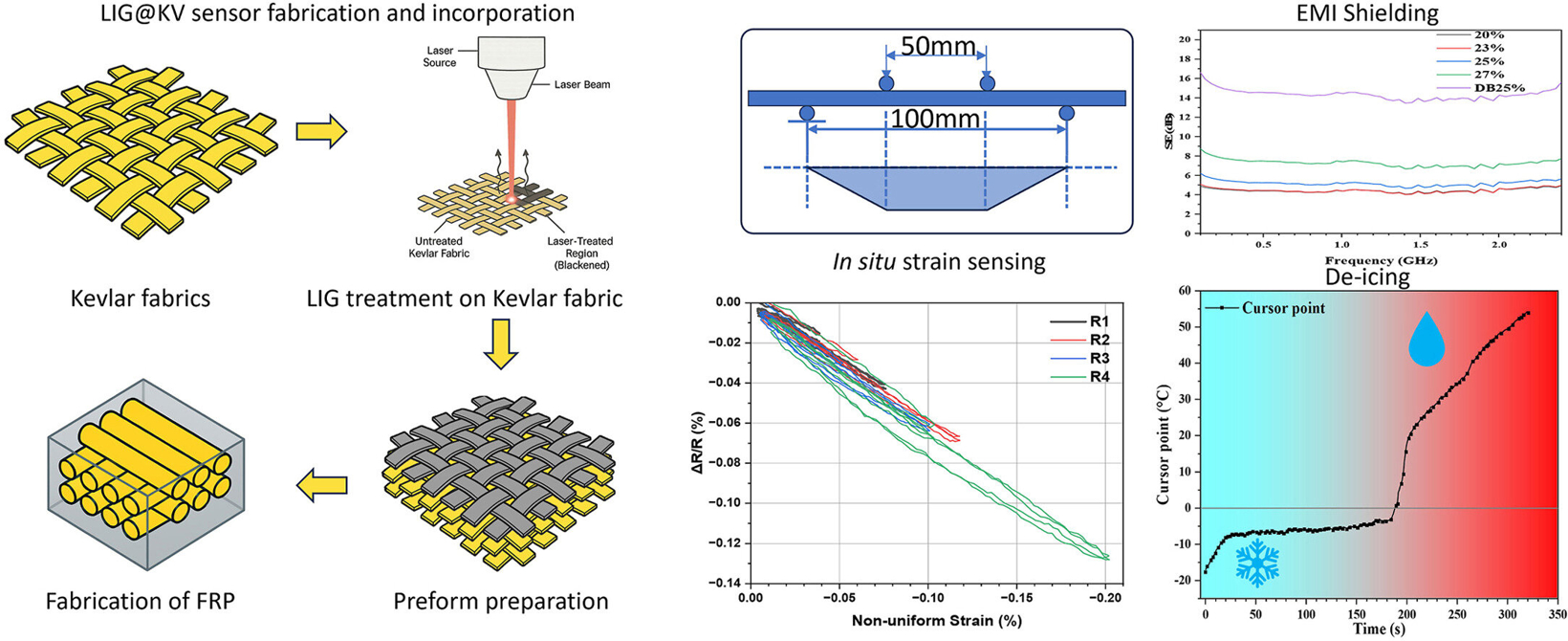
Researchers at the IMDEA Materials Institute in Madrid have developed a multifunctional Kevlar-based composite material that integrates structural performance with advanced features such as strain sensing, electromagnetic interference (EMI) shielding, and de-icing. This innovative material, described in the journal Composites Part B: Engineering, could revolutionize the design and functionality of EV battery enclosures.
Manufacturing Process
The team used a scalable manufacturing process to generate laser-induced graphene (LIG) directly on Kevlar fiber fabric. This LIG was then integrated into advanced composite laminates using a vacuum infusion process. The result is a lightweight, high-strength material that can be produced at an industrial scale, making it ideal for applications in electric mobility and wind turbines.
Key Features and Benefits
- Strain Sensing: The composite material can monitor deformation through a piezoresistive response, with a gauge factor close to 1.0, allowing for real-time health monitoring of the battery enclosure.
- EMI Shielding: The material provides effective EMI shielding, which is crucial for protecting sensitive electronic components in EVs.
- De-Icing: The composite can reach temperatures above 50°C under low voltage, enabling it to remove ice layers within five minutes, even at -40°C. This feature enhances the safety and reliability of EVs in cold climates.
Industrial Challenges and Future Prospects
While the results are promising, several challenges remain before the material can be fully industrialized. These include the need for precise thickness control in the resin infusion process, the development of more accurate theoretical models, and the stability of electrical contacts under high cyclic mechanical fatigue conditions. The research team is committed to addressing these issues by optimizing the LIG morphology and developing robust, structurally embedded electrodes.
Global Context and Implications
This development aligns with the broader trend of integrating multiple functionalities into single components to reduce weight and complexity in EVs. Recent articles from Reuters and Bloomberg highlight the growing demand for advanced materials in the EV industry, driven by the need for improved performance and cost efficiency. The new Kevlar-based composite not only meets these demands but also sets a new standard for multifunctionality.
For Western investors and auto industry professionals, this breakthrough represents a strategic pivot in the EV market. By adopting these advanced materials, companies can gain a competitive edge, ensuring their products are not only safer and more reliable but also at the forefront of technological innovation.
See our analysis on Advanced Materials in EVs for more insights into how these innovations are shaping the future of the automotive industry.