7 Seconds to Inferno: Shanghai Li Auto Fire Exposes Glaring Questions About EV Safety & Transparency
The dramatic footage of a Li Auto electric vehicle erupting in flames on a Shanghai street is more than just shocking; it’s a terrifying glimpse into the potential speed and ferocity of EV battery fires. Analysis shows sparks appeared just seven seconds before the vehicle became engulfed in flames, with the fire intensifying uncontrollably merely four seconds later. While the two occupants thankfully escaped, conflicting accounts of their exit and swirling rumors surrounding the incident raise critical questions about vehicle safety standards, corporate transparency, and the intense pressures within China’s booming EV market.
This isn’t just another car fire. It forces us to confront uncomfortable truths and ask: In the race for features and performance, is fundamental safety taking a back seat?
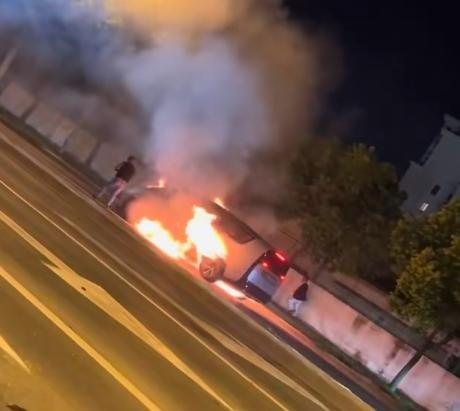
⏱️ The Terrifying Timeline: Seconds from Sparks to Inferno
Let’s revisit the chilling timeline derived from video analysis:
- Sparks to Flames (Approx. 7 seconds): Initial sparks appear under the vehicle. Within about seven seconds, visible flames erupt.
- Flames to Uncontrollable Blaze (Approx. 4 seconds): The fire rapidly escalates, engulfing the side of the vehicle in a jet-like inferno.
[Image Placeholder: Still image from the Li Auto fire video] Alt Text: Li Auto Fire engulfs vehicle rapidly on Shanghai street.
For occupants inside, especially if unaware of the initial sparks under the chassis, the reaction time from noticing flames to the fire becoming overwhelming would have been terrifyingly short – mere seconds. The video shows occupants escaping in a manner described as “tumbling and crawling (连滚带爬),” underscoring the panic and urgency of the situation.
Contradicting Narratives: Did the Doors Open or Not?
A major point of contention centers on the vehicle’s doors, specifically the electric rear doors.
- Li Auto’s Official Statement: “At the time of the incident, the vehicle doors opened smoothly, and the driver and another passenger safely exited the vehicle and are resting at home.”
- Owner’s Lawyer’s Statement: “The client (owner) was in the second-row seat at the time. The rear electric door could not be opened immediately. The client successfully escaped through the front passenger door.“
Li Auto’s statement claims doors opened “smoothly,” but crucially doesn’t specify which doors. The lawyer’s statement directly contradicts this by asserting the rear electric doors failed, forcing escape via the front. This discrepancy casts serious doubt on the completeness and transparency of Li Auto’s initial response. Were all doors functional, or only some? Why the conflicting accounts?
(Internal Link Placeholder 1: Link to a previous post discussing EV safety features)
Rumors, Denials, and the Blame Game
In the aftermath, various unverified rumors spread rapidly online, attempting to shift blame away from the vehicle itself:
- Claims the battery pack had prior impact damage.
- Suggestions the owner made unauthorized modifications (to a small auxiliary battery).
- Allegations the car had existing faults the owner ignored, despite a tow truck being called earlier.
The owner, via their lawyer, has strongly denied all these claims as “untrue statements (均为不实言論).” This raises further questions: Who benefits from these rumors? Are they attempts to discredit the owner and protect the manufacturer, or perhaps something more complex? The intense rivalry in the Chinese EV market often fuels speculation and misinformation campaigns. A thorough, independent investigation is needed not only into the fire’s cause but also into the origin of these potentially damaging rumors.
The Critical Question: Did This Battery Meet Safety Standards?
Beyond the conflicting statements and rumors lies the most crucial question: Did the battery in this specific vehicle meet required safety standards?
This is particularly relevant given China’s evolving and increasingly stringent regulations:
- Previous Standard (GB 38031-2020): Required batteries to prevent fire or explosion for at least 5 minutes after thermal runaway initiation.
- Current, Stricter Standard (GB 38031-2025): Implemented on July 1, 2025 (and thus active now), this standard demands much more:
- No fire or explosion for 2 hours after thermal runaway.
- No smoke intrusion into the passenger cabin.
- Battery pack external temperature must remain below 60°C.
Li Auto and its battery supplier, CATL (maker of the highly-regarded Qilin battery reportedly used), have promoted their batteries as meeting and exceeding standards. However, the Shanghai incident, with its rapid fire escalation, starkly challenges these claims, at least for the specific unit involved. Did this battery meet the older 5-minute standard? More importantly, did it come close to meeting the currently enforced, much stricter GB 38031-2025 standard? A transparent investigation must provide answers.
(Internal Link Placeholder 2: Link to a previous post discussing battery technology trends) (External Link Placeholder 1: Link to an official source or reputable report on GB 38031-2025)
Conclusion: Safety Must Be the Non-Negotiable Foundation
The Shanghai Li Auto fire is a harsh reminder that amidst the excitement surrounding advanced features like autonomous driving, large screens, and luxurious interiors, the fundamental promise of safety must remain paramount.
The conflicting reports about the doors and the rapid fire spread demand a fully transparent, independent investigation. Li Auto, CATL, and regulatory bodies need to provide clear answers, not just reassurances. Was this an isolated incident, or does it point to broader concerns? Did the vehicle meet the safety standards it was certified for, especially the stringent GB 38031-2025 regulations now in effect?
For consumers, it highlights the need for continued vigilance and awareness. For manufacturers, it’s a critical test of their commitment to safety engineering and ethical crisis communication. In the hyper-competitive EV landscape, trust, once lost, is incredibly difficult to regain. Safety cannot be a luxury feature; it must be the bedrock upon which the entire electric mobility future is built.