NSK and Delta Electronics Partner to Build Next-Gen Robot Joint Modules: Implications for Western EV Supply Chains

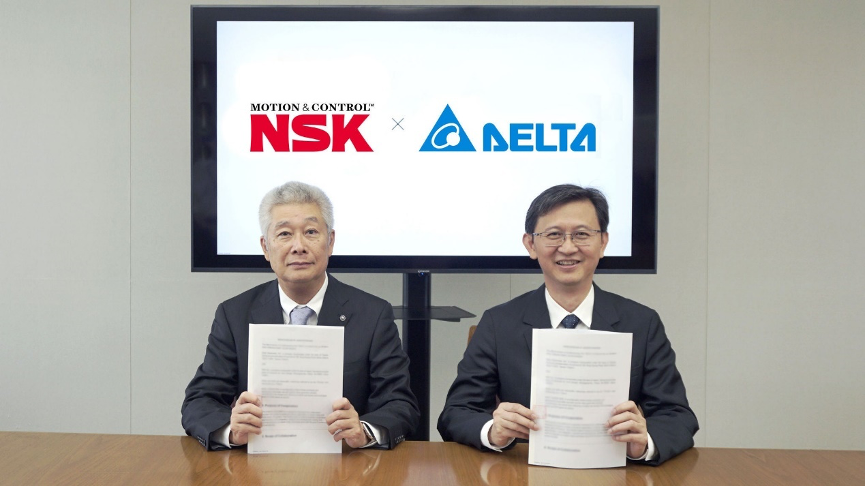
Could a Japanese bearings giant and a Taiwanese power-electronics leader reshape the future of automotive assembly lines and even autonomous driving hardware? On May 15, 2026, NSK Ltd. and Delta Electronics announced a strategic partnership to co-develop next-generation robot joint modules—specifically rotary and linear actuators—targeting humanoid and collaborative robots (cobots). This collaboration signals a major shift from component suppliers to integrated motion solution providers, with direct implications for Western automakers and Tier 1 suppliers.
What the Partnership Entails
Under a signed Memorandum of Understanding (MoU), NSK contributes deep expertise in bearings, ball screws, and mechatronics honed from decades in automotive and industrial applications. Delta Electronics brings high-performance servo drives, motor control, and power management technology. Together, they aim to create compact, high-power-density actuator modules that can reduce deployment time for robots in automotive welding, final assembly, and precision assembly tasks.
Key Technical Details
- Rotary Actuators: For robotic rotational joints (e.g., arms, wrists).
- Linear Actuators: For linear motion (e.g., sliding axes, lifts).
- Integration: Combines NSK’s mechanical precision with Delta’s electronic control for optimized dynamic response and power density.
- Target Applications: Humanoid robots, cobots, and automated guided vehicles (AGVs) in automotive plants.
Strategic Context: NSK’s Robotics Pivot
NSK established a dedicated Robotics Business Division in March 2026, signaling a long-term strategic commitment to robotics as a growth pillar. The company has also partnered with RT Corporation to expand its ecosystem. This move is part of a broader trend where traditional automotive component suppliers are pivoting to robotics and autonomous driving hardware to capture new revenue streams as EV adoption matures.
Why This Matters for Western Investors
For Western portfolio managers and strategy directors, this partnership is a leading indicator of two things: first, the accelerating automation of Chinese EV factories (which are already among the most automated globally), and second, the growing convergence between automotive-grade components and advanced robotics. If NSK and Delta succeed, their modular actuators could become a standard building block for next-generation assembly lines, potentially lowering costs and improving flexibility for OEMs like Tesla, Ford, and VW.
Competitive Landscape and Related Developments
This announcement aligns with recent moves by other suppliers. For example, Reuters reported that ABB and Fanuc are also investing in modular robot joints for automotive use. Meanwhile, Chinese players like Inovance and Estun Automation are aggressively expanding their servo motor and actuator offerings. The key differentiator for NSK-Delta is the combination of high-precision mechanical components (NSK’s core) with advanced power electronics (Delta’s strength), which could yield superior performance in speed and accuracy.
Conflict or Confirmation?
While some analysts argue that the robot joint market is already crowded, the NSK-Delta collaboration stands out due to the vertical integration of two well-established industrial companies. Confirmation of the trend comes from Bloomberg’s coverage of rising demand for automation in Chinese EV plants, where labor costs are rising and quality consistency is paramount.
Potential Impact on Western Supply Chains
If these modules achieve mass production, Western Tier 1 suppliers may face pressure to develop similar integrated solutions or risk losing business in the fast-growing Chinese EV market. The partnership also highlights the strategic importance of Taiwan-based Delta Electronics as a bridge between Japanese precision engineering and the broader Asian automation ecosystem.
Actionable Insights for Decision-Makers
- Investors: Watch for NSK and Delta’s prototype demonstrations and customer adoption timelines. Early success could signal a new supplier benchmark.
- Auto Industry Pros: Evaluate whether your current robot suppliers offer modular, integrated actuator solutions. This partnership may accelerate the shift away from discrete component sourcing.
- Tech Journalists: This story underscores the growing importance of ‘China-plus-one’ supply chain strategies, as Japanese and Taiwanese firms collaborate to serve the Chinese EV market.
Internal Link Suggestion: For a deeper dive into how Chinese EV makers are automating their factories, see our analysis on Chinese EV Factory Automation Trends in 2026.