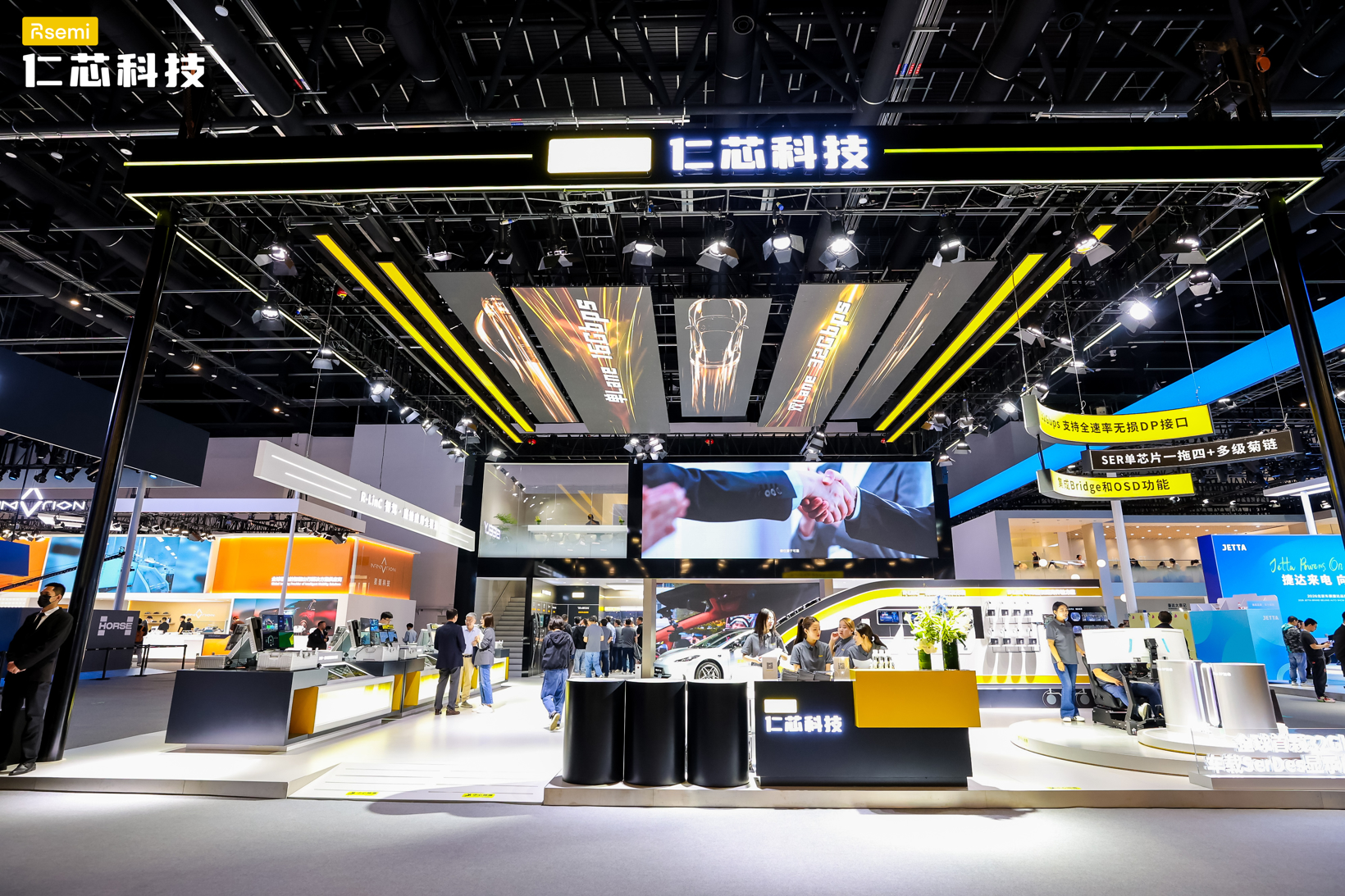
How Chinese Chipmaker Renxin is Revolutionizing In-Car Data Transmission

How Chinese Chipmaker Renxin is Revolutionizing In-Car Data Transmission
Is China’s new L2 ADAS standard about to wipe out Western Tier 1 suppliers? The rapid advancement in smart cockpit and autonomous driving technologies is pushing the boundaries of in-vehicle data transmission. As the number of in-car screens and sensors increases, the demand for high-speed, stable data transfer has become a critical challenge. Enter Renxin Technology, a Chinese chipmaker that is leading the way with innovative solutions.
The Growing Demand for High-Speed Data Transfer
The proliferation of multi-screen displays and advanced driver assistance systems (ADAS) in modern vehicles is driving an unprecedented need for high-speed data transmission. With the number of in-car screens increasing from one or two to five or six, and resolutions moving from 2K to 4K and even 8K, the amount of data that needs to be processed and transmitted is skyrocketing. Similarly, the number of ADAS cameras is increasing from a few to over a dozen, with pixel counts rising from 2 million to 8 million. This surge in data volume requires robust, high-bandwidth, and low-latency communication solutions.
Current Limitations and Industry Challenges
Currently, the most common in-vehicle SerDes (Serializer/Deserializer) solutions operate at 6-12 Gbps, with a primary focus on 55nm technology. These solutions are reaching their performance limits, especially as the industry moves towards 4K/8K displays and higher refresh rates. The existing solutions struggle to meet the growing demands of high-resolution displays and advanced ADAS systems, creating a significant gap in the market.
Renxin’s Breakthrough Solutions
Renxin Technology, a Chinese chipmaker, is addressing these challenges with innovative and high-performance SerDes chips. In 2024, Renxin introduced its 16Gbps series, which features high-integration interface solutions that simplify network topology and reduce the number of chips, cables, and connectors. For example, the R-LinC solution achieves efficient 2-to-1 integration, while the de-serializer chip offers 6-in-1 aggregation with bypass functionality, significantly reducing system complexity and cost.
Advancing to 32Gbps: A Game-Changer
At the 2026 Beijing Auto Show, Renxin unveiled its 32Gbps display-end series chips. Unlike typical solutions that require signal compression to support 24-27 Gbps, Renxin’s 32Gbps chips support full-rate, lossless DisplayPort (DP) interfaces. This means that high-quality, uncompressed video can be transmitted without any degradation in picture quality. Additionally, a single chip can drive up to four high-resolution displays, making it a powerful and versatile solution for next-generation vehicles.
Industry Impact and Future Prospects
Renxin’s advancements in SerDes technology are not only meeting the current demands but also setting the stage for future innovations. By providing high-speed, stable, and cost-effective solutions, Renxin is positioning itself as a key player in the global automotive semiconductor market. This breakthrough is particularly significant for Western investors and auto industry professionals, as it offers a glimpse into the future of in-vehicle data transmission and the potential for Chinese companies to lead the way in this critical area.
Why This Matters for Western Investors and Auto Industry Professionals
- Stay Ahead of the Curve: Understanding the latest developments in in-vehicle data transmission is crucial for staying ahead of the competition. Renxin’s solutions provide a clear indication of the direction the industry is heading.
- Strategic Insights: The ability to transmit high volumes of data efficiently and reliably is essential for the success of smart cockpits and ADAS. Renxin’s innovations offer valuable insights into the technical and strategic implications for the automotive industry.
- Competitive Benchmarking: By monitoring the progress of companies like Renxin, Western OEMs and Tier 1 suppliers can better understand the competitive landscape and adjust their strategies accordingly.
For more in-depth analysis on the Chinese EV market and the latest technological advancements, see our analysis on the Chinese EV market.