Rivian Fail-Safe Braking Patent: Engineering Redundancy for the Robotaxi Era
Rivian Fail-Safe Braking Patent: Engineering Redundancy for the Robotaxi Era
What happens when a fully autonomous electric vehicle loses its primary braking system at highway speeds with no safety driver behind the wheel? This nightmare scenario has kept regulators and fleet operators awake at night, but Rivian’s fail-safe braking patent reveals an elegant solution that could accelerate the commercialization of SAE Level 3 autonomous fleets while keeping hardware costs in check.
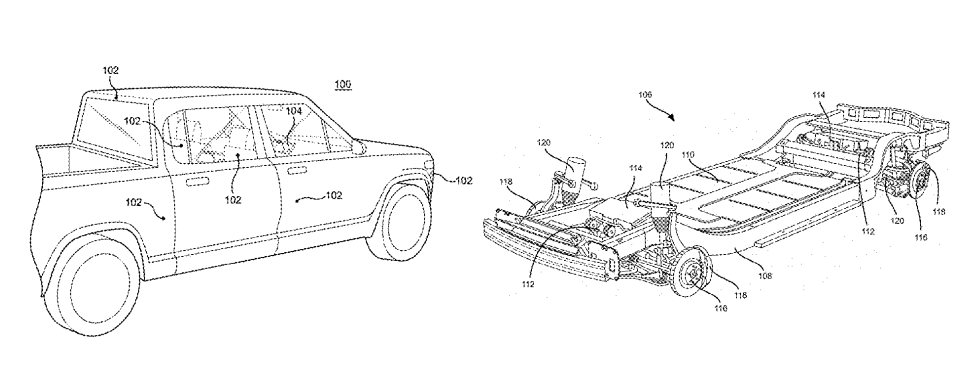
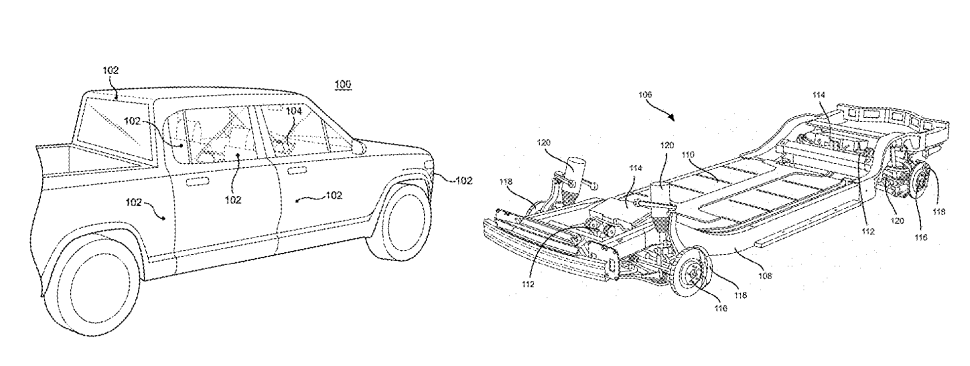
According to documents published by the United States Patent and Trademark Office (USPTO) on April 9, 2026, the California-based EV manufacturer has developed a fail-safe braking architecture that repurposes existing electronic parking brake systems as emergency stopping mechanisms. This approach eliminates the need for expensive redundant brake actuators while meeting stringent safety requirements for unsupervised autonomous operation.
The Technical Breakthrough: Dual-Path Architecture
Most autonomous vehicle developers address brake redundancy by installing duplicate hydraulic systems or additional calipers, adding significant weight, cost, and complexity. Rivian’s innovation lies in leveraging hardware already present in every vehicle: the electronic parking brake (EPB).
Intelligent Failover Logic
The patent describes a sophisticated monitoring network where the autonomous driving controller continuously polls three critical systems: regenerative braking, hydraulic friction brakes, and the electronic parking brake. When the system detects component failure, communication interruption, or voltage drops, it executes a seamless transition.
- Dual Voltage Sources: Two independent power supplies ensure the parking brake remains operational even if the primary electrical system fails
- Dual CAN Bus Architecture: Communication redundancy via dual Controller Area Network buses prevents single-point communication failures
- Dual Motion Controllers: Parallel vehicle motion controllers provide hot standby capability, with automatic takeover if the primary unit reports faults
When primary braking systems function normally, the parking brake assists during controlled stops. In catastrophic failure scenarios where both regenerative and friction braking are lost, the parking brake alone executes a full controlled stop while the steering system guides the vehicle to the roadside.
Why This Matters for Western Investors
For investors evaluating Rivian’s path to profitability, this patent signals a critical pivot toward high-margin fleet services. The company has long hinted at entering the robotaxi market, but regulatory approval requires demonstrating fail-operational capabilities without human backup drivers.
Cost Efficiency Enables Scale
Traditional redundancy approaches can add $2,000-$4,000 per vehicle in additional hardware. By utilizing existing EPB systems, Rivian achieves SAE Level 3 compliance at a fraction of the cost, making robotaxi fleet economics viable. Bloomberg reports that Rivian aims to launch commercial autonomous services by 2028, positioning this patent as foundational intellectual property.
The Amazon Connection
Notably, the patent includes front-wheel-drive (FWD) schematic configurations, indicating application beyond Rivian’s consumer R1T and R1S models. This technology directly applies to the electric delivery vans co-developed with Amazon, suggesting Rivian is preparing for autonomous last-mile logistics, a market projected to exceed $50 billion by 2030.
Competitive Landscape: How Rivian Compares to Chinese EV Leaders
While Rivian develops its proprietary safety systems, Chinese EV manufacturers have taken different approaches to autonomous redundancy. Baidu’s Apollo and XPeng’s XNGP rely heavily on LiDAR and camera fusion with redundant computing, but often require additional hardware layers for mechanical redundancy.
Rivian’s software-defined approach to existing hardware represents a distinctly Western engineering philosophy: maximizing software leverage over hardware proliferation. This aligns with Tesla’s strategy but differs from BYD’s DiPilot system, which utilizes domain controller redundancy with separate brake-by-wire systems.
See our analysis on how Chinese EV makers are approaching SAE Level 3 certification costs to understand why Rivian’s parking brake solution offers a potential cost advantage in global markets.
Implications for the R2 and R3 Lineup
The patent explicitly covers rear-wheel-drive (RWD), all-wheel-drive (AWD), and front-wheel-drive (FWD) configurations. This versatility supports Rivian’s upcoming R2 SUV (scheduled for 2026 production) and R3 crossover (2027), which will offer single-motor RWD variants alongside dual and tri-motor AWD options.
By integrating fail-safe braking across all powertrain variants from launch, Rivian ensures every vehicle produced can potentially join autonomous fleets without retrofitting, creating a unified hardware platform that supports both consumer sales and future robotaxi deployment.
Conclusion: A Patent with Portfolio Implications
Rivian’s fail-safe braking patent represents more than a safety feature; it is a commercial enabler. By solving the redundancy problem without redundant hardware, Rivian reduces the capital intensity required for autonomous fleet scaling while meeting regulatory safety thresholds.
For Western investors monitoring the autonomous vehicle transition, this development positions Rivian alongside Tesla and Waymo as a serious contender in self-driving logistics and ride-hailing. The integration with Amazon’s delivery ecosystem provides an immediate commercialization path that competitors lack, potentially accelerating the timeline from patent to profit.
As the industry moves toward SAE Level 3 standardization, Rivian’s elegant engineering solution may prove more valuable than the sum of its parts, offering a template for cost-effective autonomy that balances safety with scalability.