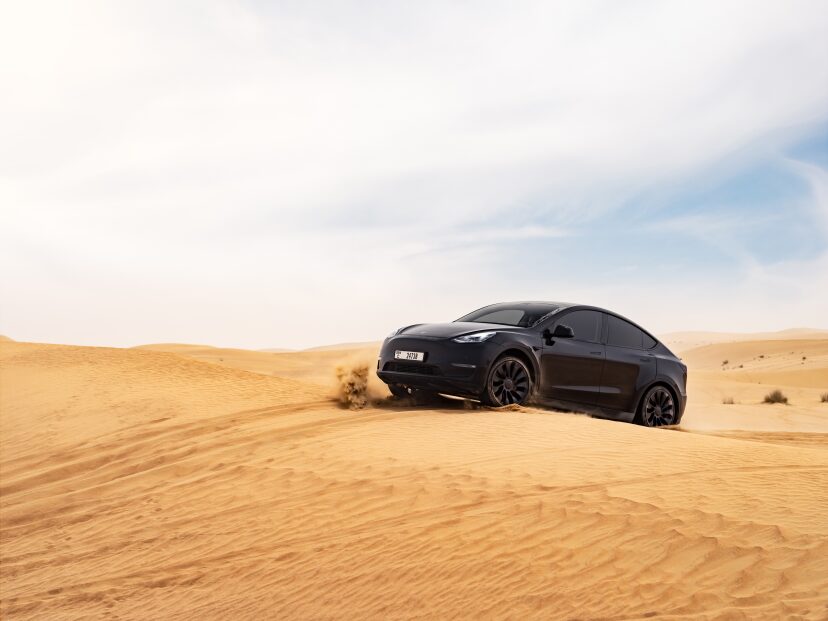
Tesla California Registrations Plummet 24%: Hybrid Resurgence Threatens EV Pure-Play Strategy

Tesla California Registrations Plummet 24%: Is the EV Darling Losing Its Golden State Halo?
What happens when the world most valuable automaker loses a quarter of its sales in its own backyard? According to the California New Car Dealers Association (CNCDA), Tesla California registrations plummeted 24% year-over-year in Q1 2024—a seismic shift that signals far more than a seasonal slump. For Western investors and OEMs betting on pure-electric futures, this is not merely a Tesla problem. It is a structural market alarm that demands immediate strategic recalibration.
The California Bellwether: Why Tesla Home Turf Matters
California is not simply Tesla largest U.S. market; it is the world most important electric vehicle laboratory outside China. When adoption curves flatten here, global markets listen. Data from Experian Automotive, cited by CNCDA, reveals a stark divergence: zero-emission vehicles captured less than 14% of California new car market in Q1, while hybrid powertrains surged to approximately 21% market share.
This represents a fundamental consumer pivot away from the pure-EV thesis. Despite Tesla Model Y retaining its crown as California best-selling vehicle overall—followed closely by the Toyota Camry Hybrid—the underlying trajectory suggests growing fatigue with battery-electric compromises regarding charging infrastructure and real-world range.
The Hybrid Middle Ground
Western consumers, scarred by range anxiety and charging deserts, are increasingly viewing hybrids as the pragmatic bridge technology. Unlike China rapid EV adoption—fueled by dense urban charging networks and aggressive state subsidies—American suburban sprawl demands flexibility that pure BEVs struggle to provide at mass-market price points.
Recent industry analysis from Reuters confirms this pattern extends beyond California, with U.S. hybrid inventory turning significantly faster than electric equivalents nationwide. Bloomberg data further indicates that Tesla aging Model 3 and Model Y lineup faces intensifying competition not just from Detroit electrified offerings, but from an impending wave of Chinese EVs that threaten to undercut Western pricing by 30-40%.
Policy Whiplash: Newsom $200M Gambit
Recognizing the existential threat to California 2035 ICE ban mandate, Governor Gavin Newsom has proposed a $200 million state-level subsidy program. This desperate fiscal measure attempts to offset the reduction in federal EV tax credits, which have begun phasing out for many Tesla models as price caps and domestic content requirements tighten.
However, subsidizing demand cannot resolve supply-side lethargy. The registration collapse suggests that financial incentives alone cannot overcome charging infrastructure friction and lifestyle incompatibility for apartment dwellers and long-distance commuters.
Strategic Implications: The Western OEM Valuation Crisis
For institutional investors, the 24% contraction carries valuation-multiple implications. Tesla premium valuation rests on growth narratives assuming exponential EV adoption curves. When the bellwether market contracts instead, those multiples compress—affecting not just Tesla, but legacy OEMs like GM and Ford that have staked billions on EV transitions.
[INTERNAL_LINK: Chinese EV makers global expansion strategy and Western market entry threats]
The contrast with China market could not be starker. While California BEV penetration stagnates below 14%, China new energy vehicle penetration has exceeded 50% in recent months, driven by BYD aggressive hybrid-electric strategy. This divergence suggests Western markets face a prolonged valley of death between early adopters and mass-market pragmatists, fundamentally threatening pure-EV business models.
Tier 1 Supplier Stranded Assets
Beneath the OEM headlines, the supplier ecosystem faces existential recalibration. If hybrids dominate the Western transition until 2030—a scenario increasingly likely—Tier 1 suppliers that pivoted entirely to BEV architectures face stranded assets. The California data suggests demand for internal combustion components, transmission systems, and hybrid battery management will persist far longer than Wall Street EV-only models projected, benefiting Japanese and Korean suppliers with strong hybrid portfolios over Silicon Valley tech-focused vendors.
Conclusion: A Strategic Inflection Point
Tesla California stumble is not a death knell, but it is a reality check. The registration plummet coinciding with hybrid resurgence indicates Western EV adoption follows a radically different S-curve than China explosive trajectory. For investors and OEMs, the message is clear: diversification across powertrain technologies is not conservative hedging—it is survival.
As California goes, so goes the nation. And right now, California is choosing the pragmatic middle ground over electric idealism, rewriting the timeline for automotive electrification in the West.