Why Bosch, Schaeffler, and Valeo Are Betting Big on Embodied AI: A Strategic Shift for Western Tier 1 Suppliers

Is the next frontier of automotive innovation no longer the car itself? A wave of Western Tier 1 suppliers—including Bosch, Schaeffler, Valeo, and Aptiv—is aggressively pivoting toward embodied AI, a technology that merges physical robotics with advanced artificial intelligence. This isn’t a fleeting trend; it’s a calculated strategic repositioning that could redefine the global supply chain for decades. For Western investors and auto industry professionals, understanding this move is key to capturing alpha in the evolving mobility ecosystem.
The Strategic Pivot: From Auto Parts to Embodied AI
According to a recent report by Gasgoo (via TheSinoReport.com), these traditional automotive suppliers are not simply chasing hype. Instead, they are leveraging decades of industrial expertise to become key players in the embodied AI value chain. This shift represents a move from being core players in the automotive supply chain to becoming key definers of the embodied AI ecosystem.
Bosch: Building a Closed-Loop Verification Model
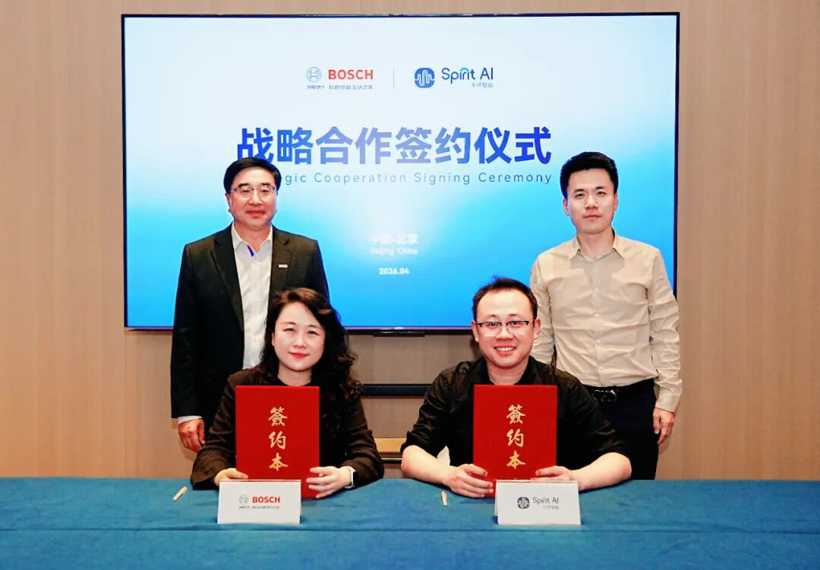
Bosch has been the most aggressive. Through its venture arm, Bosch has invested in multiple robotics startups, including Lingong Robot, InTime Robot, and Fa Robot. It has also established dedicated entities like Bosch Yuanchuang and a joint venture with Galaxy General (Boyin Hechuang) to commercialize embodied AI robots. The strategy is clear: use its own factories and logistics centers as a testing ground, creating a closed-loop verification cycle where demand originates from its own production lines, products serve internal needs first, and then are scaled externally. This solves the classic ‘cold start’ problem for new technologies.
Schaeffler: Targeting 10% Revenue from Humanoid Robots by 2035
Schaeffler has set an audacious goal: by 2035, it aims to deploy thousands of humanoid robots in its global factories and generate 10% of total revenue from the embodied AI sector. In February 2025, it established a dedicated robotics company in China to focus on core components and subsystems. It has also partnered with Leju Robot and Luoshi Robot to push humanoid robots toward mass industrial deployment. This is a classic ‘picks-and-shovels’ strategy—supplying the critical hardware that enables the AI revolution.
Valeo and Aptiv: Joining the Race
Valeo and Aptiv are also making moves. ZF LIFETEC and Oumowei have partnered with Wujie Power to explore embodied AI in advanced manufacturing. This collective rush indicates that the industry sees embodied AI not as a distant science project, but as a near-term business opportunity.
Why This Matters for Western Investors and Analysts
This strategic pivot is a signal for several key trends:
- Diversification Beyond Automotive: Tier 1 suppliers are hedging against automotive market saturation by entering adjacent high-growth sectors like logistics, manufacturing, and healthcare robotics.
- Leveraging Existing Strengths: These companies possess deep expertise in precision manufacturing, sensor fusion, and systems integration—skills directly transferable to embodied AI.
- China as a Test Bed: Many of these investments and partnerships are centered in China, which offers a fast-paced, high-volume manufacturing environment ideal for rapid prototyping and scaling.
Expert Analysis: The ‘E-E-A-T’ Perspective
This is not mere hype. A report from Reuters confirms Bosch’s deepening robotics investments, while Bloomberg highlights Schaeffler’s ambitious robotics revenue targets. The convergence of these reports validates the trend: Western Tier 1 suppliers are making sober, capital-intensive bets on embodied AI. For investors, the key is to watch which companies can successfully bridge the gap between traditional auto manufacturing and this new frontier.
Conclusion: The New Industrial Frontier
The rush of Bosch, Schaeffler, Valeo, and Aptiv into embodied AI is a watershed moment. It signals that the lines between automotive, robotics, and AI are blurring. For those tracking the Chinese EV market, this is a reminder that innovation is accelerating on multiple fronts. See our analysis on how this impacts ADAS and autonomous driving trends.