Xpeng’s Full-Stack Robotaxi: A Game-Changer in Autonomous Driving

Xpeng’s Full-Stack Robotaxi: A Game-Changer in Autonomous Driving
Is Xpeng’s full-stack, in-house production of a Robotaxi set to redefine the autonomous driving landscape?
Introduction
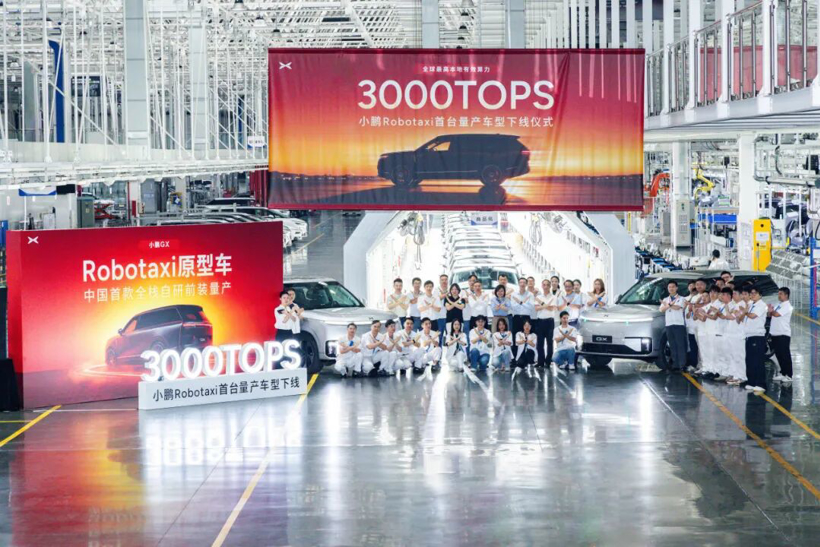
On May 18, 2026, Xpeng Group made history by rolling out its first fully self-developed and mass-produced Robotaxi in Guangzhou, China. This milestone marks the first time a Chinese automaker has achieved full-stack, in-house production of a Robotaxi, signaling a significant shift in the global autonomous driving market.
The Breakthrough
The new Xpeng Robotaxi is based on the company’s flagship model, the GX, and is equipped with four in-house developed Turing AI chips, providing an effective computing power of 3000 TOPS. It also features Xpeng’s second-generation VLA (Vehicle Learning Architecture) large model, enabling L4-level autonomous driving capabilities. This advanced technology allows the vehicle to operate without human intervention in most driving scenarios, making it a true game-changer in the industry.
Key Features
- Four Turing AI Chips: Providing 3000 TOPS of computing power.
- Second-Generation VLA Model: Enabling L4-level autonomous driving.
- Based on the GX Model: A proven and reliable platform.
Strategic Implications
This breakthrough is not just a technological achievement; it has profound strategic implications for Western auto investors and OEMs. The ability to produce a fully autonomous vehicle in-house reduces dependency on external suppliers and accelerates the commercialization of autonomous driving technologies. This move positions Xpeng as a formidable competitor in the global autonomous driving race, challenging established players like Tesla, Waymo, and Cruise.
Market Impact
- Reduced Dependency on Suppliers: In-house production reduces supply chain risks and costs.
- Accelerated Commercialization: Faster deployment of autonomous vehicles in the market.
- Competitive Edge: Xpeng gains a significant advantage over competitors who rely on third-party solutions.
Future Plans
Xpeng plans to launch three Robotaxi models by the end of 2026 and has partnered with Amap (a subsidiary of Alibaba) to introduce a ‘ride-hailing platform + front-end mass-produced Robotaxi’ cooperation model. This partnership aims to start trial operations in major cities like Guangzhou, further solidifying Xpeng’s position in the autonomous driving market.
Partnership Highlights
- Amap Partnership: Collaboration for ride-hailing services.
- Trial Operations: Initial trials in key cities like Guangzhou.
- Three Models by 2026: Expansion of the Robotaxi fleet.
Industry Context
This development aligns with the broader trend of increased investment in autonomous driving technologies. According to a recent report by Reuters, the global autonomous vehicle market is expected to grow significantly over the next decade. Xpeng’s full-stack approach sets a new standard for the industry, pushing other automakers to accelerate their own autonomous driving initiatives.
See our analysis on Autonomous Driving Trends in 2026 for more insights into the future of this rapidly evolving market.