
XPeng’s AI Smart Glass Technology Signals End for Mechanical Sunshades in EVs
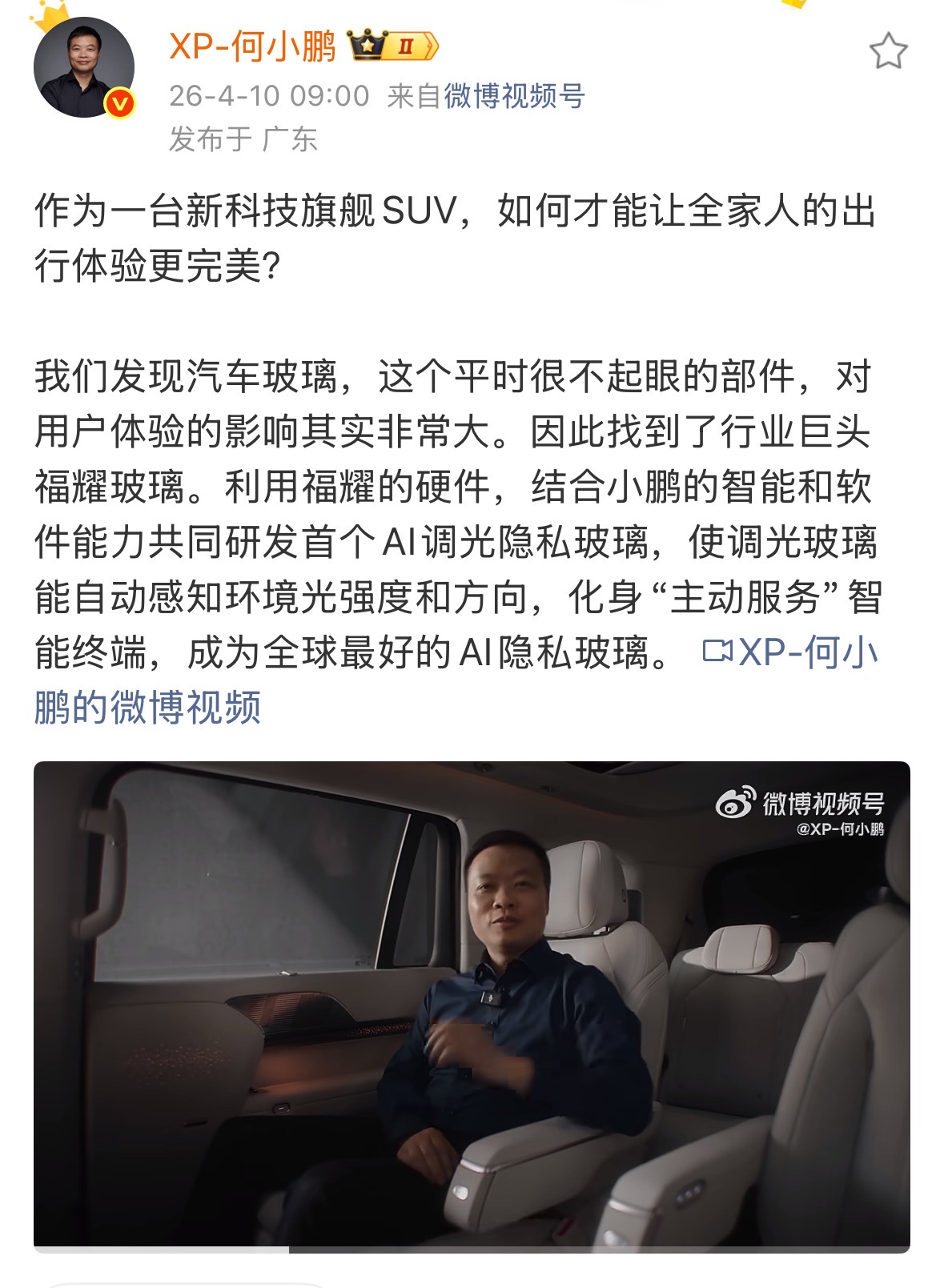
XPeng’s AI Smart Glass Technology Is Disrupting the $25 Billion Auto Supply Chain
What if your car windows were smarter than your first smartphone? That question is no longer hypothetical. XPeng Motors and Fuyao Glass Industry Group have officially commenced mass production of a breakthrough AI smart glass technology that transforms vehicle windows from passive barriers into active intelligent systems. Debuting on XPeng’s flagship GX SUV, this collaboration represents more than a fancy feature—it signals a fundamental shift in how Western automakers must rethink their supply chains or risk obsolescence.
From Aviation to Driveway: The Tech Behind the Glass
The AI dimming glass found in the XPeng GX traces its lineage to aviation cockpit technology but executes a critical evolution for automotive applications. Unlike traditional polymer-dispersed liquid crystal (PDLC) glass found in some luxury Mercedes-Benz or Tesla models—which merely toggles between opaque and transparent states—this system employs advanced LC dye liquid crystal technology.
Why LC Dye Technology Changes Everything
- Continuous Adjustment: Unlike PDLC’s binary switching, the GX’s glass offers 0% to 65% continuous gray scale tuning
- Speed: Transition from fully transparent to privacy mode takes just 0.16 seconds—literally the blink of an eye
- Clarity: Eliminates the foggy or milky appearance common in traditional smart glass when in transparent mode
- Acoustic Benefits: Provides 3 to 5 decibels better sound insulation than equivalent tempered glass
At 1.88 square meters of coverage spanning the second and third rows, this is not a proof-of-concept sunroof application but a comprehensive cabin solution.
The AI Difference: Beyond Simple Dimming
Here is where Reuters’ recent analysis of Chinese EV differentiation strategies proves prescient: Western competitors treat glass as a commodity, while XPeng treats it as a computational surface.
The system integrates directly with the vehicle’s electronic architecture and AI large models, creating what engineers call ‘glass that understands light.’ Sensors monitor external light intensity, sun angle, and driving direction while interior cameras recognize specific scenarios. When the vehicle enters a tunnel, the glass instantly clears for safety. During high-speed highway cruising, rear privacy automatically engages. The system learns user preferences, adjusting proactively rather than waiting for manual input.
Why Western Legacy Suppliers Should Worry
This development exposes a critical vulnerability in Western automotive supply chains. Companies like Saint-Gobain or Corning may dominate traditional auto glass, but they face a classic innovator’s dilemma. According to Bloomberg’s coverage of automotive component shifts, legacy suppliers remain focused on mechanical improvements while Chinese firms redefine the category entirely.
Traditional mechanical sunshades—ubiquitous in European and American luxury vehicles—suddenly appear archaic. They consume precious headroom, add mechanical failure points, and offer zero intelligent response to environmental conditions. Fixed-tint privacy glass cannot adapt to changing light conditions. Even existing electrochromic solutions from premium Western brands lack the AI integration and continuous variability that XPeng and Fuyao have achieved.
Fuyao’s Strategic Pivot: From Manufacturer to Platform
For Fuyao Group—the world’s largest automotive glass supplier serving Tesla, BMW, and Mercedes-Benz—this collaboration represents a strategic inflection point. The company’s 2025 financial disclosures reveal R&D investments exceeding 4.98 billion yuan ($685 million USD), with explicit focus on ‘expanding a single piece’s boundaries.’
Fuyao is not merely supplying a component; it is transitioning from commodity glass manufacturing to intelligent surface provision. This mirrors broader trends where Chinese suppliers vertically integrate AI capabilities that Western Tier 1 suppliers typically outsource to software firms, creating latency and compatibility issues in the development cycle.
Implications for Investors and Global Markets
For Western investors evaluating EV supply chain exposure, this technology introduces several critical considerations:
- Supply Chain Disintermediation: As Chinese OEMs develop proprietary intelligent components with domestic partners, Western brands lose access to bleeding-edge technology
- Feature Expectation Shift: Consumers will soon expect AI-integrated cabin environments as standard, not luxury options
- Margin Compression: Traditional glass suppliers face commoditization unless they develop similar AI-integration capabilities
See our analysis on China’s AI defined vehicle ecosystem and how it is reshaping global automotive standards.
Conclusion: The Window as Battleground
The XPeng GX’s AI smart glass technology is not merely an incremental improvement—it is a declaration that the cockpit intelligence war extends to every surface. For US and European automakers, the message is clear: the era of outsourcing glass to traditional suppliers and AI to Silicon Valley is ending. The winners will be those who integrate both, and currently, that integration is happening fastest in Chinese engineering centers.
As this technology scales from flagship SUVs to mass-market vehicles, Western legacy automakers must decide whether to license these innovations or risk being perceived as offering yesterday’s technology in tomorrow’s vehicles.