Battery Sovereignty Crisis: France’s €1.5B Gamble on ProLogium Solid-State Tech
Battery Sovereignty Crisis: Why France Bet €1.5 Billion on Taiwanese Solid-State Tech
What happens when a continent discovers its green industrial revolution is built on foreign silicon? The bankruptcy of Sweden’s Northvolt in late 2024 didn’t just erase Europe’s domestic battery dreams—it exposed a battery sovereignty crisis that threatens the continent’s automotive future. Now, France is making a desperate €1.5 billion gamble on Taiwanese startup ProLogium’s solid-state battery factory in Dunkirk, revealing Europe’s painful pivot from industrial autonomy to aggressive foreign recruitment.
This isn’t merely a factory announcement. It’s an admission of structural defeat—and a critical signal for Western investors monitoring the global battery supply chain realignment.
The Autopsy of Europe’s Battery Champions
For five years, Brussels and European capitals poured billions into cultivating domestic battery champions capable of challenging China’s dominance. The strategy collapsed spectacularly in 2024.
Northvolt’s Billion-Euro Failure
Sweden’s Northvolt, once hailed as Europe’s answer to CATL, filed for bankruptcy protection in November 2024 after burning through $10 billion in capital. Reuters reported that the company struggled with ‘production delays and capital constraints,’ unable to achieve scale despite securing contracts from BMW and Volkswagen.
The failure wasn’t merely operational—it was existential. Northvolt’s collapse proved that European manufacturing expertise in traditional automotive sectors doesn’t translate to the complex chemistry and scaled precision required for modern EV batteries.
Britishvolt’s Quiet Demise
Similarly, UK-based Britishvolt entered administration in early 2023 after failing to secure Series B funding. The company had promised a £3.8 billion gigafactory in Northumberland but couldn’t overcome the ‘valley of death’ between prototype production and mass manufacturing—a gap Chinese competitors bridge with state-backed capital and vertical integration.
France’s Strategic Pivot: From Domestic Cultivation to Foreign Recruitment
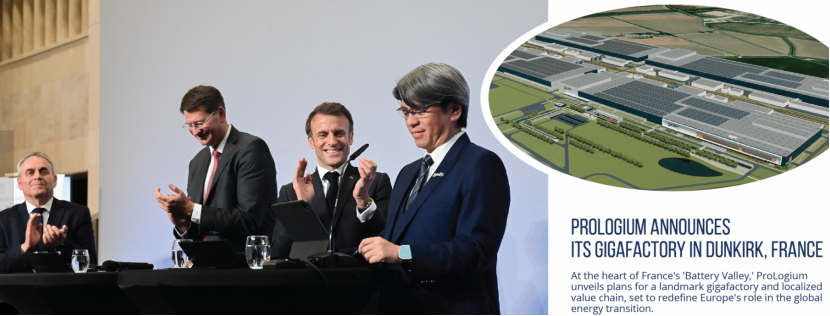
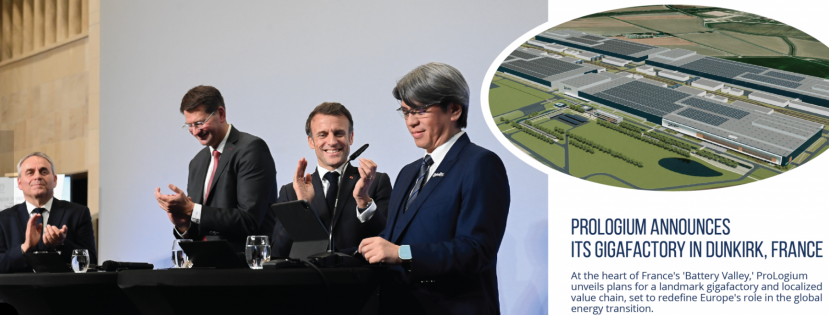
With native champions extinguished, France has abandoned the ‘European only’ approach. In February 2024, ProLogium Technology—a Taiwanese solid-state battery pioneer—broke ground on a €5.2 billion factory in Dunkirk, backed by €1.5 billion in French government subsidies approved by the European Commission.
Bloomberg noted that this represents one of the largest state-aid packages ever approved for a non-European battery firm, signaling a fundamental shift in EU industrial policy.
The Solid-State Advantage
Unlike conventional lithium-ion batteries, ProLogium’s ceramic solid-state technology promises:
- Enhanced Safety: Elimination of flammable liquid electrolytes, reducing thermal runaway risks
- Energy Density: Potential for 50-100% higher capacity than current lithium-ion cells
- Fast Charging: Capability to reach 80% capacity in under 10 minutes
For Western automakers struggling with Chinese battery dependency, ProLogium offers a geopolitically palatable alternative—though still Asian-controlled.
The China Dependency Trap
France’s urgency stems from alarming supply chain realities. According to the European Automobile Manufacturers’ Association (ACEA), China controls approximately 80% of global EV battery manufacturing and 90% of rare earth element processing.
This dependency created acute crisis in 2024 when Beijing imposed export controls on critical minerals. Reuters documented how European automotive production lines faced immediate disruption, validating President Macron’s warning that ‘industrial sovereignty equals territorial security.’
The ProLogium investment represents France’s attempt to diversify away from Chinese lithium iron phosphate (LFP) and nickel manganese cobalt (NMC) supply chains, even if it means subsidizing Taiwanese rather than French technology.
Investment Implications: What Western Investors Must Watch
For portfolio managers and automotive analysts, the ProLogium deal signals three critical trends:
- Policy Risk Arbitrage: European governments will pay premium valuations to secure non-Chinese battery capacity, creating opportunities in Taiwanese, Korean, and Japanese battery tech firms
- Technology Transition Timing: Solid-state batteries represent the next paradigm shift. First movers in European manufacturing—regardless of headquarters location—will capture IRA and EU Green Deal subsidies
- Supply Chain Bifurcation: The global battery market is splitting into Chinese and ‘Western-friendly’ ecosystems. ProLogium’s success could establish Taiwan as a critical node in the Western-aligned supply chain
See our deep dive on Asian battery makers’ European expansion strategies for comparative analysis.
Recommended Reading
For investors seeking to understand the geopolitical battery war, we recommend The Powerhouse: America, China, and the Great Battery War by Steve LeVine. This journalistic investigation traces how lithium-ion technology became the new oil—and why controlling the battery means controlling the 21st-century economy.
Conclusion: A Costly Necessity
France’s €1.5 billion ProLogium subsidy isn’t industrial policy—it’s crisis management. With domestic alternatives bankrupt and Chinese dominance tightening, Europe is paying a sovereignty premium for battery security. For Western investors, the message is clear: the transition to EVs will be built on strategic alliances, not pure market competition, and the companies navigating these geopolitical currents will define the next decade of automotive returns.