Ferrari Luce Price at €550K: Why Luxury EV Pricing Strategy Defies China’s Price War
Ferrari Luce Price at €550K: Why Luxury EV Pricing Strategy Defies China’s Price War
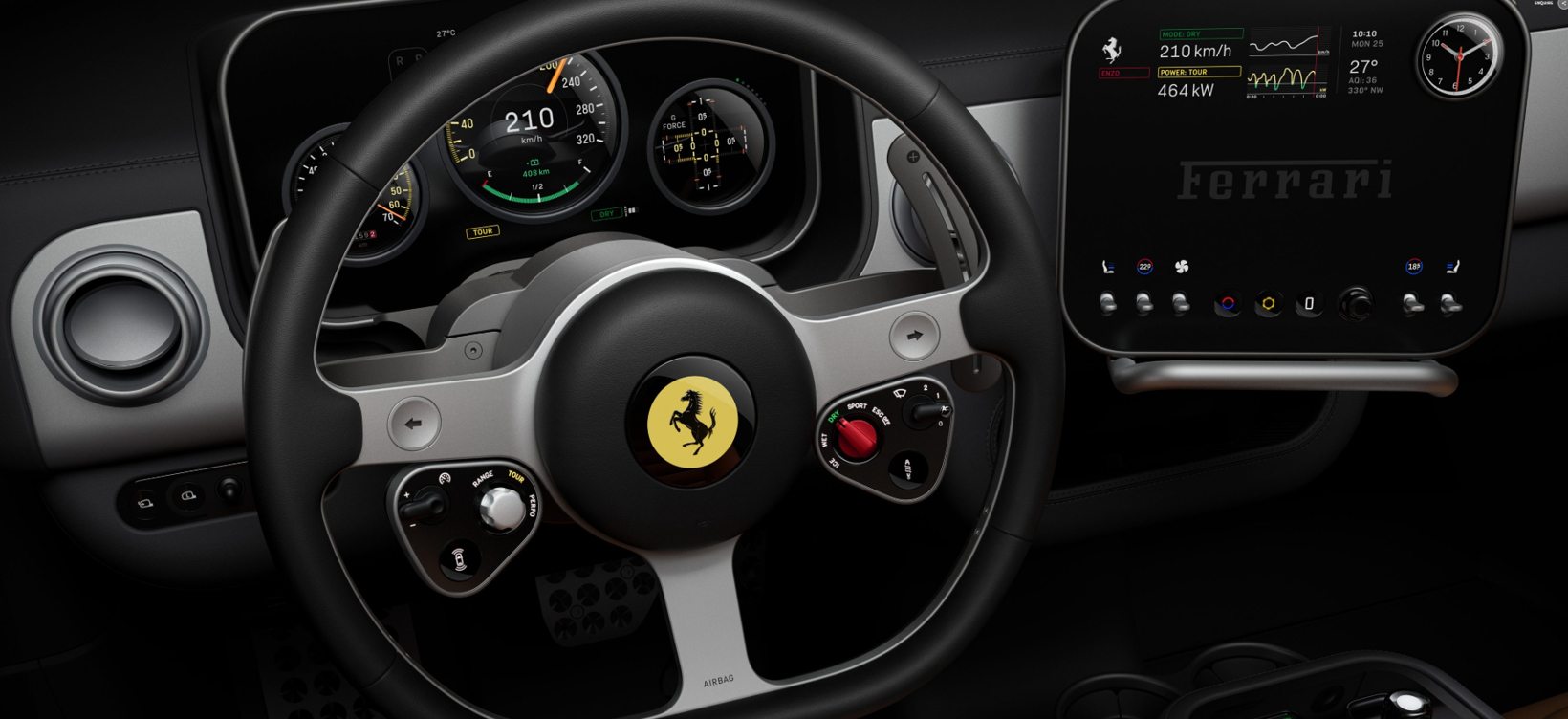
What happens when the world’s most brutal EV price war collides with the world’s most exclusive automotive brand? While Chinese manufacturers slash electric vehicle prices by up to 30% to survive a cutthroat domestic market, Ferrari has quietly finalized a radically different number for its debut electric supercar: €550,000 ($647,000). This isn’t just a price tag—it is a declaration of war against EV commoditization.
The Rome Reveal: Ferrari’s Electric Gambit
According to Bloomberg, Ferrari has set the preliminary price for its inaugural battery-electric vehicle, codenamed Luce, at approximately €550,000. The Italian marque plans to unveil this milestone model next month in Rome, positioning it €100,000 above the Purosangue SUV, which starts at €450,000.
Sources indicate the final Ferrari Luce price could fluctuate by 10% in either direction, but the message is clear: electrification will not trigger discounting. This aligns with recent Reuters analysis showing luxury automakers maintaining pricing discipline despite mass-market EV deflation.
Value Over Volume: The Anti-China Playbook
CEO Benedetto Vigna’s ‘value over volume’ philosophy represents a deliberate counter-strategy to the Chinese EV market’s trajectory. Where BYD, NIO, and XPENG are locked in a margin-destroying race to the bottom, Ferrari is insulating itself through scarcity and pricing power.
This approach addresses a critical anxiety among ultra-high-net-worth buyers: depreciation. While mass-market EVs suffer from battery degradation fears and technology obsolescence, Ferrari is betting that halo pricing will protect residual values—treating the Luce not as transportation, but as a collectible asset.
The Purosangue Precedent
The pricing strategy mirrors Ferrari’s success with the Purosangue, which broadened the brand’s appeal while maintaining exclusivity through a 20% production cap. By limiting supply, Ferrari has actually increased average transaction prices—a lesson Chinese EV brands are struggling to learn as they chase volume over profitability.
China’s Price War vs. Ferrari’s Pricing Power
The contrast couldn’t be starker. China’s EV market has entered what analysts call ‘Phase 2’ of price wars, with CNBC reporting continuous margin compression across the sector. Tesla has repeatedly cut prices in Beijing, while local giants wage subsidy battles that would bankrupt Western startups.
Yet Ferrari’s €550K entry point suggests these markets are decoupling. The luxury EV segment operates on scarcity economics, while China’s mass market fights for volume survival. This bifurcation challenges the assumption that electrification inevitably democratizes automotive performance.
Investor Takeaway: Two Speeds of Electrification
For Western investors, Ferrari’s pricing reveals a crucial market segmentation. The EV revolution isn’t monolithic—it is splitting into commoditized mobility (China’s domain) and electrified luxury (where European heritage brands retain pricing power).
See our analysis on Chinese EV Price War Economics and Global Impact to understand how these divergent strategies are reshaping automotive portfolios.
The Middle East pause—where Ferrari halted shipments during regional instability—also demonstrates how ultra-premium brands can throttle supply to maintain pricing integrity, a luxury no mass-market Chinese EV maker can afford while fighting for survival.