HarmonyOS Responds to Zero-Gravity Seat Safety Concerns in Enjoy S9: What It Means for Western Investors
HarmonyOS Responds to Zero-Gravity Seat Safety Concerns in Enjoy S9: What It Means for Western Investors
Is the rapid deployment of software-defined vehicles in China a double-edged sword for safety and innovation?
Introduction
On May 5, 2026, HarmonyOS, the technology arm of Huawei, issued a statement addressing the recent controversy surrounding the zero-gravity seats in their Enjoy S9 model. The incident, which sparked online debates, highlights the critical balance between innovation and safety in the rapidly evolving Chinese EV market. For Western investors, this case study provides valuable insights into the operational risks and strategic responses of Chinese tech-led OEMs.
The Incident: Zero-Gravity Seats and Safety Concerns
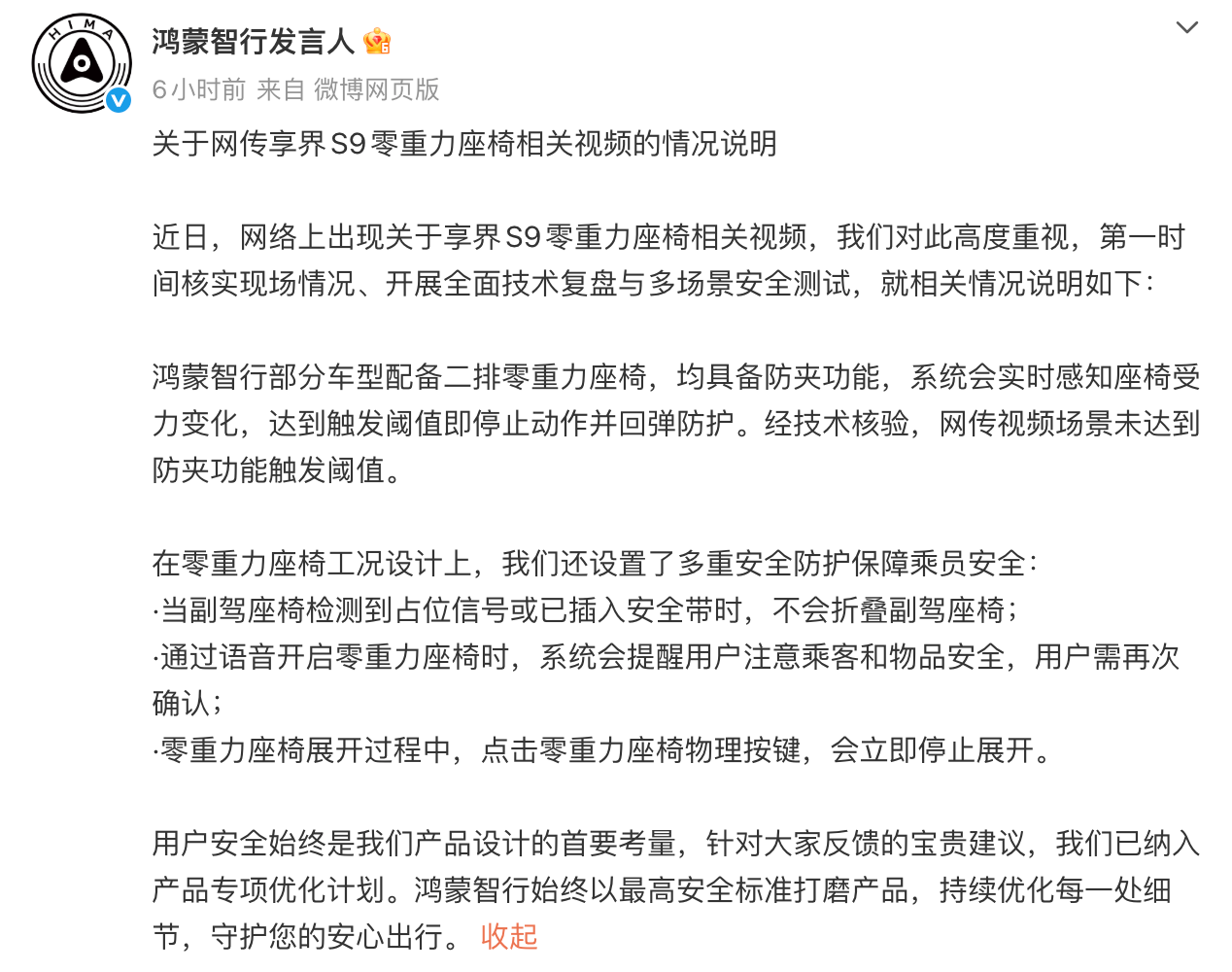
A video circulating on social media showed a user activating the zero-gravity seat mode via voice command. During the process, the seat began to fold, and there was a person in the area, raising safety concerns. HarmonyOS quickly responded, stating that the force detected in the video did not reach the threshold required to trigger the anti-pinch function, and thus, the safety mechanism did not activate.
Multilayered Safety Features
- Occupancy Detection: The second-row zero-gravity seats are designed to detect if the seat is occupied or if the seat belt is fastened, preventing any folding action.
- Secondary Confirmation: When the zero-gravity mode is activated by voice, the system prompts the user to confirm the action, ensuring they are aware of the potential risks.
- Physical Stop Button: During the seat’s movement, pressing a physical button can immediately halt the action, providing an additional layer of safety.
HarmonyOS’s Response and Future Plans
HarmonyOS emphasized that user safety is the top priority in their product design. They have already incorporated the public feedback into their product optimization plan. The company will continue to refine and enhance the safety features, ensuring that their vehicles meet the highest safety standards.
Why This Matters to Western Investors
This incident underscores the importance of robust safety protocols in the development of advanced automotive features. As Chinese OEMs like Huawei push the boundaries of innovation, Western investors must stay vigilant about the potential risks and the companies’ ability to address them effectively. The rapid pace of ‘China-speed’ innovation, while exciting, also brings with it the need for stringent safety measures.
Conclusion
The response from HarmonyOS to the zero-gravity seat controversy in the Enjoy S9 is a clear example of how Chinese tech-led OEMs are navigating the challenges of integrating advanced features while maintaining high safety standards. For Western investors, this case study serves as a reminder of the operational risks and the importance of a proactive approach to safety in the rapidly evolving Chinese EV market.
For more insights into the latest developments in the Chinese EV market, see our analysis on the impact of ADAS and LFP batteries.