Huawei L3 Autonomous Driving: How AITO M6’s 100,000 Pre-Orders Are Reshaping the Global EV Landscape

Huawei L3 Autonomous Driving: The 100,000-Unit Wake-Up Call for Western Automakers
What happens when a technology giant declares Level 3 autonomy ‘inevitable’ and backs it up with 100,000 vehicle pre-orders in just twenty days? The answer is unfolding in China right now, where Huawei’s automotive push through Harmony Intelligent Mobility Alliance (HIMA) is accelerating faster than most Western analysts predicted. The AITO M6’s explosive debut is not merely a sales story—it is a signal that Huawei L3 autonomous driving commercialization has arrived, threatening to disrupt the global automotive hierarchy before legacy OEMs have finished their regulatory paperwork.
The L3 Inflection Point: From Laboratory to Highway
At the recent Smart Electric Vehicle Development Summit in Beijing, Huawei’s Intelligent Automotive Solution CEO Jin Yuzhi made a declaration that reverberated through industry circles: Level 3 autonomous driving is not a distant dream, but an ‘inevitable stage’ of technical evolution. This was not marketing hyperbole. It was a technical roadmap backed by silicon and regulatory momentum.
Why Huawei’s L3 Declaration Matters
While Western regulators debate liability frameworks and German automakers cautiously deploy Drive Pilot on specific highway sections, Huawei is preparing for mass-market L3 deployment through its Advanced Driving System (ADS) 3.0. The AITO M6, priced aggressively at 269,800 yuan (approximately $37,200) for the EREV variant, comes standard with Huawei’s autonomous hardware suite—undercutting Tesla’s Full Self-Driving package by nearly 50% while promising hands-off capability in designated scenarios.
This represents a fundamental shift in the autonomy race’s economics. As noted by Reuters, Huawei’s vertical integration in chips and software allows it to bypass the supply chain bottlenecks constraining Western OEMs.
Regulatory Tailwinds vs Western Headwinds
China’s Ministry of Industry and Information Technology has accelerated L3/L4 pilot programs in Beijing, Shanghai, and Guangzhou, creating a regulatory sandbox that simply does not exist in the fragmented US state-by-state system or the EU’s cautious approval process. Bloomberg reports that Beijing is preparing national standards for conditional autonomous driving by late 2024—precisely when the AITO M6 begins deliveries.
AITO M6: Decoding the 100,000-Unit Phenomenon
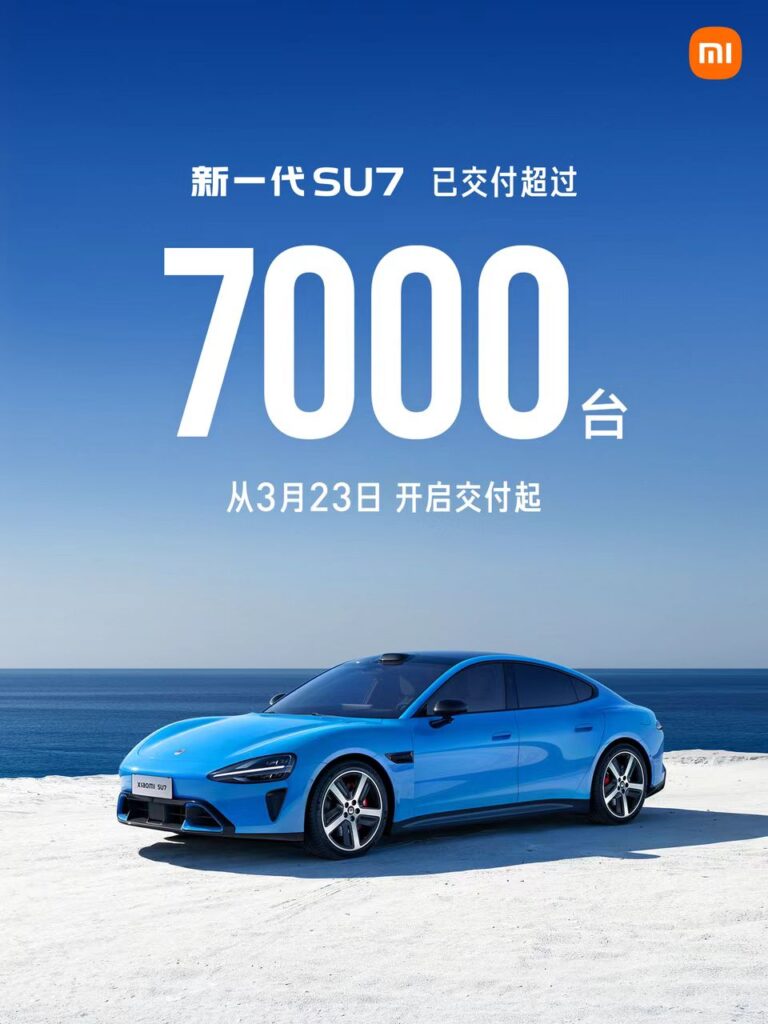
The M6’s pre-order velocity—100,000 units since March 23—makes it the fastest-selling vehicle in HIMA’s history. But the numbers tell only part of the story. Positioned as a ‘large five-seat SUV for young families,’ the M6 targets the heartland of China’s EV market: tech-savvy millennials upgrading from first-generation electric vehicles.
The Price-to-Technology Disruption
At 289,800 yuan for the pure electric variant, the M6 undercuts Tesla’s Model Y by nearly 15% while offering superior interior space and, crucially, Huawei’s HarmonyOS cockpit integration. This is not just a car; it is a mobile device ecosystem entry point—a concept Western automakers are still struggling to execute.
The vehicle’s success also validates Huawei’s ‘intelligent selection’ business model, where the tech giant provides full-stack solutions while traditional manufacturers handle assembly. [INTERNAL LINK: See our analysis on Huawei’s HIMA ecosystem vs Tesla’s vertical integration strategy]
The Semiconductor Subtext: Chips, Sanctions, and Self-Sufficiency
Beneath the autonomy headlines lies a more consequential battle: semiconductor sovereignty. While NIO’s William Li Bin advocates for industry standardization to reduce costs (claiming unified cell and chip standards could save billions), Huawei is already executing on vertical integration.
Despite US sanctions, Huawei has developed domestic supply chains for autonomous driving chips through partnerships with SMIC and others. This contrasts sharply with Western OEMs still wrestling with Qualcomm and NVIDIA allocation constraints. As Financial Times analysis suggests, Huawei’s ability to produce high-performance automotive chips without Western technology gives it a cost and supply security advantage that could define the next decade.
Beyond the Headlines: Market Context
The M6’s launch coincides with other significant shifts in China’s EV landscape:
- Market Maturation: Voyah CEO Lu Fang noted that the ‘evil involution’ (cutthroat price wars) of 2023 has moderated, with regulators successfully cooling anti-competitive behavior and steering the industry toward healthier competition.
- Alternative Powertrains: Changan’s Deepal brand announced second-generation fuel cell systems for 2027, suggesting hydrogen remains part of China’s multi-pathway strategy despite the battery-electric focus.
- Manufacturing Consolidation: Recent denials regarding Chery acquiring HiPhi’s factory highlight the ongoing shakeout in China’s overcrowded EV sector, where only technology-heavy survivors like Huawei’s partners appear positioned to thrive.
Strategic Implications for Western Stakeholders
For US and European investors, the AITO M6 phenomenon presents three critical takeaways:
- Tesla’s China Risk: With domestic competitors offering comparable tech at lower price points, Tesla’s pricing power in its second-largest market faces structural compression.
- Component Supplier Displacement: Traditional tier-1 autonomy suppliers (Mobileye, Aptiv) risk being bypassed entirely by Chinese OEMs adopting Huawei’s full-stack solutions.
- Regulatory Arbitrage: As China standardizes L3 deployment while the West debates, Chinese automakers will accumulate millions of real-world miles—creating data moats impossible to replicate.
Recommended Reading
To understand the broader implications of autonomous vehicle development and the industrial shifts underway, consider Autonomy: The Quest to Build the Driverless Car—And How It Will Reshape Our World by Lawrence D. Burns and Christopher Shulgan. This comprehensive account of the DARPA challenges and the race toward self-driving vehicles provides essential context for understanding why Huawei’s current advantage could be more durable than Western markets currently assume.