GM’s New Patent: How Driver Impairment Detection Technology Is Reshaping Automotive Safety
GM’s New Patent: How Driver Impairment Detection Technology Is Reshaping Automotive Safety
What if your car could detect you are too drunk to drive before you even touch the door handle? General Motors is betting on exactly that future with a newly published patent that leverages artificial intelligence to analyze driver gait patterns for signs of impairment. This breakthrough in driver impairment detection technology offers Western investors a rare glimpse into how legacy automakers are weaponizing AI to solve one of transport’s oldest safety challenges.
The Technical Breakdown: Gait Analysis Meets LSTM Neural Networks
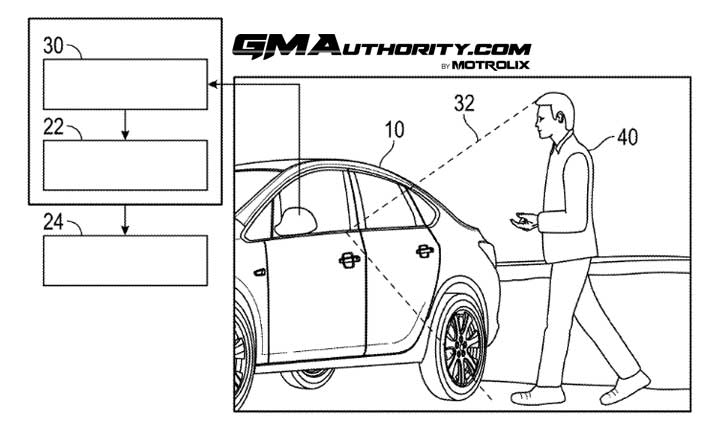
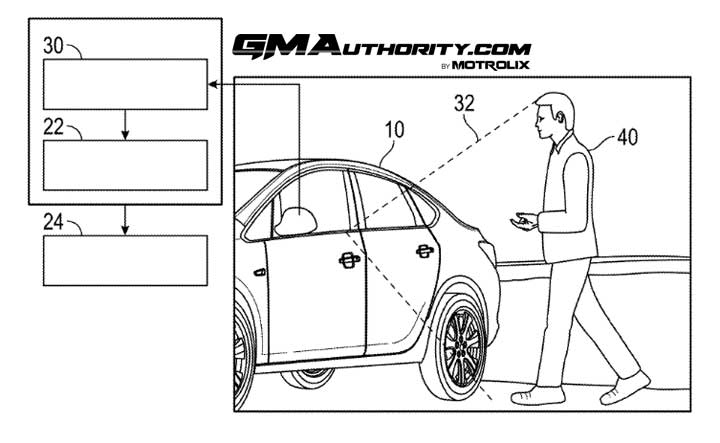
Filed on September 5, 2024, and published March 5, 2026 (US Patent Application US 2026/0062025 A1), GM’s system represents a significant advancement in driver impairment detection technology. Unlike traditional in-vehicle monitoring systems that rely on steering patterns or eye-tracking, GM’s approach begins the moment a driver approaches their vehicle.
The system utilizes external cameras and sensors to capture:
- Walking speed and stride length
- Lateral sway and balance metrics
- Path straightness and gait consistency
These data points feed into a Long Short-Term Memory (LSTM) recurrent neural network—a sophisticated machine learning architecture particularly effective at recognizing temporal patterns. The system generates a ‘gait score’ that correlates with behavioral impairment likelihood, whether from alcohol, drugs, or medical conditions.
Crucially, the technology includes verification mechanisms to ensure the analyzed individual is actually the driver, detecting door access and ignition attempts before finalizing its assessment.
Why This Matters: The Liability and Regulatory Calculus
For institutional investors and automotive analysts, this patent is not merely a safety feature—it is a strategic liability mitigation tool. According to Reuters, alcohol-related crashes cost the U.S. economy over $44 billion annually, with OEMs facing increasing litigation pressure over foreseeable misuse of vehicles.
The Euro NCAP and NHTSA Alignment
Regulatory tailwinds are accelerating adoption of impairment detection systems. The European New Car Assessment Programme (Euro NCAP) has announced protocols requiring advanced driver monitoring by 2026, while the U.S. National Highway Traffic Safety Administration (NHTSA) continues evaluating mandatory alcohol detection systems under the Infrastructure Investment and Jobs Act.
GM’s pre-drive biometric approach potentially satisfies these mandates while avoiding the intrusiveness of constant in-cabin surveillance that has raised privacy concerns among consumers.
Insurance Industry Implications
Bloomberg Intelligence notes that insurers are increasingly offering premium discounts for vehicles equipped with advanced safety systems. GM’s gait analysis could unlock new revenue streams through usage-based insurance partnerships, creating recurring value beyond the initial vehicle sale.
The China Comparison: Divergent Paths to Safety
While GM focuses on pre-entry biometrics, Chinese EV leaders like NIO, XPeng, and BYD are aggressively deploying in-cabin monitoring systems utilizing facial recognition and steering behavior analysis. See our analysis on Chinese EV Driver Monitoring Strategies for a detailed comparison.
This divergence reflects fundamentally different market conditions:
- China: Dense urban environments and high rideshare usage favor continuous monitoring of driver attention
- U.S./EU: Privacy concerns and suburban driving patterns make pre-drive screening more culturally acceptable
However, both approaches converge on the same critical data point: the global ADAS market is projected to exceed $83 billion by 2030, with impairment detection representing the fastest-growing segment according to industry forecasts.
Implementation Challenges and Privacy Concerns
Despite the technological promise, significant hurdles remain. The system requires high-resolution external cameras capable of functioning in adverse weather conditions—potentially increasing vehicle costs by $200-$400 per unit. Additionally, civil liberties groups have raised concerns about biometric data storage and the potential for false positives that could strand sober drivers.
GM’s patent addresses these concerns by proposing edge-computing architectures where gait analysis occurs locally rather than in the cloud, though regulatory frameworks in the EU’s GDPR and emerging U.S. state laws will complicate deployment strategies.
Investment Takeaway: The ADAS Arms Race Intensifies
For portfolio managers evaluating automotive stocks, GM’s patent filing demonstrates that legacy manufacturers are not ceding the software-defined vehicle space to Tesla or Chinese EV newcomers. By securing intellectual property in driver impairment detection technology, GM positions itself to license these systems to fleet operators and commercial vehicle manufacturers—a market segment particularly sensitive to liability exposure.
The technology also creates defensive moats against potential regulatory mandates that could disadvantage OEMs lacking biometric capabilities. As the industry transitions toward autonomous driving, intermediate safety technologies that bridge human and machine control will command premium valuations.
Recommended Reading
For readers seeking deeper insight into automotive safety systems and biometric integration, we recommend The Car That Cares: How AI Is Transforming Automotive Safety by Dr. Elena Vostrova. This comprehensive analysis explores the regulatory and technological forces shaping next-generation vehicle monitoring systems, providing essential context for understanding patents like GM’s latest filing.
Sources: General Motors Patent Application US 2026/0062025 A1 via USPTO, Reuters, Bloomberg