Roewe and ByteDance Unveil World’s First AI-Native Vehicle Series: The End of Retrofitted AI
Roewe and ByteDance Unveil World’s First AI-Native Vehicle Series: The End of Retrofitted AI
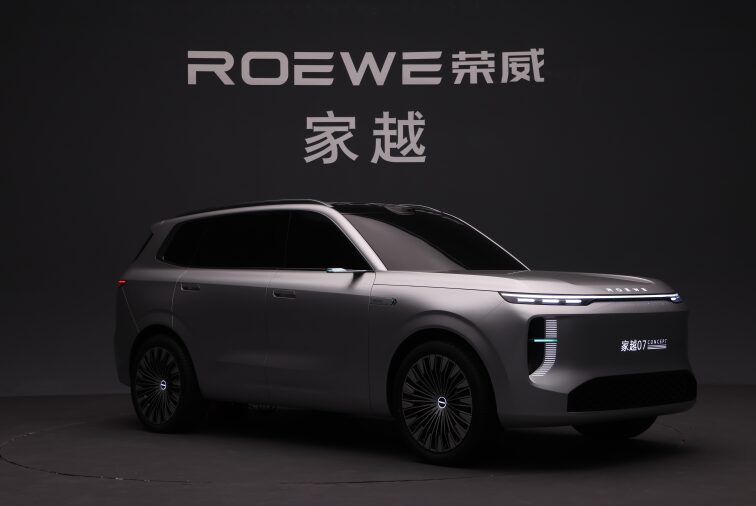
What if your next car was not merely upgraded with AI, but born from it? On April 21, SAIC’s Roewe brand launched the Jiayue family – the world’s first AI-native vehicle series – developed in deep partnership with ByteDance’s Volcano Engine. This is not another software update or voice assistant add-on; it represents a fundamental architectural shift that threatens to render Western legacy OEMs’ retrofit strategies obsolete.
The Architecture Paradigm Shift: From ‘AI-Added’ to ‘AI-Native’
Traditional automotive AI has followed a predictable pattern: build the car, then bolt on intelligence. Tesla disrupted this partially, but even industry leaders have largely treated AI as a layer atop conventional vehicle architectures. Roewe and ByteDance’s Volcano Engine have flipped this model entirely with their “AI go first” philosophy.
According to the strategic partnership details, the collaboration began at the product definition stage – not post-production. Joint R&D teams from both companies established a unified technology foundation that integrates ByteDance’s Doubao large language model directly into the vehicle’s nervous system from inception.
- Native Integration: Unlike Mercedes-Benz’s MBUX or BMW’s iDrive – which adapt existing operating systems for AI features – Jiayue vehicles treat the AI model as the primary decision-making architecture
- Embodied Intelligence: The system achieves true “embodied AI” – transitioning from internet-based LLMs to physical world interaction, directly scheduling, deciding, and executing physical device controls
- Cloud-Vehicle Fusion: Deep integration between Volcano Engine’s cloud infrastructure and vehicle edge computing creates a seamless “vehicle-cloud” continuum
Why ByteDance Changes the Competitive Calculus
Western observers often underestimate Chinese tech giants’ automotive ambitions. While Google and Apple have struggled to penetrate vehicle architectures deeply, ByteDance – through its enterprise cloud arm Volcano Engine – has achieved what Silicon Valley tech giants have only promised.
The partnership leverages Volcano Engine’s enterprise AI capabilities and Doubao’s massive training data from China’s digital ecosystem. This creates a consumer AI experience that understands contextual nuance far beyond Western voice assistants. Recent analysis from Reuters highlights how Chinese AI applications are moving faster from chatbots to physical world integration than their US counterparts.
The Western OEM Existential Crisis
For US and European automakers, the Jiayue launch represents an existential technical threat. Companies like Volkswagen, General Motors, and Stellantis are currently spending billions retrofitting software architectures developed for combustion engines – or creating “software-defined vehicle” platforms that still treat AI as an application rather than the OS.
Roewe’s approach – building the vehicle as an “embodied intelligent terminal” from the silicon up – creates capabilities that legacy architectures cannot match through updates:
- Latency: Native AI processing eliminates the translation layers that slow Western systems
- Personalization: Deep LLM integration enables true contextual learning about family usage patterns, not just driver profiles
- Ecosystem Integration: Seamless connection with ByteDance’s content and service ecosystem creates a sticky user experience Western brands cannot replicate
Bloomberg’s coverage of China’s EV acceleration notes that such vertical integration between tech giants and automakers is creating moats that Western regulatory frameworks actually inhibit.
Global Market Implications
For Western investors and industry observers, the Jiayue series (comprising the 07, 06, and 09 concept models) signals that China’s automotive advantage has moved beyond batteries and cost efficiency into fundamental AI architecture leadership.
This development suggests two critical trajectories:
The Export Threat
While currently aimed at Chinese families, SAIC has global distribution networks. An AI-native vehicle priced competitively against mid-market Western EVs – but with superior intelligent cockpit experiences – could disrupt European markets where Chinese EVs face tariff scrutiny but consumer demand for AI features is high.
Tier 1 Supplier Disruption
The Roewe-Volcano Engine partnership bypasses traditional automotive Tier 1 suppliers (Bosch, Continental, Denso) for core AI and software stack development. This mirrors how Tesla’s vertical integration destroyed the traditional auto supply chain, but at the software layer. The Financial Times has reported on how Western suppliers are unprepared for this shift from hardware to AI-native platforms.
See our analysis on how AI-native architectures threaten Western Tier 1 suppliers
Conclusion: The New Automotive AI Divide
The Jiayue launch marks the moment when “AI in cars” became “cars born from AI.” While Western automakers debate over-the-air update capabilities and app store revenues, Roewe and ByteDance have established that the next generation of automotive competitiveness requires AI-native DNA from the drawing board.
For Western consumers, this may mean that the most sophisticated AI driving experiences will increasingly come from Chinese brands. For investors, it signals that automotive value is migrating decisively toward companies that control the AI model layer – not just the metal.