Xiaomi SU7 Teardown: Lei Jun’s 5-Hour Livestream and the Transparency War Reshaping EVs
Xiaomi SU7 Teardown Analysis: Why Lei Jun’s 5-Hour Transparency Gambit Changes Everything
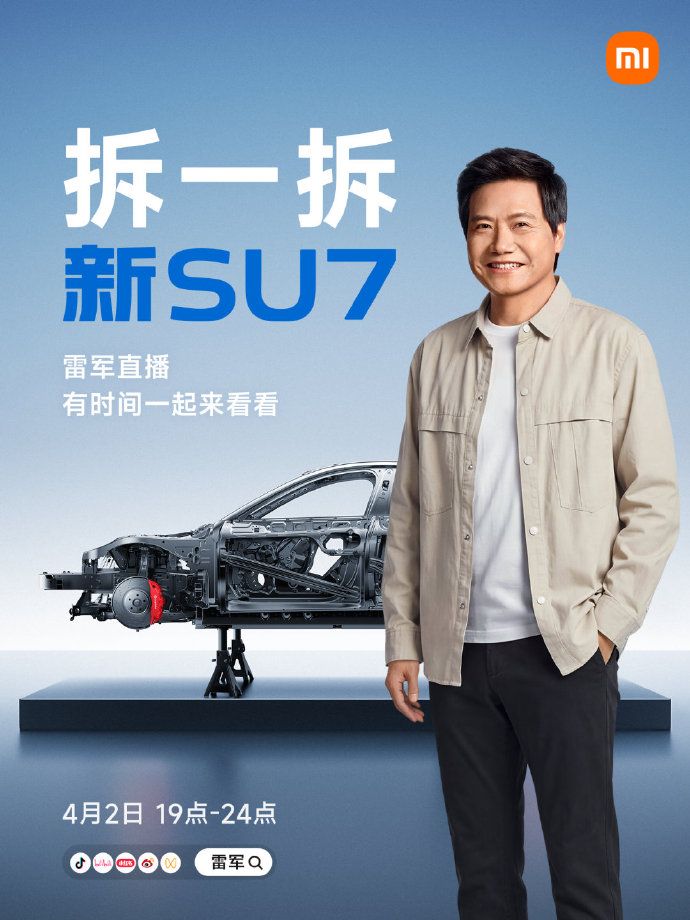
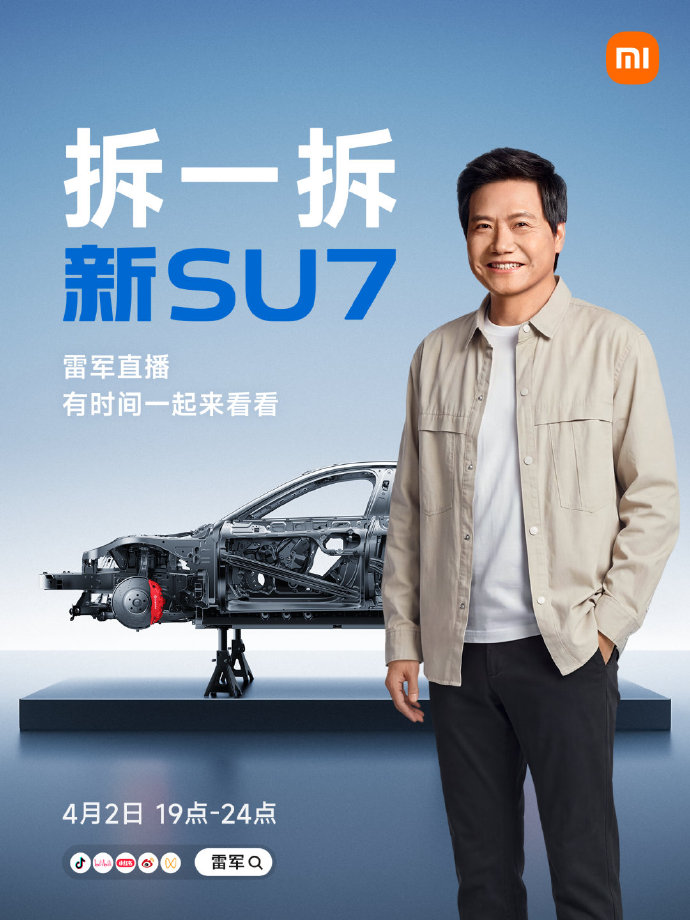
What happens when a smartphone company treats a $30,000 electric vehicle like a gadget unboxing? On April 2, Xiaomi founder Lei Jun answered with a five-hour livestream that dissected every bolt, battery cell, and welding seam of the 2026 Xiaomi SU7. This Xiaomi SU7 teardown was not merely marketing theater—it represents a fundamental shift in how Chinese EV makers are weaponizing technical transparency to dominate global automotive markets.
Within 34 minutes of the vehicle’s March 19 launch, Xiaomi had secured 15,000 locked orders despite raising prices by ¥4,000 ($550) across all variants. The message to Western incumbents is stark: secrecy is no longer a sustainable competitive advantage.
The Disassembly Doctrine: Beyond Traditional Auto Marketing
Traditional OEMs rely on polished press releases and curated spec sheets. Xiaomi, applying lessons from consumer electronics ‘disassembly culture,’ flipped the script by inviting technical experts to analyze the SU7’s architecture in real-time. According to Reuters, this approach targets sophisticated buyers who increasingly view opacity as a red flag in China’s hyper-competitive EV landscape.
Battery Systems Under the Microscope
The teardown exposed significant hardware upgrades that challenge Western cost structures:
- High-Voltage Architecture: Standard and Pro variants utilize 752V silicon carbide platforms, while the Max version jumps to 897V quasi-900V capability—surpassing most European competitors still transitioning to 800V systems.
- Power Density: Xiaomi’s self-developed V6s Plus motors achieve 22,000rpm with 94% energy transfer efficiency, specifications typically reserved for luxury performance EVs costing twice the price.
- Thermal Management: Live dissection of the battery pack revealed advanced cell-to-pack integration that likely reduces manufacturing costs by 15-20% compared to modular designs used by legacy OEMs.
ADAS Hardware: No Hidden Sensors
Unlike competitors who obscure autonomous driving compute power, Xiaomi showcased its Nvidia Thor chip (700TOPS) alongside 4D millimeter-wave radar and LiDAR arrays. Bloomberg notes that this radical openness addresses consumer skepticism about ‘phantom’ capabilities while establishing new benchmarks for hardware redundancy.
Strategic Implications for Western Markets
This teardown transcends marketing. For US and European automakers, it poses two existential challenges:
The Cost Benchmarking Crisis
By publicly revealing chassis structures, suspension geometries, and battery integration techniques, Xiaomi effectively open-sourced its engineering efficiency. Western OEMs now face unprecedented pressure to match these cost-performance ratios or justify premium pricing through brand equity alone—a difficult proposition as Financial Times analysis suggests Chinese EVs already enjoy 30-40% cost advantages.
IP Strategy Disruption
Traditional automotive IP relies on trade secrecy around manufacturing processes. Xiaomi’s teardown commoditizes this knowledge, accelerating the industry’s shift toward ‘white box’ component integration where software, not hardware, becomes the primary differentiator.
What Investors Should Watch
The SU7’s technical transparency coincides with Xiaomi’s aggressive vertical integration strategy. The company’s ability to manufacture motors, batteries, and semiconductors in-house—demonstrated through physical disassembly—suggests margin resilience even as price wars intensify. For investors evaluating exposure to automotive incumbents, this teardown serves as forensic evidence of the engineering gap widening between Silicon Valley-inspired Chinese EVs and legacy Detroit or Stuttgart manufacturers.
See our analysis on BYD’s Blade Battery vertical integration strategy to understand how hardware transparency accelerates market share capture.
Recommended Reading
For deeper insight into the battery technology wars exposed during this teardown, consider The Powerhouse: America, China, and the Great Battery War by Steve Levine. This journalistic account traces how Chinese manufacturers achieved dominance in lithium-ion cell production—the same supply chain advantages now visible in the SU7’s exposed battery pack architecture.