
XPeng L4 Autonomous Driving Strategy: Why China Is Skipping Level 3
XPeng L4 Autonomous Driving Strategy: Why China Is Skipping Level 3
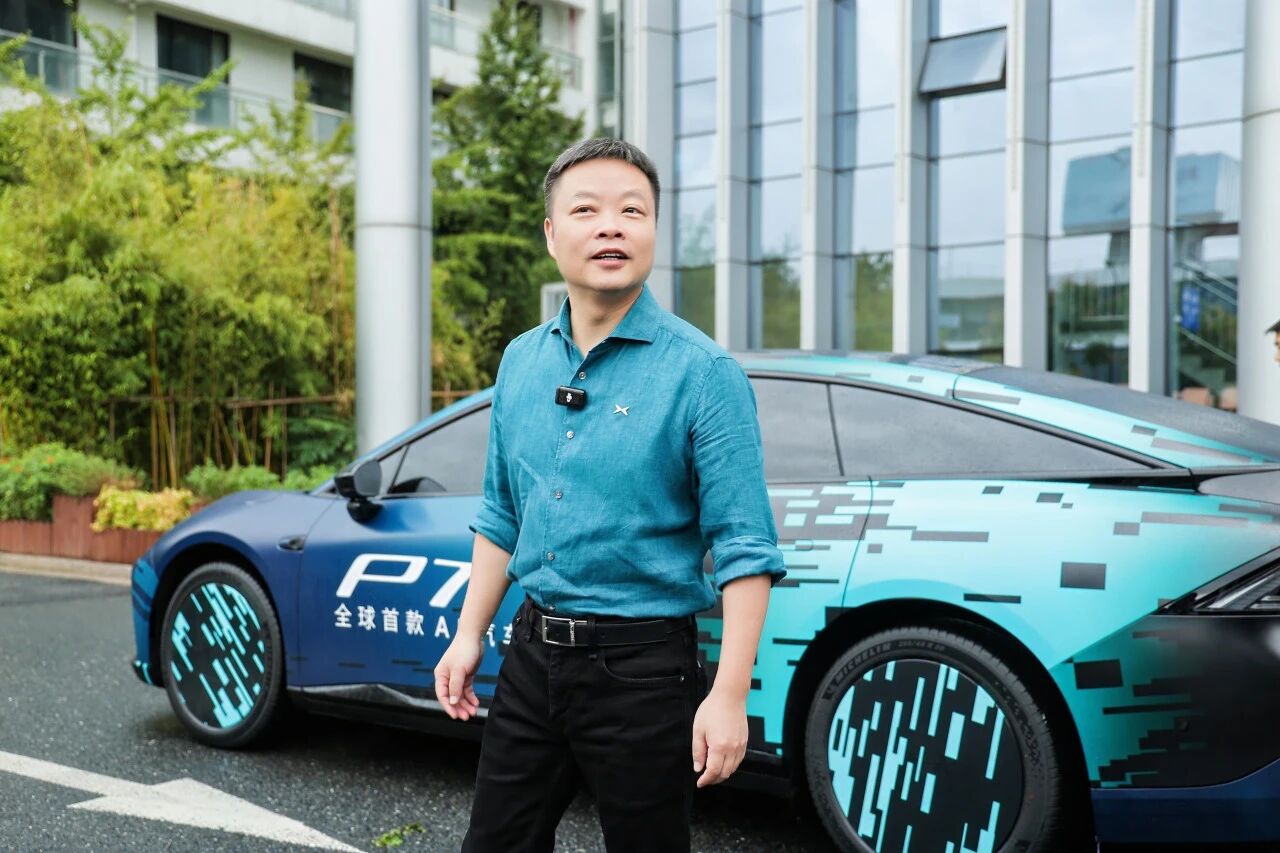
What if the $100 billion global bet on Level 3 autonomous driving is a strategic dead end? XPeng CEO He Xiaopeng recently detailed an ambitious XPeng L4 autonomous driving strategy that challenges the incremental roadmap embraced by Western legacy automakers. In an April 16 interview with Chinese media, He argued that the safest commercialization path runs directly from L2 to L4—effectively leapfrogging Level 3 entirely. This stance places XPeng in direct opposition to Huawei and raises profound questions about which technological philosophy will dominate the next decade of mobility.
The L3 Fault Line: Huawei vs XPeng
The autonomous driving world is splitting into two camps. On one side stands Huawei, whose Senior VP Jin Yuzhi insists that L3 is an unavoidable bridge to full autonomy. On the other, XPeng joins Tesla and Baidu in viewing L3 as a regulatory mirage—technically feasible but commercially dangerous.
He Xiaopeng’s critique cuts to the heart of the matter: L3 and L4 were originally technical classifications, not commercial roadmaps. In his view, attempting to commercialize L3—where the driver must remain ready to take over—creates a dangerous liability gray zone while delivering minimal user value.
Why XPeng Is Betting on L2 to L4
- Safety Metrics: He emphasizes improving intervention rates from once per 100 kilometers to once per 10,000 kilometers—metrics that require L4-grade redundancy, not L3 partial automation.
- Data Efficiency: XPeng’s fleet learns from millions of L2-assisted miles while targeting L4 capabilities, avoiding the middle child problem of L3 data that cannot fully train unsupervised systems.
- Regulatory Clarity: By avoiding L3’s ambiguous handoff scenarios, XPeng aims to jump directly to regulatory frameworks designed for unsupervised operation.
China’s New ADAS Safety Standards: The Hidden Context
He Xiaopeng’s statement coincided with a regulatory shift. On April 15, China’s Ministry of Industry and Information Technology finalized the mandatory national safety standard for Combined Driver Assistance Systems—the first regulatory framework specifically targeting L2+ systems.
Crucially, the standard categorizes systems into three tiers: basic single-lane, basic multi-lane, and pilot assist. By formalizing L2 capabilities while remaining silent on L3 commercialization, Beijing effectively created a regulatory sandbox where companies can develop L4 tech under existing L2+ frameworks—a subtle but significant endorsement of XPeng’s leapfrog approach.
See our analysis on how China’s ADAS regulations compare to EU AI Act for deeper regulatory insights.
Investment Implications: A Threat to Western OEMs?
For Western investors, this philosophical divergence carries billion-dollar implications. While Detroit and Stuttgart pour resources into L3-certified systems—complete with driver monitoring and handoff protocols—Chinese EV makers are optimizing for the endgame.
The Valuation Gap
Legacy automakers view L3 as a revenue bridge: charge subscription fees for hands-off highway driving while developing L4. XPeng’s strategy suggests this bridge may lead nowhere. If L3 becomes a regulatory quagmire—trapped between liability concerns and user expectations—the billions invested in Level 3-ready architectures could become stranded assets.
Data Network Effects
XPeng’s approach accelerates the data flywheel. Every mile driven today in L2 mode contributes to L4 algorithms, whereas L3 systems require distinct validation for the handoff moments that L4 intends to eliminate entirely. As reported by the South China Morning Post, this direct iteration philosophy aligns with Tesla’s FSD strategy, potentially creating a duopoly of data-rich ecosystems while Western Tier 1 suppliers struggle with L3 complexity.
Conclusion: The Autonomous Driving Great Leap Forward
He Xiaopeng’s intervention is more than technical posturing—it is a declaration of strategic independence. By rejecting the incremental orthodoxy, XPeng is betting that the future belongs to those who solve for L4 first, rather than those who perfect the art of the handoff.
For Western audiences, the message is clear: the autonomous driving race may not be won by the most careful step-takers, but by those willing to skip a step entirely. As China standardizes L2 and targets L4 simultaneously, the question is no longer who reaches Level 3 first, but who renders it irrelevant.