CATL Vertical Integration Strategy: The $4.1B Move That Could Starve Western Automakers
CATL Vertical Integration Strategy: The $4.1B Move That Could Starve Western Automakers
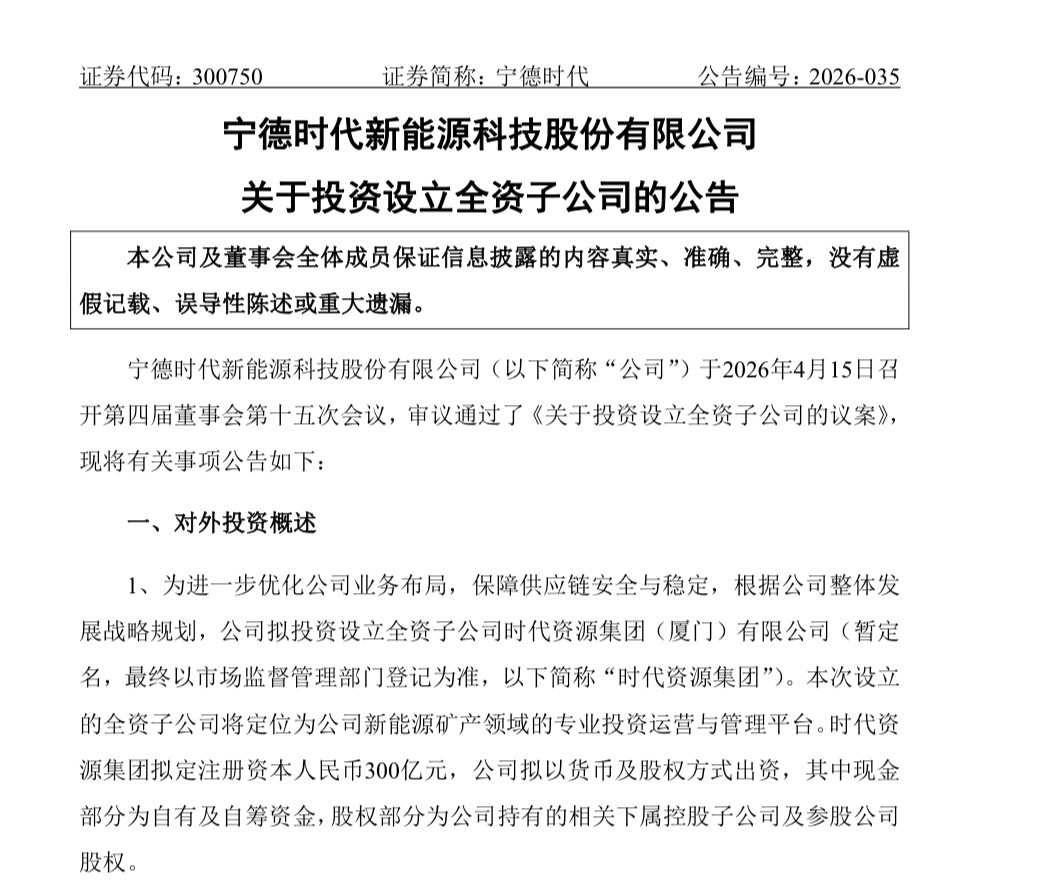
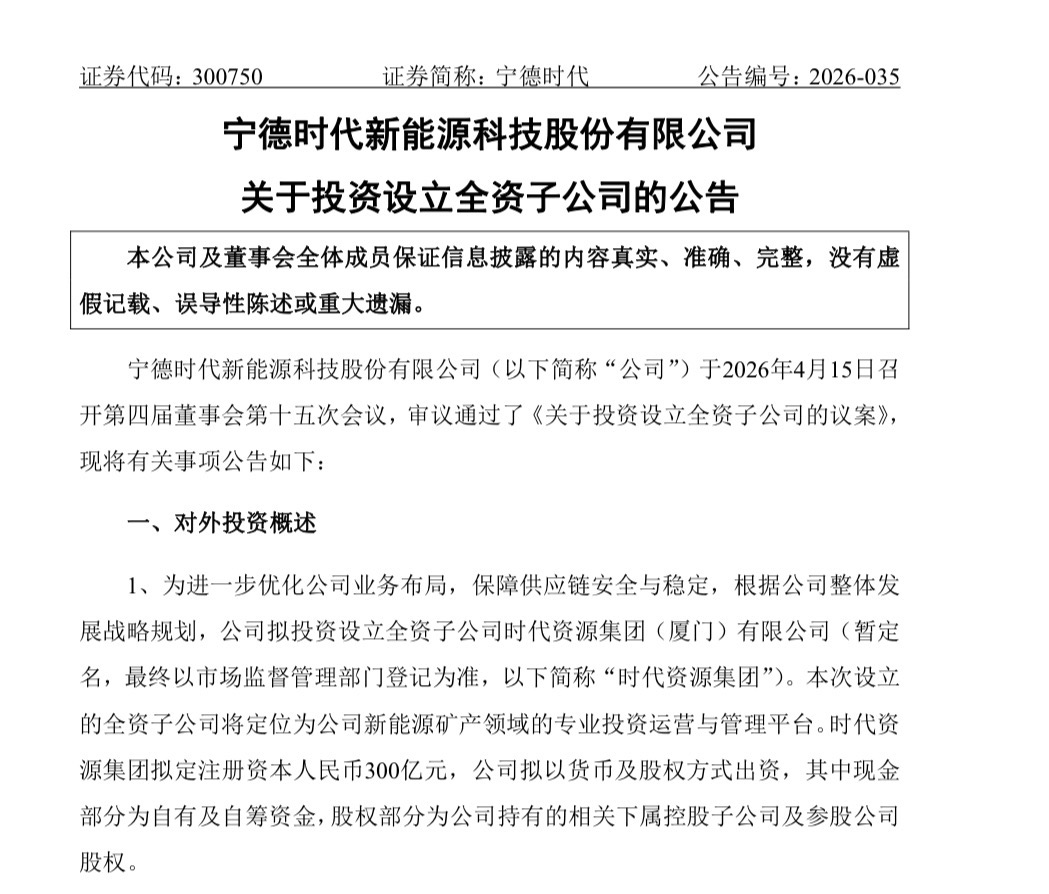
What if the world’s largest battery maker stopped competing on factory output and started weaponizing the entire mineral supply chain instead? On April 15, 2026, CATL (Contemporary Amperex Technology Co. Limited) announced a move that validates every worst fear of Western automotive executives: a 30 billion yuan ($4.1 billion) investment to establish a wholly-owned mineral resource subsidiary, effectively declaring that the era of open-market battery material purchasing is over.
This aggressive CATL vertical integration strategy does not just secure the company’s future; it potentially locks out competitors from the lithium, nickel, and phosphorus reserves essential for the EV transition. For investors and automakers in the US and EU, this represents a seismic shift in how battery supply chains will be controlled and who gets priced out.
The $4.1 Billion Resource Grab: From Cells to Mines
According to Reuters, CATL’s new subsidiary tentatively named Times Resource Group (Xiamen) Co. will function as a dedicated investment and management platform for new energy mineral resources. This is not a passive financial play. The subsidiary’s business scope covers the entire mining value chain:
- Exploration and Extraction: Mineral resource surveying, non-coal mining operations, and geological exploration
- Processing: Ore dressing, mineral washing, and refining capabilities
- Manufacturing: Mining machinery production and sales
- Circularity: Resource recycling technology and new material R&D
As Bloomberg notes, this creates a closed-loop system where CATL controls everything from the mine face to the battery pack. The company has explicitly stated this move aims to extend further upstream into key raw material fields and build integrated industrial chain competitive advantages.
Why Western Automakers Should Panic
For Tesla, Ford, and Volkswagen, CATL’s vertical integration strategy presents an existential threat. Western OEMs have spent the last three years scrambling to secure battery supply agreements under the assumption that raw materials would remain commoditized. CATL’s move suggests those days are ending.
The Supply Chain Squeeze
By internalizing mineral procurement, CATL achieves three strategic advantages that Western competitors cannot easily replicate:
- Price Control: Internal transfer pricing insulates CATL from commodity volatility that squeezes Western manufacturers
- Priority Access: When global lithium supplies tighten, CATL’s mines feed CATL’s cells first while everyone else waits in line
- Technology Integration: Direct control over ore quality and processing methods allows for proprietary battery chemistry optimization
See our analysis on Western EV Supply Chain Vulnerability to understand how this compounds existing shortages.
The Geopolitical Minefield
The timing could not be worse for Western policymakers. As the Financial Times highlights, CATL’s investment comes as the US Inflation Reduction Act and EU Critical Raw Materials Act attempt to friend-shore battery supply chains away from Chinese control. Instead, CATL is preemptively acquiring global mineral assets potentially in jurisdictions where Western companies face restrictions or higher extraction costs.
CATL’s own risk disclosure acknowledges the friction: macroeconomic fluctuations, geopolitical conflicts, and policy adjustments in downstream new energy industries could disrupt operations. Yet these same risks disproportionately impact Western firms lacking CATL’s state-backed capital depth.
Q1 2026 Results: The War Chest is Full
The mineral investment announcement coincided with blockbuster Q1 2026 earnings that prove CATL can fund this expansion without breaking stride:
- Revenue: 129.13 billion yuan ($17.8 billion), up 52.45% year-over-year
- Net Profit: 20.74 billion yuan ($2.85 billion), surging 48.52%
- EPS: 4.58 yuan per share, climbing 44.03%
These figures, reported via Bloomberg, demonstrate that CATL is not just defending market share but accumulating the capital necessary to vertically integrate while simultaneously pricing competitors out of the cell market.
Strategic Implications: The New Battery Order
CATL’s $4.1 billion mining subsidiary signals the end of the battery arms race as we knew it. Previously, competition focused on gigafactory capacity and cell chemistry. Now, it is about who owns the dirt.
For Western investors, this creates a bifurcation risk: either OEMs pay premium prices for CATL’s secured-material batteries, or they face raw material shortages that throttle production. The not invented here strategy of building Western battery plants becomes meaningless if those plants cannot access affordable lithium.
The question is no longer whether CATL will dominate the EV battery market, but whether Western automakers can survive as anything more than assembly partners for Chinese technology.