China Automotive Chip Market Analysis: Xingji’s Dragon Eagle Challenges Western Semiconductor Dominance
What if the next generation of Western EVs depends on semiconductor architectures that Beijing is already locking down? At the Beijing Auto Show, Xingji Technology unveiled a comprehensive chip matrix that signals a decisive shift from component supplier to centralized computing platform provider—threatening to disrupt the China automotive chip market analysis frameworks that Western investors have relied upon for years.
The Silicon Pivot: From Cockpit to Cross-Domain Fusion
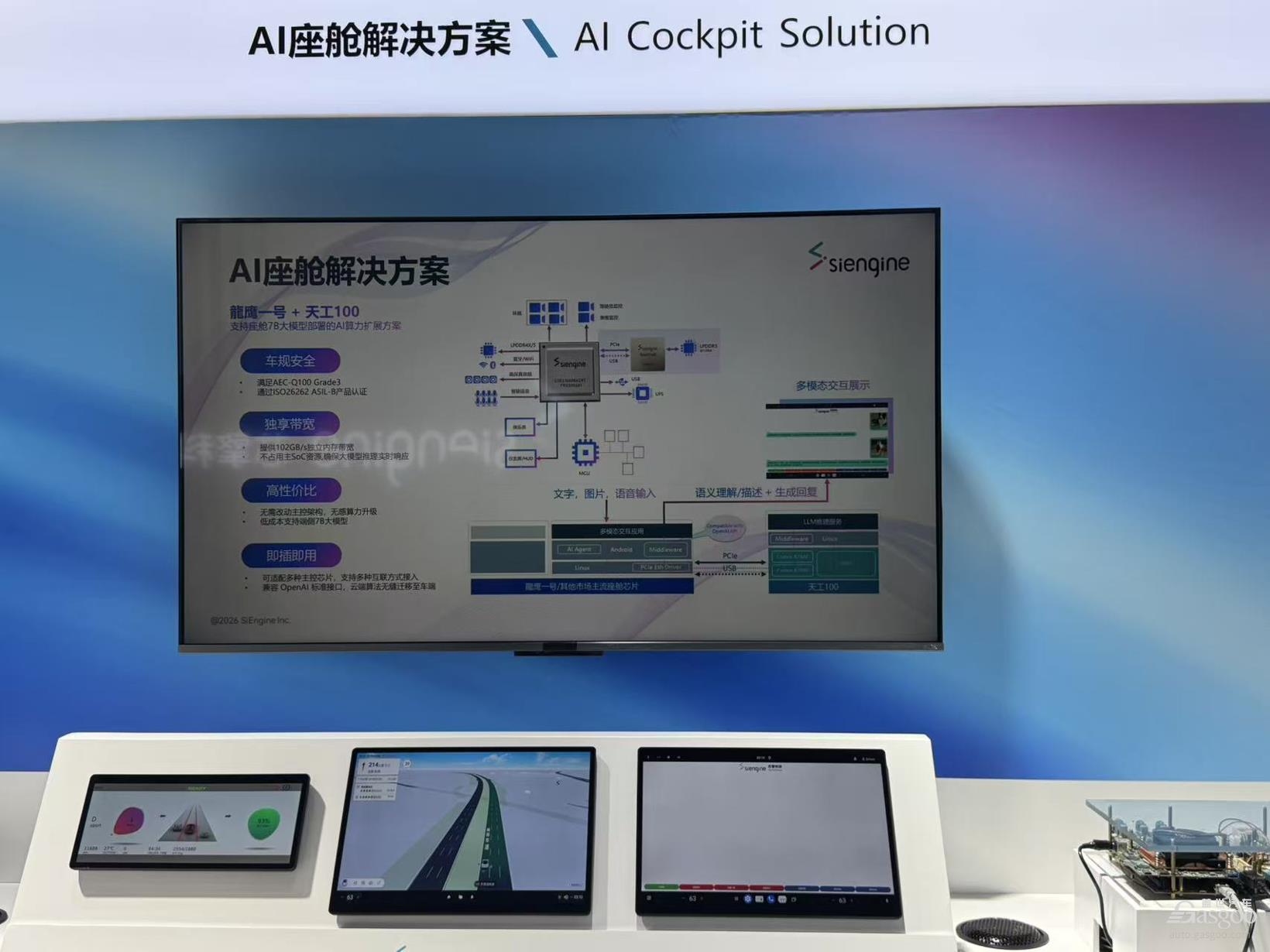
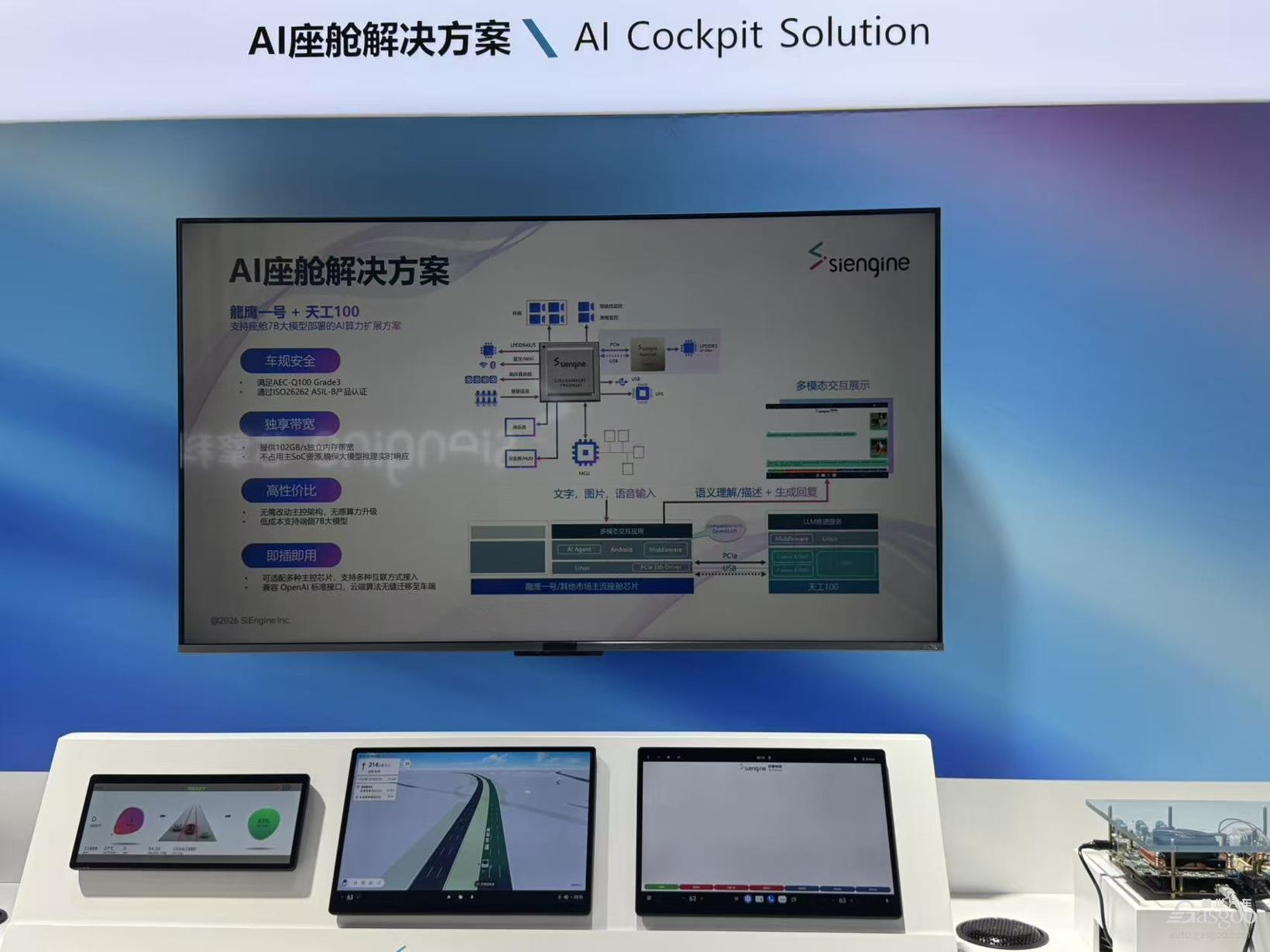
Xingji’s exhibition centered on its ‘Dragon Eagle’ (龍鹰) cockpit processor series and ‘Star’ (星辰) ADAS chip line, but the strategic revelation lies in their integration. The company showcased ‘cockpit-driving-parking’ fusion solutions—a domain consolidation architecture that mirrors Qualcomm’s Snapdragon Ride Flex and Nvidia’s Drive Thor, yet optimized for China’s cost-sensitive mass market.
The 7nm Dragon Eagle Portfolio
- Dragon Eagle One: Industrial-grade variant expanding beyond passenger vehicles into commercial applications
- Tiangong 100 AI Accelerator: Dedicated neural processing for edge computing scenarios
- New SerDes Lineup: High-speed interconnect chips addressing bandwidth bottlenecks in centralized architectures
Notably, Xingji announced that ‘Dragon Eagle Two’—presumably a successor to its 7nm SE1000 cockpit chip—will begin adaptation in Q1 2027, suggesting a roadmap that aligns with the next cycle of vehicle platform refreshes by major Chinese OEMs.
Beyond Automotive: The Edge Computing Gambit
CEO Dr. Wang Kai emphasized Xingji’s evolution ‘from automotive-grade scenarios to ubiquitous edge intelligence,’ targeting industrial robotics and embodied AI. This diversification mirrors strategies employed by Western semiconductor giants like Intel and AMD, but with a crucial difference: Xingji leverages China’s unified domestic EV supply chain to amortize R&D costs across multiple sectors.
Strategic Alliances Reshaping Supply Chains
Xingji’s Beijing announcements included partnerships that deserve scrutiny from Western supply chain analysts:
The WeRide Collaboration: Algorithm-Hardware Co-design
By integrating with WeRide’s autonomous driving algorithms, Xingji is pursuing a ‘full-stack’ optimization strategy reminiscent of Tesla’s vertical integration. This challenges the Western Tier 1 model where Nvidia and Mobileye supply chips to separate software vendors.
Yutong’s Strategic Investment: Commercial Vehicle Penetration
Bus manufacturer Yutong’s backing enables Xingji to execute a ‘passenger-commercial dual-track’ strategy. While Western chipmakers focus primarily on premium passenger vehicles, Xingji gains volume through China’s dominant bus and truck electrification programs—creating economies of scale that could eventually undercut Western pricing in global markets.
Implications for Western Investors
Xingji’s push toward ‘cockpit-driving fusion’ and SerDes integration represents more than technical evolution; it signals China’s attempt to close the final gaps in automotive semiconductor self-sufficiency. With domestic players now offering alternatives to Nvidia’s Orin and Qualcomm’s SA8295, Western automakers face a dilemma: risk supply chain concentration in Chinese silicon, or pay premiums for non-Chinese alternatives.
See our analysis on US CHIPS Act restrictions and automotive supply chain diversification.
The Competitive Landscape: Local vs. Global
Xingji now competes directly with Horizon Robotics and Black Sesame Technologies in the domestic ADAS chip market, while simultaneously challenging Qualcomm’s dominance in digital cockpit solutions. The company’s industrial pivot—leveraging automotive-grade reliability for broader edge applications—provides a revenue hedge that pure-play automotive chipmakers lack.
For Western portfolio managers, Xingji’s rapid ascent exemplifies the ‘China speed’ phenomenon in EV component markets: where Western semiconductor transitions take 5-7 years, Chinese vendors compress these cycles to 3-4 years through aggressive OEM partnerships and state-backed ecosystem development.
Conclusion: Architectural Decoupling Accelerates
Xingji’s Beijing showcase confirms that Chinese semiconductor capabilities have evolved from ‘good enough’ domestic alternatives to potentially superior integration solutions. As the industry moves toward central compute architectures, the divergence between Western (zonal E/E architecture) and Chinese (cockpit-driving fusion) approaches creates parallel supply chain ecosystems—forcing global automakers to maintain dual sourcing strategies or pick sides.