China EV Market Penetration Hits 60 Percent: A Critical Warning for Western Investors
China EV Market Penetration Hits 60 Percent: A Critical Warning for Western Investors
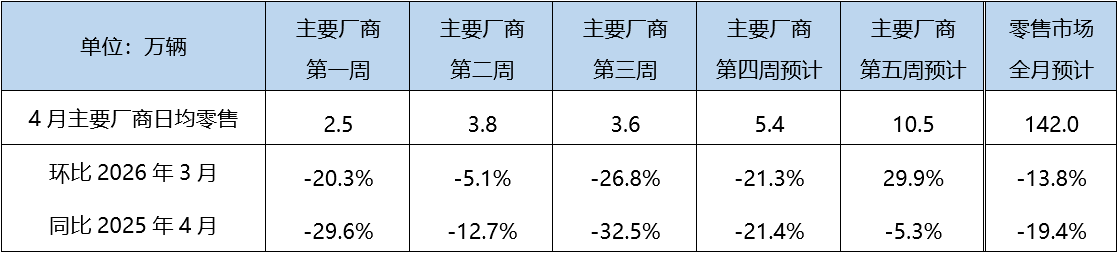
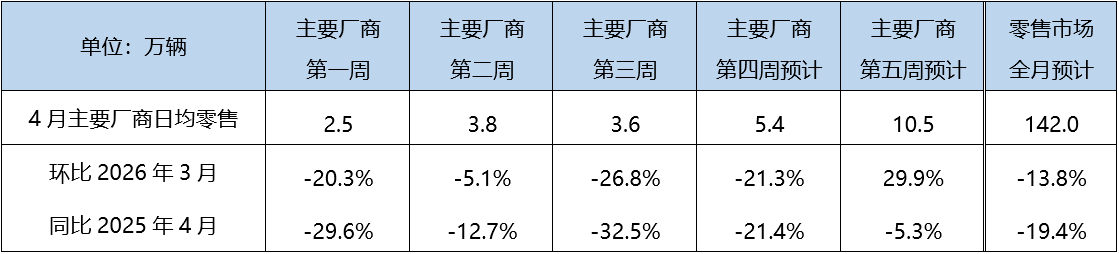
What happens when the world’s largest auto market flips from fossil fuels to electric in real time? In April 2024, China crossed a threshold that seemed distant just years ago: new energy vehicles now account for over 60% of all passenger vehicle sales. According to data from the China Passenger Car Association (CPCA), the China EV market penetration hit 60.6% this month, with 860,000 units sold against a total market of 1.42 million vehicles.
This is not merely a statistical milestone—it signals the irreversible collapse of internal combustion engine economics in the world’s most competitive automotive arena. For Western investors and legacy OEMs, the message is stark: the playbook for winning in China has changed forever, and the window for adaptation is closing rapidly.
The Sixty Percent Tipping Point
While overall passenger vehicle sales in China dipped 13.8% month-over-month to 1.42 million units in April—consistent with seasonal patterns following the Qingming Festival—the underlying market structure reveals a brutal divergence. ICE vehicle sales are cratering while electric momentum accelerates.
- NEV Sales: 860,000 units (60.6% penetration)
- ICE Sales: Approximately 560,000 units (39.4% share)
- Year-over-Year Context: Q1 2024 total passenger vehicle sales fell 17.4%, masking the NEV sector’s resilience
This 60% threshold represents more than market dominance; it indicates technological inevitability. When three out of every five vehicles sold require no gasoline, the infrastructure economics shift decisively. Charging networks expand while gas stations convert or close. Resale values for ICE vehicles collapse. Consumer psychology shifts from early adoption to mainstream expectation.
Why ICE Economics Are Collapsing in China
The death spiral for gasoline vehicles in China stems from a dual squeeze that Western markets have yet to fully experience:
The Fuel Price Crisis
International oil prices remain elevated, pushing gasoline costs to painful levels for Chinese consumers. Unlike the US, where fuel taxes remain relatively stable, China’s pump prices directly reflect volatile global markets. This daily cost reality makes EVs’ total cost of ownership calculations increasingly compelling.
The Price War Aftershocks
Following aggressive pricing strategies from BYD and subsequent industry-wide cuts, ICE vehicles face an impossible margin equation. Bloomberg reported that Chinese EV makers are now selling vehicles at price points that legacy OEMs cannot match without destroying profitability. The result? A ‘wait-and-see’ mentality among ICE buyers, extending purchase cycles as depreciation risks mount.
From Policy-Driven to Product-Driven
Perhaps the most significant shift—and the one with deepest implications for Western competitors—is the market’s evolution from subsidy-dependent growth to genuine product superiority.
The April 2024 Beijing Auto Show catalyzed this transition. Rather than competing solely on purchase incentives, Chinese manufacturers unveiled next-generation platforms emphasizing:
- Hybrid Efficiency: Extended-range EVs and plug-in hybrids dominating the 60% penetration figure, eliminating range anxiety
- Intelligent Cockpits: Advanced AI-driven infotainment systems that make Western interfaces feel antiquated
- Vertical Integration: BYD’s blade batteries and CATL’s cell-to-pack technology driving costs below $80 per kWh
See our analysis on how China’s battery supply chain dominance reshapes global margins to understand the structural cost advantages now baked into these products.
Implications for Western Investors and OEMs
For stakeholders in Western automotive giants, China’s 60% EV penetration delivers three uncomfortable truths:
1. The China Market is Lost for ICE-Dependent Brands
Volkswagen, GM, and Stellantis have watched their Chinese market share evaporate as local EV brands capture the premium segment. With NEVs now the default choice, legacy OEMs face the prospect of retreating to niche luxury segments or accepting massive localization partnerships that cede control.
2. Margin Compression Will Export Globally
Chinese EV makers are not content with domestic dominance. Buoyed by domestic scale economics, they are aggressively pricing exports into Europe and Southeast Asia. The EU’s investigation into Chinese EV subsidies, reported by Reuters, acknowledges the threat: subsidized or not, Chinese EVs can undercut Western production by 20-30% while maintaining superior software integration.
3. Technology Leadership Has Shifted
The ‘product-driven’ era means Chinese consumers now judge vehicles on smart features, OTA update frequency, and energy efficiency—domains where Western automakers trail. As this competitive standard exports globally via Chinese brands, Western OEMs face disruption in their home markets.
Conclusion: The New Automotive World Order
China’s crossing of the 60% EV penetration threshold marks the end of the ‘transition’ period and the beginning of the ‘dominance’ era. For Western investors, this requires immediate portfolio reassessment. Companies still deriving majority revenue from ICE technology in China face stranded assets. Those without competitive EV platforms and software ecosystems by 2025 risk obsolescence.
The question is no longer whether electric vehicles will dominate global automotive markets, but whether Western manufacturers can survive the transition at all. With China setting the pace, the answer increasingly favors those who embraced electrification early—and bet big on the battery supply chain.