China V2X Infrastructure Strategy: Why Vehicle-Road-Cloud Integration Is the New Battleground for Autonomous Driving
China V2X Infrastructure Strategy: Why Vehicle-Road-Cloud Integration Is the New Battleground for Autonomous Driving
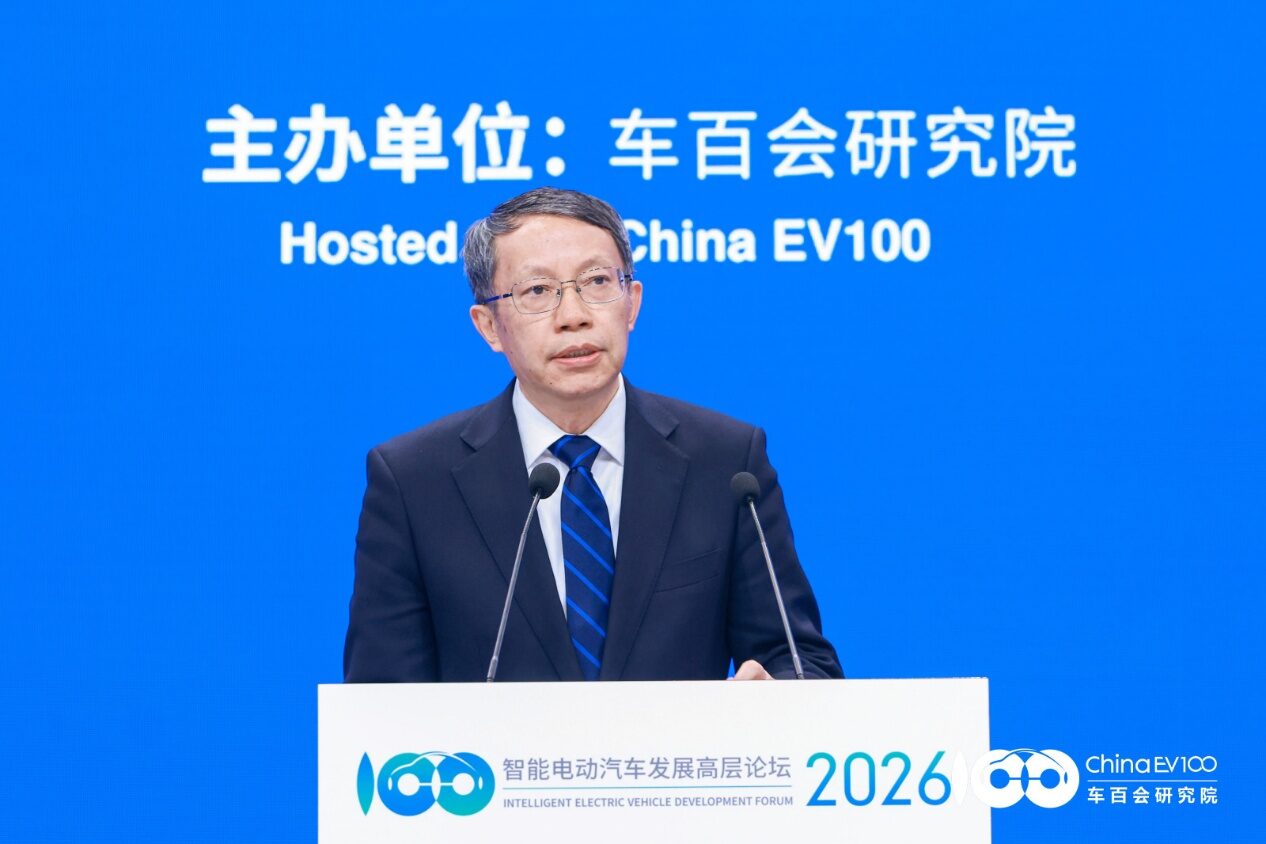
Is China’s 65% L2 adoption rate a triumph or a trap? While Western automakers celebrate incremental gains in driver assistance, Beijing’s top connectivity scientist warns that the era of solo vehicle intelligence is hitting a safety ceiling. According to Professor Li Keqiang, chief scientist at China’s National Intelligent Connected Vehicle Innovation Center, safety reliability has become the primary bottleneck constraining large-scale commercialization of autonomous driving.
Li’s proposed solution signals a strategic inflection point: a nationwide pivot to Vehicle-Road-Cloud Integration that could render Tesla’s camera-only approach obsolete before achieving widespread deployment in China.
The 65% Plateau: When Penetration Becomes Saturation
China’s L2 adoption has stalled at approximately 65% of new vehicles, according to data presented at the April 2026 Intelligent Electric Vehicle Development Forum. Yet Li emphasizes a troubling paradox—high volume without viable profitability. Bloomberg reports that despite massive deployment, Chinese ADAS providers have failed to establish a virtuous commercial cycle, with safety liabilities mounting faster than revenue streams.
The Technical Limits of Single-Vehicle Intelligence
- Perception Boundaries: Camera and LiDAR systems remain vulnerable to occlusion and edge cases that Li describes as the ‘invisible’ scenarios
- End-to-End Fragility: Deep learning models exhibit reliability gaps in rare corner cases that training data cannot anticipate
- Architectural Costs: Siloed development architectures create redundant engineering expenses while delivering diminishing safety returns
These limitations manifest in dangerous scenarios: the ghost probe (sudden pedestrian emergence), unexpected construction zones, and catastrophic handoff failures between AI and human drivers.
Vehicle-Road-Cloud Integration: The Infrastructure Override
Li proposes treating infrastructure as the primary sensor and vehicles as nodes in a distributed intelligence network. This Vehicle-Road-Cloud Integration strategy transforms static roads into dynamic computing platforms, effectively establishing digital tracks for automotive navigation.
Super-Visual Perception Through V2X
By embedding high-definition sensors, edge computing units, and V2X communication modules in urban infrastructure, China’s system achieves perception beyond vehicle line-of-sight. Roadside units detect hazards obscured by weather, topography, or traffic—effectively providing vehicles with X-ray vision through cloud coordination.
The Digital Power Station Advantage
Strategically significant for Western investors: the integrated platform functions as a digital power station for AI training. Pooling data from vehicles, roads, and cloud servers generates training datasets orders of magnitude larger than siloed Western competitors. CNBC analysis suggests this data synergy could accelerate algorithm iteration cycles by 40% compared to Tesla’s fleet-learning model.
Regulatory Coordination: Beijing’s Structural Advantage
Unlike the fragmented regulatory landscape in the EU and US, China’s Ministry of Industry and Information Technology has aligned with Public Security and Transport ministries to advance two concurrent initiatives: high-level autonomous driving city access and national V2X demonstration projects.
Beijing and Chongqing have operationalized shared data infrastructures, with 15 domestic and foreign OEMs collaborating on 17 commercial scenarios. Seven manufacturers—including BYD and NIO—have initiated mass production plans for V2X-enabled vehicles.
See our analysis on how European GDPR regulations handicap V2X deployment compared to China’s unified data standards.
Implications for Western Markets
For US and European automakers, the autonomous driving race is shifting from who has the best algorithm to who controls the infrastructure. While Tesla and Waymo bet on pure vehicle-side AI, China is legislating roads into sentience.
This creates a structural moat. Western OEMs entering China must adapt to Vehicle-Road-Cloud Integration standards or risk operating blind in a connected ecosystem. Conversely, Chinese brands exporting to infrastructure-poor Western markets may face reverse compatibility challenges—suggesting a bifurcation in global autonomous architectures.
Recommended Reading
To understand the geopolitical implications of China’s infrastructure-heavy AI strategy, we recommend AI Superpowers: China, Silicon Valley, and the New World Order by Kai-Fu Lee. Lee’s analysis of China’s data ecosystem advantages provides essential context for why Vehicle-Road-Cloud Integration represents not merely engineering evolution but state-level industrial policy designed to dominate the next decade of mobility.