Xiaomi Abandons Budget Segment: Chinese EV Market Segmentation Hits Tech Cost Wall
Why Xiaomi Abandoned the Budget Market: Chinese EV Market Segmentation Hits a Tech Cost Wall
Here is the startling reality: China’s most-hyped EV newcomer just permanently surrendered the sub-$14,000 market to traditional automakers. During a recent livestream, Xiaomi CEO Lei Jun delivered a blunt verdict on the company’s Chinese EV market segmentation strategy: no vehicles under 100,000 yuan (approximately $13,800) for the foreseeable future. The reason? The relentless cost of intelligent driving technology is creating an impenetrable price floor that threatens to reshape global automotive competition.
This is not merely a pricing decision—it is a structural admission that the economics of smart EVs are fundamentally incompatible with mass-market affordability. For Western investors and Detroit executives watching China’s EV revolution, Lei Jun’s statement reveals a critical inflection point: the era of ‘cheap Chinese EVs’ is bifurcating into two distinct markets, with profound implications for global expansion strategies.
The $14,000 Red Line: Why Xiaomi Won’t Touch Budget EVs
Lei Jun’s refusal to enter the sub-100,000 yuan segment stems from brutal cost arithmetic that contradicts the popular narrative of Chinese manufacturers effortlessly undercutting Western prices. According to industry calculations cited during the discussion, producing a competitive EV at this price point leaves virtually no room for the technologies that define modern Chinese automotive competitiveness.
The Hardware Squeeze
In the sub-100,000 yuan category, hardware components already consume approximately 70,000 yuan ($9,600) of the total vehicle cost. This leaves a razor-thin 30,000 yuan margin to cover:
- Research and development for intelligent cockpit systems
- Advanced driver-assistance system (ADAS) computing hardware
- Marketing, distribution, and after-sales service networks
- Manufacturing overhead and quality control
The resulting gross margins of just 5% to 8% make it mathematically impossible for technology-forward startups like Xiaomi to sustain their business model. Unlike traditional automakers who can amortize costs across legacy platforms, Xiaomi’s value proposition depends entirely on cutting-edge smart features that require massive ongoing investment.
XPeng’s Confirmation: Industry Consensus
Lei Jun is not alone in this assessment. Days earlier, XPeng CEO He Xiaopeng issued an almost identical proclamation, stating his company would avoid the sub-100,000 yuan segment entirely because it offers ‘scale but minimal value.’ When China’s two most prominent EV tech optimists simultaneously abandon the mass market, the signal is clear: intelligent driving costs have created a permanent market segmentation.
The Smart Tax: Why Intelligence Drives Costs Irreversibly Higher
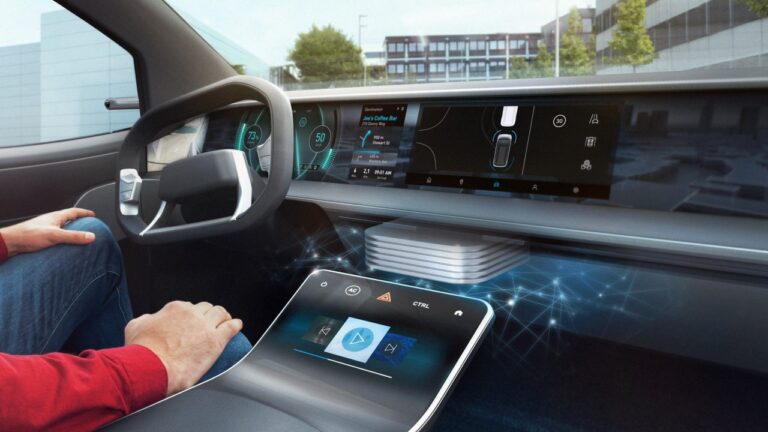
The ‘smart tax’ represents the hidden iceberg sinking budget EV ambitions. While Western consumers often associate Chinese EVs with battery cost advantages, the reality is that advanced driver-assistance systems (ADAS) and intelligent cockpits now represent the dominant cost center for next-generation vehicles.
The Chip Cost Crisis
High-level autonomous driving requires sophisticated computing platforms—NVIDIA Drive Thor, Horizon Robotics Journey chips, or Huawei’s MDC platforms—each adding thousands of dollars in hardware costs alone. When combined with lidar sensors, high-definition cameras, and the software development to integrate them, the per-unit cost of a competent smart driving system exceeds 10,000 yuan ($1,400).
For a $50,000 vehicle, this represents a manageable 20% technology premium. For a $14,000 vehicle, it becomes an existential margin killer. As Bloomberg’s analysis of Chinese EV economics notes, new force manufacturers cannot amortize billions in R&D across low-margin volume sales without destroying their path to profitability.
The R&D Amortization Trap
Xiaomi’s intelligent driving team alone represents a multi-billion yuan investment. Spreading this cost across budget vehicles would require selling millions of units annually—a volume that would simultaneously destroy the exclusivity and premium positioning that justifies the technology investment in the first place.
Market Bifurcation: Who Actually Dominates the Budget Segment?
If Xiaomi and XPeng are retreating upstream, who controls the sub-$14,000 market that represents the bulk of China’s automotive volume? The answer reveals a stark technological divide.
Traditional Giants and Platform Economics
The sub-100,000 yuan segment belongs to established conglomerates like BYD, Geely, and SAIC—manufacturers with decades of supply chain integration and platform sharing. These players achieve cost control through:
- Vertical integration (BYD manufactures its own batteries and chips)
- Legacy internal combustion platforms adapted for electrification
- Minimal investment in Level 3+ autonomous features
- High-volume, low-margin sales strategies optimized for fleet and first-time buyers
See our analysis on BYD’s vertical integration strategy and cost advantages to understand how traditional players maintain profitability where tech startups cannot.
The Two-Tier Market Reality
This creates a bifurcated Chinese EV market segmentation: intelligent premium EVs (20,000+ USD) dominated by Tesla, Xiaomi, NIO, and XPeng with advanced ADAS; and transportation appliances (under 14,000 USD) controlled by legacy manufacturers offering basic electrification without the AI bells and whistles.
As Financial Times reporting confirms, this divergence is accelerating as 2026 tax policy changes force all manufacturers to reconsider pricing strategies.
The SU7 Strategy: Absorbing Costs to Maintain Positioning
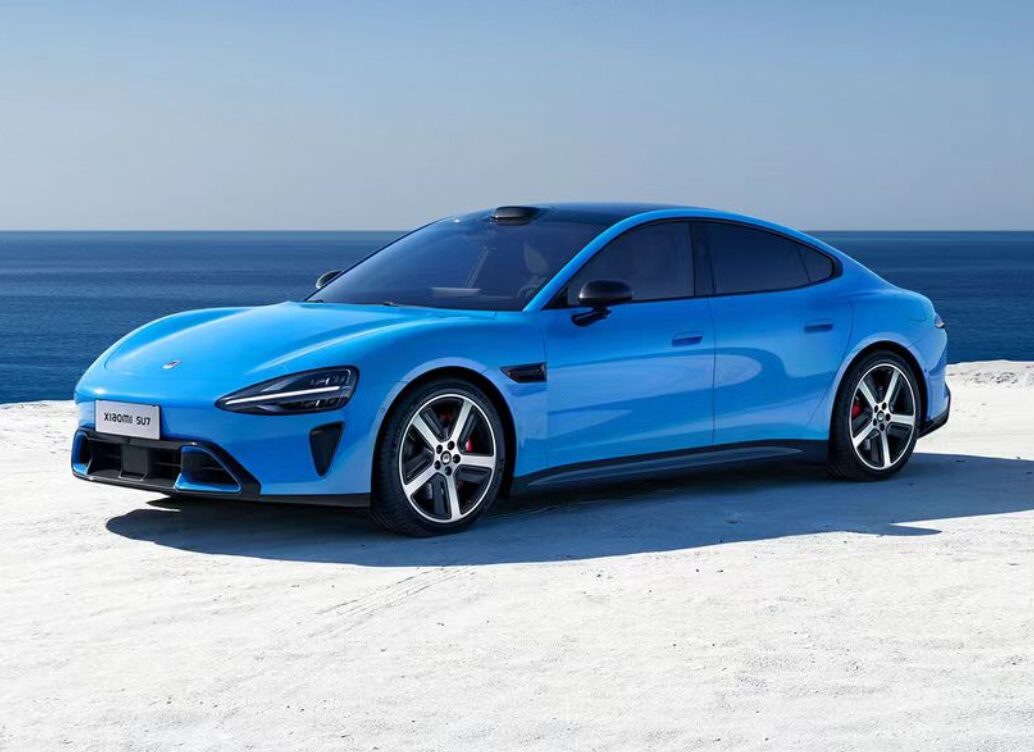
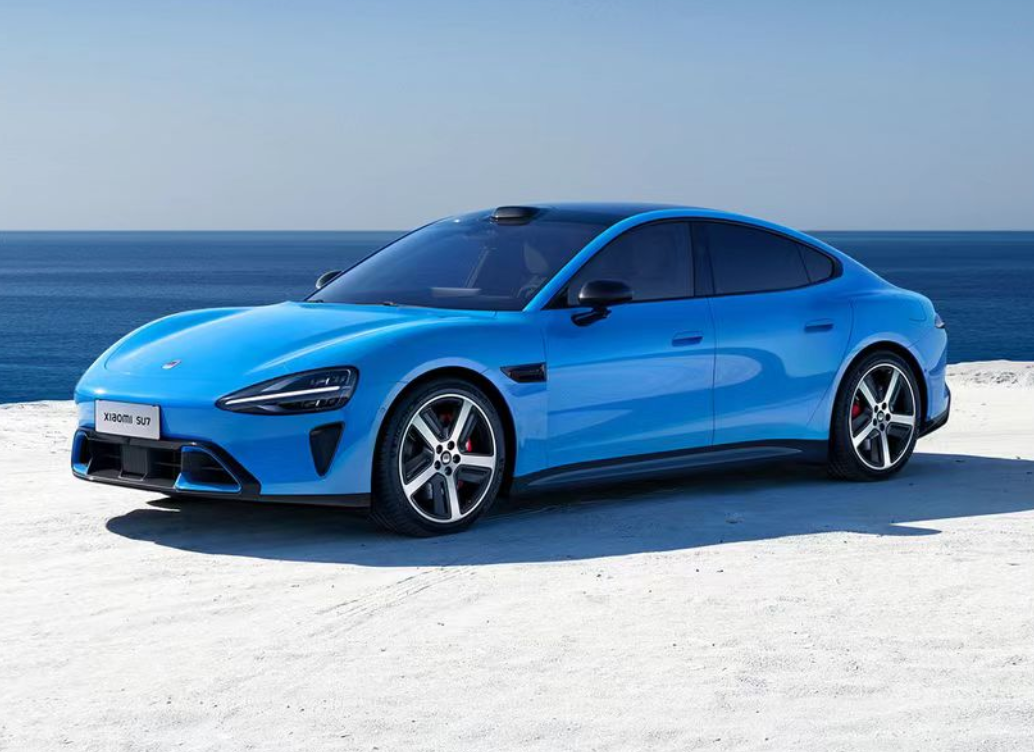
Xiaomi’s pricing strategy for the second-generation SU7 illustrates this calculus perfectly. Despite material cost increases of nearly 20,000 yuan ($2,760) per vehicle due to over 100 component upgrades, Xiaomi raised prices by only 4,000 yuan ($550).
The 4,000 Yuan Gamble
This aggressive pricing—standard version at 219,900 yuan ($30,400), Pro at 249,900 yuan ($34,500), and Max at 303,900 yuan ($42,000)—reflects Lei Jun’s user-centric philosophy. Rather than passing through full cost increases, Xiaomi is absorbing margin compression to maintain accessibility for its target demographic.
Tax Policy Timing
The decision partially anticipates China’s 2026 new energy vehicle tax adjustments, where purchase tax exemptions will halve (from 30,000 yuan to 15,000 yuan maximum relief). Lei Jun explicitly stated he refused to let the new SU7 exceed customer psychological price thresholds, even at the expense of short-term profitability.
This ‘premium-but-accessible’ positioning—tech-forward yet avoiding luxury price points—represents Xiaomi’s attempt to capture the upper-middle market while the bottom tier becomes a commodity bloodbath among traditional OEMs.
Implications for Western Markets: Why Detroit Should Pay Attention
For Western automotive executives and investors, Xiaomi’s retreat from the budget segment contains contradictory signals.
The Good News: Price Floors Are Rising
Chinese EVs cannot indefinitely undercut Western competitors on price while maintaining advanced technology. The sub-$15,000 EV—threatening to European and American mass-market segments—will remain the domain of traditional manufacturers using older technology, not the tech-forward startups that terrify Silicon Valley.
The Bad News: Technology Moats Are Widening
Conversely, the gap between ‘smart’ and ‘dumb’ EVs is becoming a chasm. As Xiaomi, XPeng, and Huawei concentrate resources on the $30,000+ segment, their AI capabilities will accelerate beyond what Western legacy OEMs can match in affordable vehicles. When these Chinese premium EVs eventually enter European and American markets—equipped with mature autonomous driving systems—they will compete against Western EVs that lack comparable intelligence at similar price points.
The Tesla Factor
This dynamic explains Tesla’s aggressive pricing in China despite tariff pressures. By maintaining volume in the premium-mass market (200,000-300,000 yuan), Tesla prevents Chinese newcomers from achieving the scale necessary to fund global expansion. However, as tax incentives fade and material costs rise, even Tesla faces pressure to either cut features or raise prices—precisely the dilemma Xiaomi is navigating with its minimal 4,000 yuan increase.
Conclusion: The End of the Affordable Smart EV?
Lei Jun’s candid admission marks the end of an era in Chinese automotive development. The dream of democratizing intelligent electric vehicles—making autonomous driving and AI cockpits accessible to the mass market—has collided with the economic reality of semiconductor costs and software development.
For Western audiences, the takeaway is clear: China’s EV threat is not uniform. The sub-$15,000 vehicles that might flood emerging markets will come from traditional manufacturers with limited smart capabilities, while the tech-forward ‘Tesla killers’ will remain firmly positioned in the premium segments where Western brands traditionally maintain dominance.
The question is no longer whether Chinese EVs can be cheap, but whether Western premium brands can remain competitive as Chinese market segmentation forces unprecedented technological acceleration at the $30,000+ price point. Detroit’s comfort in the mass market may prove illusory if the definition of ‘mass market’ itself shifts upward.