EV Battery Giant EVE Energy Secures 8 GWh India Deal: A Strategic Pivot for Global Storage Markets

Why This 8 GWh Deal Signals a Shift in Global Energy Storage
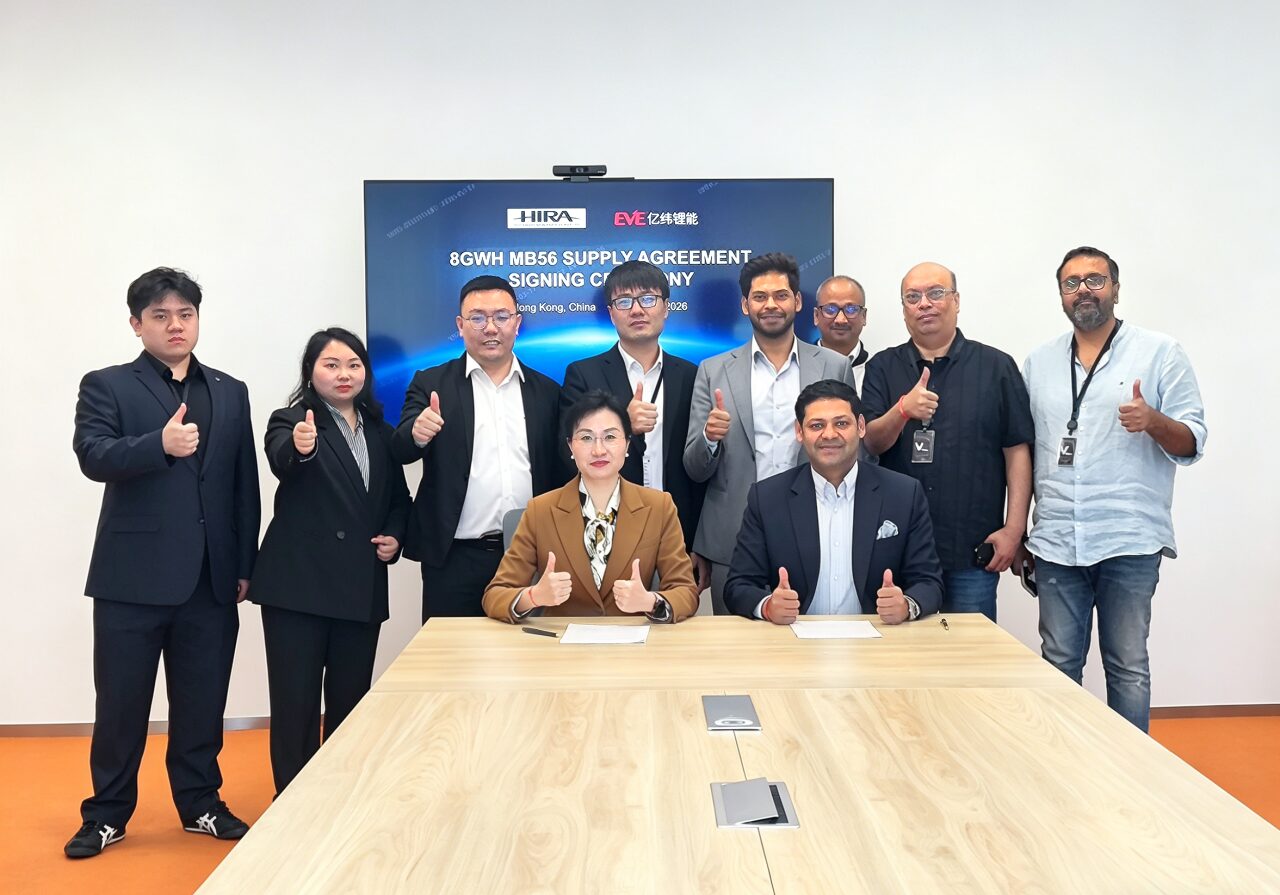
On May 6, 2026, Chinese battery manufacturer EVE Energy (亿纬锂能) announced an 8 GWh order from Indian energy firm Godawari New Energy Private Limited (GNEPL), with a potential five-year collaboration scaling up to 60 GWh. This is not just another supply contract—it is a strategic move that underscores China’s deepening influence in emerging markets and the accelerating global demand for grid-scale storage.
For Western investors and industry analysts, this deal highlights three critical trends: the rapid expansion of Chinese battery makers beyond EVs into stationary storage, India’s emergence as a high-growth energy storage market, and the competitive pricing pressure on Western Tier 1 suppliers like Fluence and Tesla Energy.
The Core Product: 628Ah Large-Format Cells
EVE Energy will supply its 628Ah lithium iron phosphate (LFP) cells, designed specifically for utility-scale storage. According to EVE, these cells offer ‘high safety, high reliability, and minimalist integration,’ aiming to reduce total lifecycle costs by at least 15% compared to conventional 280Ah cells. This aligns with a broader industry shift toward larger-format cells (e.g., CATL’s 314Ah, BYD’s Blade) that improve energy density and reduce balance-of-system costs.
Why India Matters Now
India’s renewable energy capacity surged to 180 GW in early 2026, with a target of 500 GW by 2030. However, grid instability due to solar and wind intermittency has created an urgent need for storage. The Indian government recently mandated that all new solar farms above 10 MW must co-locate storage, driving demand for 40+ GWh of battery storage by 2028, per BloombergNEF estimates.
EVE’s partnership with GNEPL, a subsidiary of the Godawari Group, positions it to capture early-mover advantages. GNEPL is already developing a 2 GWh pilot project in Rajasthan, and the 60 GWh framework suggests a pipeline of multiple gigafactory-scale installations.
Competitive Dynamics: Chinese vs. Western Suppliers
This deal intensifies competition in the global storage market:
- Chinese advantages: Lower manufacturing costs (LFP cells at ~$50/kWh vs. $70/kWh for Western peers), vertical integration, and willingness to offer long-term price locks.
- Western response: Tesla Energy is ramping up its Megapack production in Shanghai, while Fluence is partnering with Indian conglomerates like Reliance to localize assembly.
- Risk factor: Geopolitical tensions—India has imposed tariffs on Chinese solar equipment but has not yet targeted battery imports, leaving an open window.
Analyst Takeaway
For a Western investor, the key metric to watch is cost per kWh delivered over 20 years. EVE’s 628Ah cells, combined with India’s low-cost labor for balance-of-system, could undercut Western bids by 20-30%. This mirrors the pattern seen in solar panel dominance a decade ago.
See our analysis on How Chinese Battery Makers Are Reshaping Global Storage Markets for a broader perspective.
Risks and Caveats
While the deal is promising, challenges remain:
- Execution risk: India’s infrastructure bottlenecks (port capacity, grid connectivity) could delay installations.
- Regulatory uncertainty: India’s Ministry of Power may introduce local content requirements for batteries, similar to its solar policy.
- Technology validation: The 628Ah cell is still in early production; field performance over 10+ years is unproven.
However, EVE Energy has a track record of scaling production—its annual battery capacity exceeded 200 GWh in 2025, with a 30% allocation to storage.
Conclusion: A Bellwether for Global Storage Growth
The EVE-GNEPL deal is a microcosm of the global energy transition: Chinese manufacturing scale meets emerging market demand. For Western stakeholders, the message is clear: the cost advantage of Chinese storage is now too large to ignore. Strategic partnerships, localized production, or policy interventions will be necessary to compete.
Stay ahead of the curve by subscribing to our newsletter for weekly updates on Chinese EV and battery market intelligence.