Solid State Battery Commercialization Risks Exposed in Donut Lab Criminal Report
Solid State Battery Commercialization Risks Exposed in Donut Lab Criminal Report
Is the solid-state battery revolution running on empty promises? While CATL ships semi-solid state cells to aviation and automotive markets, and BYD scales production of blade battery architectures, a criminal complaint filed in Finland suggests some Western startups may be packaging obsolete laboratory demos as production-ready breakthroughs, exposing critical solid state battery commercialization risks for unwary investors.
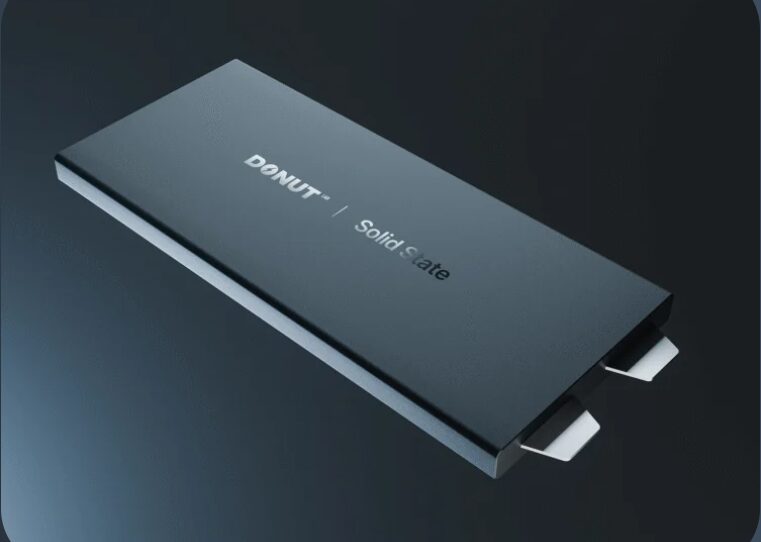
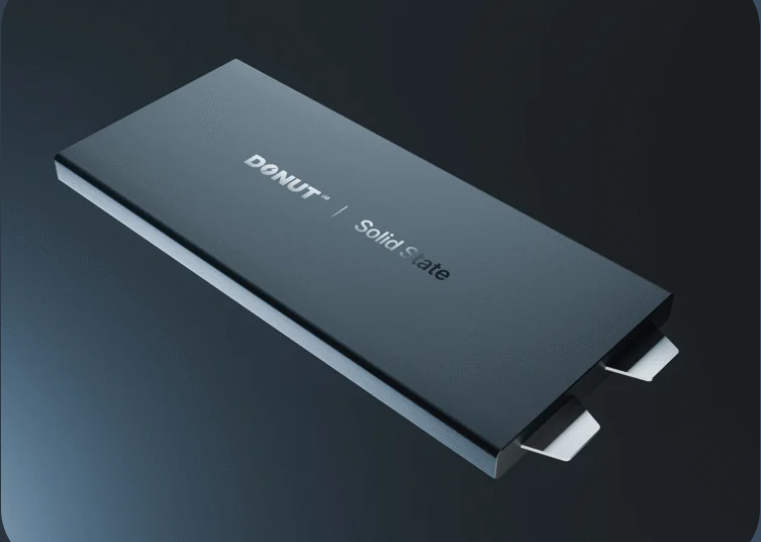
Finnish startup Donut Lab now faces a criminal report alleging the company exaggerated key solid-state battery specifications—including energy density and cycle life—to investors and manufacturing partners. The allegations, first reported by Helsingin Sanomat, claim Donut Lab demonstrated discontinued first-generation technology from partner CT-Coating while claiming these units represented imminent mass-production capabilities.
The Allegations: Vintage Tech Masquerading as Breakthrough Innovation
The Criminal Complaint Details
Lauri Peltola, who serves as Chief Business Officer at fellow Finnish energy firm Nordic Nano, filed the criminal complaint alleging Donut Lab misrepresented its solid-state battery capabilities to Finland’s VTT Technical Research Centre and potential investors. The report claims internal communications reveal Donut Lab presented CT-Coating’s abandoned Gen 1 battery design as current, proprietary technology.
According to documents reviewed by Helsingin Sanomat, CT-Coating had already pivoted to a new early-stage design, rendering the demonstrated units effectively obsolete. Engadget separately reported that Donut Lab’s public demonstrations relied on this older CT-Coating technology, raising questions about whether the startup possessed any scalable, proprietary solid-state chemistry at all.
The Conflict of Interest
The case carries additional complexity given the intertwined corporate relationships. Donut Lab CEO Marko Lehtimäki sits on Nordic Nano’s board and reportedly made a significant strategic investment in the company last year. Nordic Nano’s current CEO, Esa Parjanen, has publicly stated that Peltola’s allegations do not represent the company’s official position, though the incident highlights governance risks in tight-knit Nordic cleantech ecosystems.
The China Contrast: Incremental Reality vs Breakthrough Hype
This controversy illuminates a strategic divergence in global battery development. While Western startups frequently promise revolutionary solid-state leaps that face solid state battery commercialization risks, Chinese manufacturers dominate current markets through validated, incremental innovation:
- CATL’s Condensed Battery: Already mass-producing semi-solid state batteries with 500 Wh/kg density for electric aviation and premium EV applications
- BYD’s Blade Battery: Shipping millions of LFP cells using structural pack innovations rather than waiting for solid-state salvation
- WeLion and QingTao: Chinese solid-state startups delivering actual production volumes to NIO and other OEMs on aggressive but verified timelines
See our analysis on CATL’s technology roadmap and Western supply chain vulnerability.
Investment Implications: Due Diligence Red Flags
For Western investors and automotive procurement teams, the Donut Lab case exposes systemic verification gaps in the battery startup ecosystem. The allegations suggest a recurring pattern where:
- Technical demonstrations use third-party legacy hardware presented as proprietary breakthroughs
- Mass-production timelines lack underlying manufacturing partnerships or CAPEX commitments
- Key performance metrics remain unaudited by independent third-party testing facilities
This mirrors ongoing skepticism surrounding QuantumScape’s manufacturing delays and Solid Power’s production scaling challenges. Unlike Chinese competitors operating under stricter manufacturing discipline and state-backed validation protocols, Western solid-state ventures appear increasingly susceptible to hype cycles that outpace technical validation.
Conclusion: The Verification Premium
As the global EV transition accelerates, the Donut Lab controversy serves as a stark reminder that in solid state battery commercialization, verified production capacity—not laboratory demonstrations or press releases—determines market leadership. Western investors must apply heightened scrutiny to unproven battery claims, particularly when Chinese competitors are already shipping next-generation chemistries at scale. In this high-stakes race, due diligence is not merely cautious; it is essential to avoiding catastrophic supply chain missteps.