Mercedes EQS Steer-by-Wire: Germany’s Secret Weapon Against Chinese EVs?
Mercedes EQS Steer-by-Wire: Germany’s Secret Weapon Against Chinese EVs?
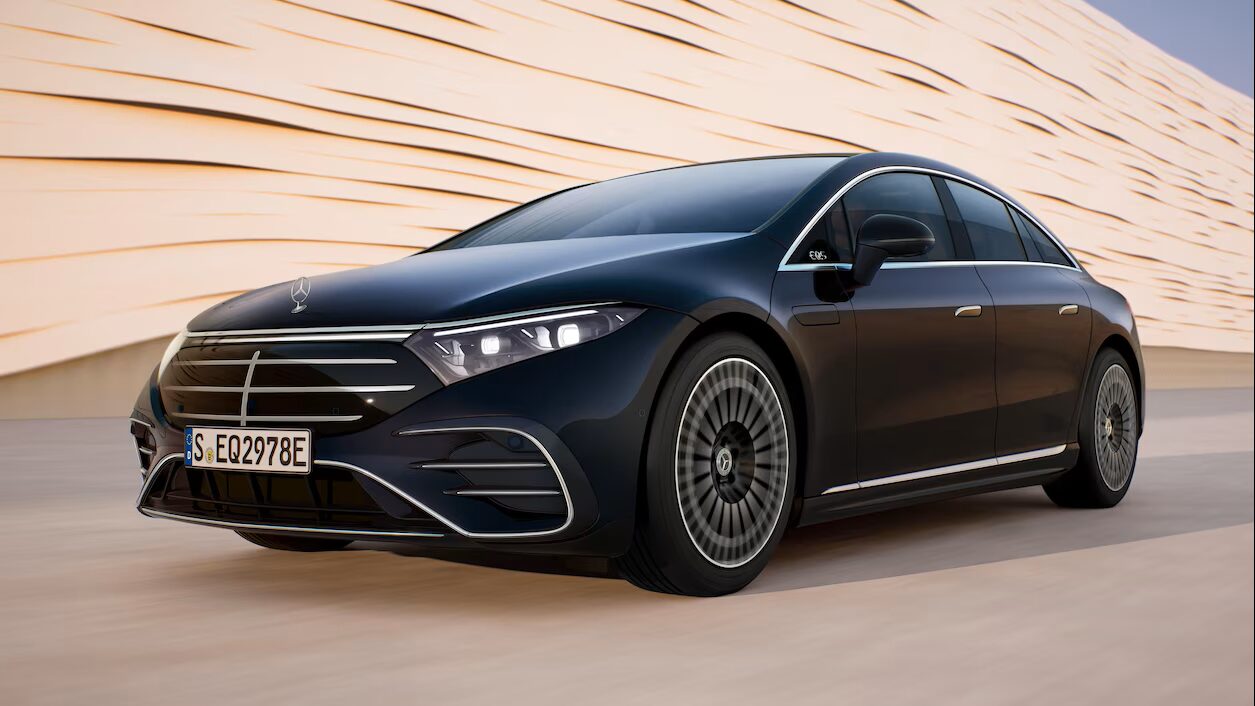
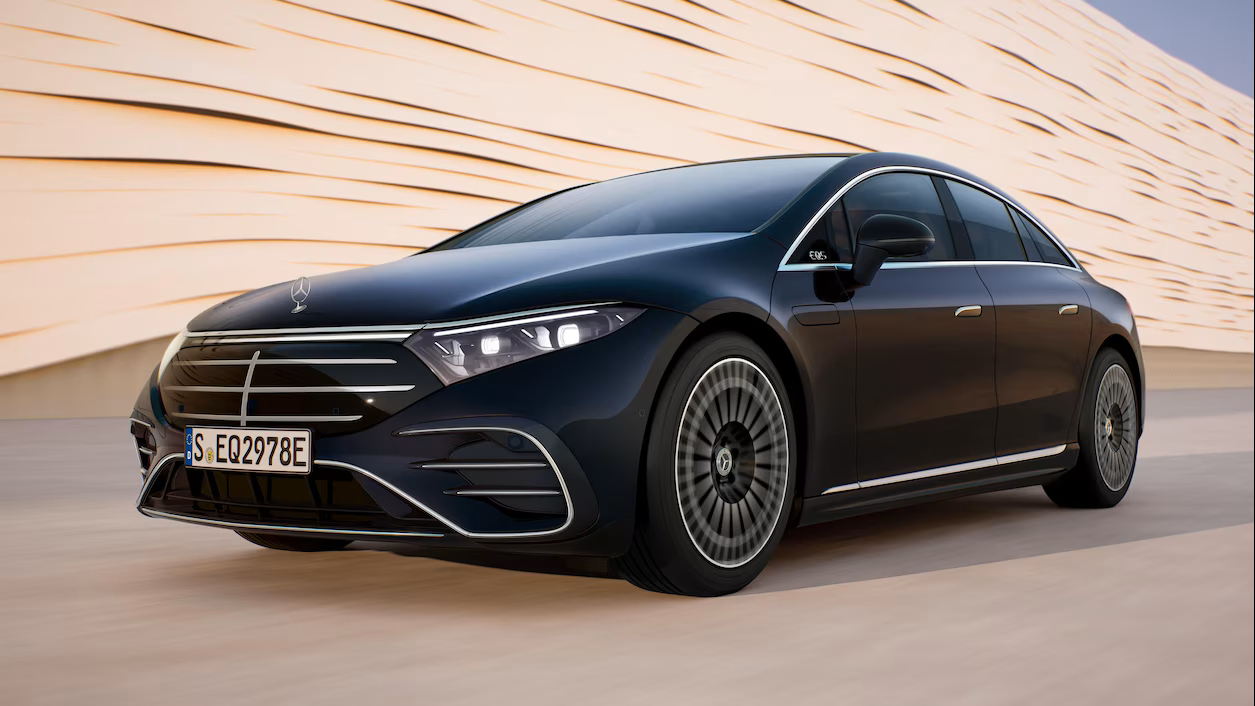
What if the steering wheel in your luxury sedan was merely a sophisticated video game controller? Mercedes-Benz just made that mechanical divorce a production reality—with profound implications for the global autonomy race. The Stuttgart giant’s latest Mercedes EQS steer-by-wire technology represents more than a mid-cycle refresh; it is a fundamental architectural shift that eliminates physical steering linkages entirely, replacing them with redundant electronic signal pathways. Combined with a class-leading 926km (575-mile) WLTP range and an all-new 800V silicon-anode battery architecture, this is Mercedes’ most aggressive counter-punch yet in its existential battle against BYD, NIO, and Xiaomi’s dominance of the premium EV market.
Why Steer-by-Wire Changes the Autonomy Game
Traditional steering systems rely on physical shafts connecting wheel to tire. Mercedes’ production debut of steer-by-wire—a first for any German automaker—severs that mechanical tether permanently. For Western investors monitoring the tortuous path to Level 3 autonomous driving, this matters enormously: steer-by-wire provides the hardware redundancy necessary for legal liability transfer from driver to machine.
The Architecture of Trust
- Redundant Signal Paths: The system uses duplicate electronic pathways and separate power circuits to ensure zero single-point-of-failure scenarios, a critical requirement for unsupervised autonomy
- 10-Degree Rear Axle Steering: Combined with steer-by-wire, this enables crab-walking and tighter turning circles despite the EQS’s limousine proportions
- Flat Steering Wheel: Without a steering column intrusion, Mercedes can offer rectangular ‘yoke-style’ wheels that improve cockpit visibility and ease entry/exit
According to Bloomberg’s automotive analysis, this technology is prerequisite for true hands-off, eyes-off highway autonomy. While Tesla’s ‘Full Self-Driving’ remains under regulatory scrutiny in multiple jurisdictions, Mercedes is building the fail-operational hardware foundation that regulators actually trust.
926km Range: Closing the Efficiency Gap on CATL
The EQS facelift addresses a critical vulnerability against Chinese competition: volumetric energy density. By adopting silicon-oxide-graphite composite anodes in a 122kWh pack (up from 118kWh without increasing physical size), Mercedes achieved a 13% range boost while reducing cobalt content.
800V Charging Infrastructure Play
The shift to 800V architecture enables 350kW DC fast charging, adding 320km of range in 10 minutes. Critically, Mercedes engineered a workaround for aging 400V infrastructure: the battery intelligently splits into two virtual 400V cells, each charging at 175kW simultaneously. This ‘backward compatibility’ is crucial for Western markets where charging infrastructure remains fragmented compared to China’s unified ultra-fast charging standards.
See our analysis on CATL’s next-generation sodium-ion battery technology to understand how Chinese suppliers are responding to these silicon-anode efficiency gains.
The China Factor: Pricing and Technology Parity
Here is where the analysis becomes uncomfortable for Western investors. At €94,403 ($103,000) in Germany, the EQS 450+ undercuts the BMW i7 ($107,250) but faces annihilation from Chinese flagships that deliver comparable technology at half the price.
Competitive Landscape Analysis
- BYD Yangwang U8: Offers comparable chassis-by-wire technology with four-motor torque vectoring at roughly 50% of the EQS price point
- NIO ET9: Features 925V architecture and full-domain controller computing, challenging Mercedes’ electrical superiority while costing significantly less in Chinese markets
- Xiaomi SU7 Max: Delivers 800km CLTC range (roughly 700km WLTP equivalent) for under $40,000, making the EQS pricing appear unsustainable outside luxury niches
As Automotive News Europe reported, Mercedes’ redesign of over 26% of vehicle components—unusually high for a facelift—suggests desperation rather than iterative improvement. The question is whether German engineering prestige can justify a 2.5x price premium over equally advanced Chinese alternatives.
Investment Implications: A Tale of Two Markets
For US and EU investors, the EQS facelift signals two contradictory trends that demand careful portfolio consideration:
- Technology Leadership: Mercedes retains a demonstrable edge in integrated chassis autonomy, luxury NVH refinement, and safety system redundancy
- Margin Compression: To compete with China’s 2025 EV onslaught in Europe, Mercedes must either slash prices (destroying profitability) or cede volume (destroying relevance in the mass luxury segment)
The steer-by-wire system’s delayed activation—available months after delivery via over-the-air update—also hints at regulatory caution. Unlike China’s more permissive approach to autonomous driving pilots, European type-approval requirements may slow Mercedes’ software rollout, giving Chinese competitors time to match the hardware while Mercedes struggles with bureaucratic compliance.
Conclusion: The Wire Isn’t Enough
The Mercedes EQS steer-by-wire breakthrough proves Western automakers can still innovate at the fundamental architectural level. However, with Financial Times data showing Chinese EVs capturing 35% of global battery electric vehicle sales in Q3 2024, hardware superiority alone cannot win this war. Mercedes has built a better mousetrap, but the mice are building faster, cheaper, and smarter ones in Shenzhen. For Western luxury investors, the EQS facelift is a hold—not a buy—signal until Stuttgart solves the pricing algorithm or establishes clear technological moats beyond brand heritage.