Chery Export Strategy: How Q1 2026 Sales Records Rewrote Global Auto Rules
Chery Export Strategy: Analyzing the 393,000-Unit Quarter That Terrifies Detroit
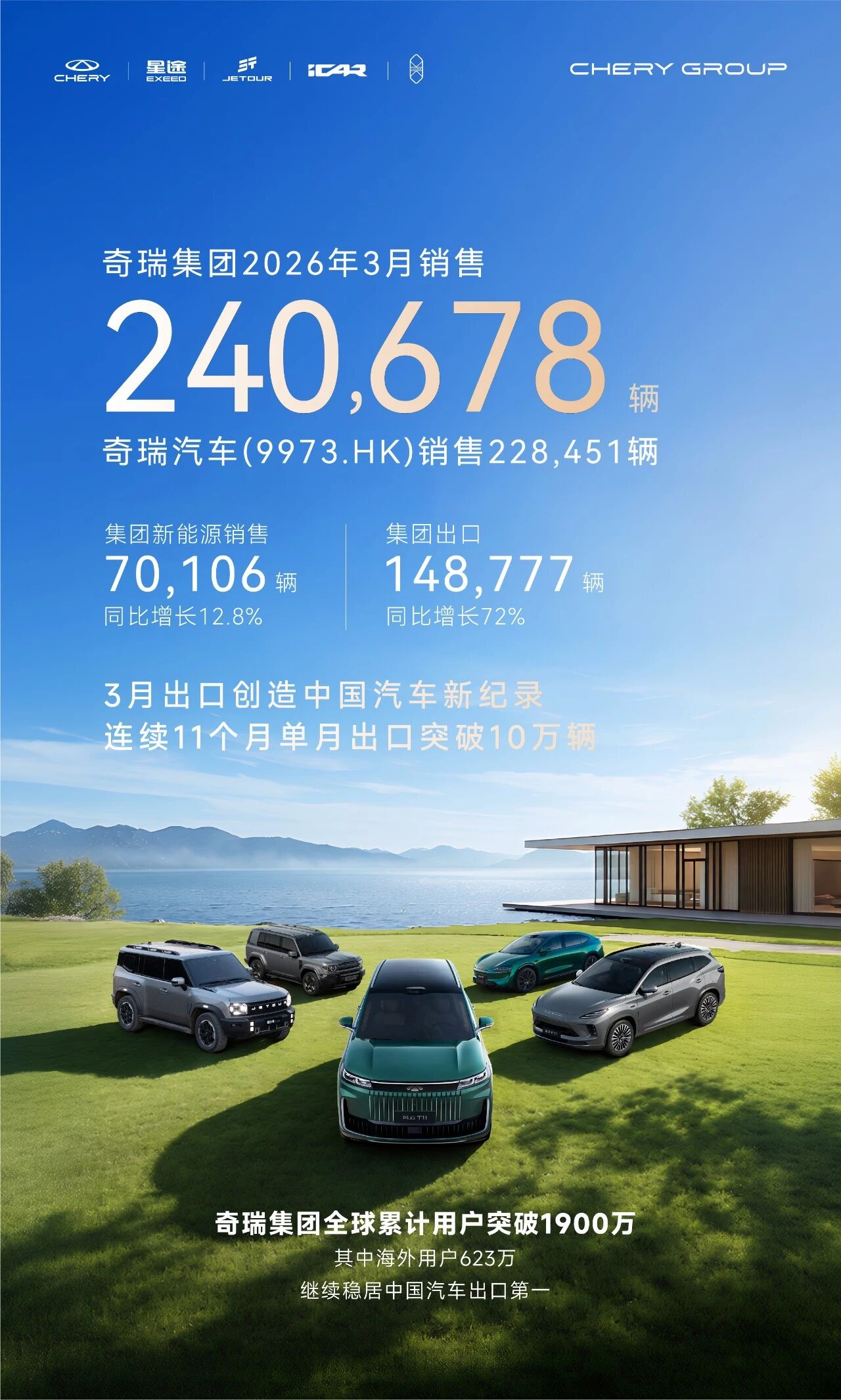
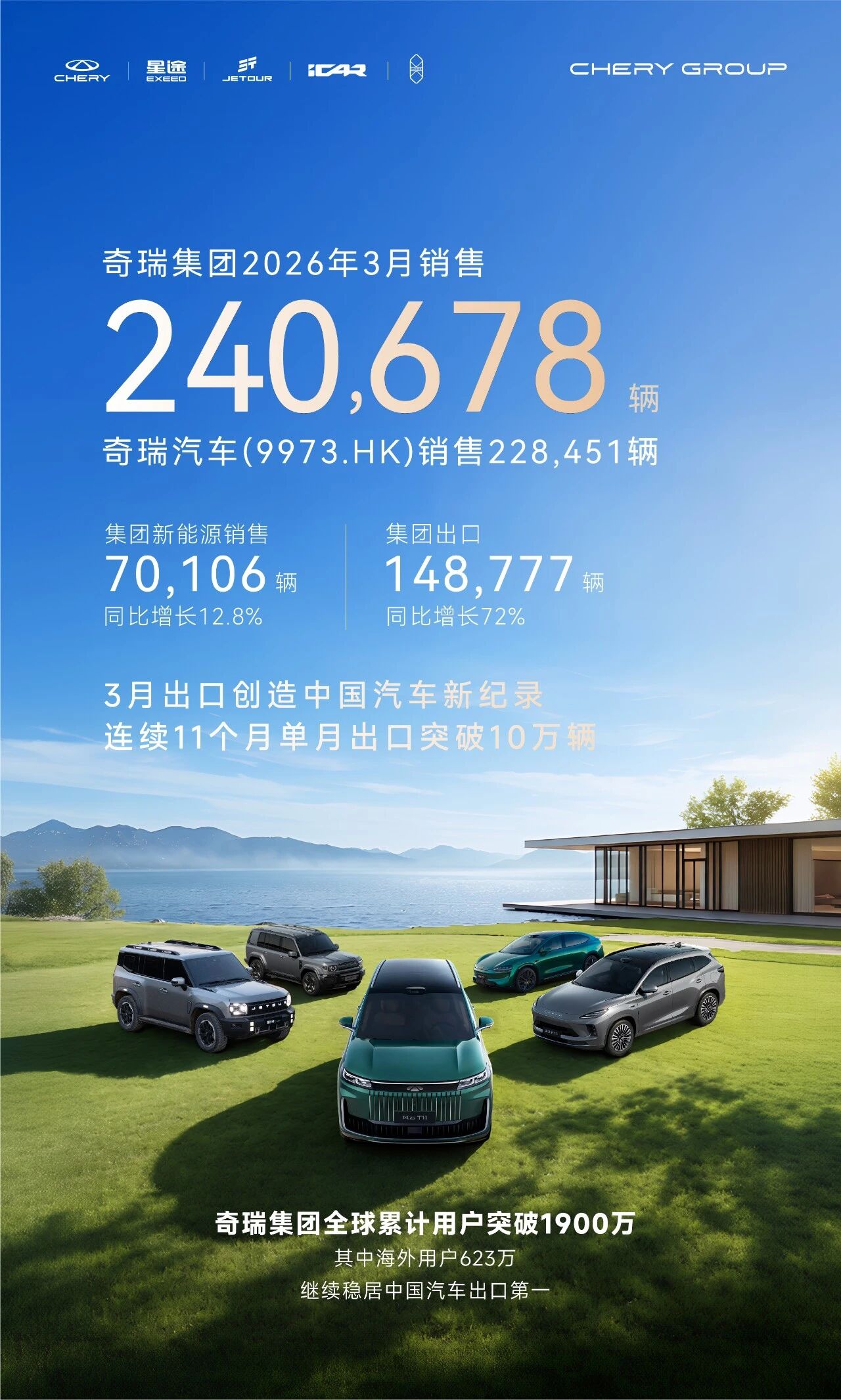
What if I told you that every fifth Chinese car shipped overseas wears a Chery badge? In March 2026 alone, Chery Group exported nearly 150,000 vehicles—a single-month record for any Chinese brand—while Q1 shipments surged 53.9% year-over-year to 393,311 units. This is not just volume; it is a masterclass in execution. Chery export strategy has evolved from simple trade to sophisticated ecosystem domination, creating a template that Western automakers can no longer afford to ignore.
The Q1 2026 Data: Decoding the Export Machine
Chery’s first-quarter performance defies the industry’s zero-sum expectations. While legacy OEMs struggle with inventory gluts and EV price wars, Chery moved 601,712 total vehicles, with exports accounting for nearly two-thirds of volume—a ratio unmatched by any global major.
- Total Q1 Sales: 601,712 units (+12.1% YoY)
- Export Volume: 393,311 units (+53.9% YoY)
- March Exports: ~150,000 units (industry record)
- Consecutive 100k+ Months: 11 straight months
See our analysis on BYD’s Blade Battery European expansion for comparative context on Chinese OEM globalization tactics.
Europe’s High-Regulation Gambit: Why Chery Is Not Just Dumping
Western analysts often dismiss Chinese exports as low-margin dumping. Chery’s Q1 2026 European results demolish that thesis. With presence in 18 European countries, the automaker did not just enter the EU—it conquered premium segments.
The UK/EU Breakthrough
January-February 2026 data reveals explosive traction in high-regulation markets:
- UK/EU Sales: 39,135 units (+200% YoY)
- NEV Sales: 11,484 units (+250% YoY)
- Market Position: Successfully penetrating above €30k price points
This is not compliance; it is competitive advantage. Chery’s adaptation to EU safety and emissions standards—including 100% recycled aluminum production and 52.77% green electricity usage—positions it ahead of European legacy brands still transitioning factories.
Beyond Exporting: The Localization Imperative
Smart Chery export strategy recognizes that shipping cars is Phase One. Phase Two involves manufacturing sovereignty. The March 2026 announcement of South African local production—targeting 2027 startup—follows the playbook that Toyota and Hyundai used to dominate Southeast Asia.
ESG as Market Entry Tool
Chery’s global expansion leverages sustainability not as marketing fluff, but as tariff avoidance and brand differentiation. The company’s regenerative aluminum technology and renewable energy integration address the EU’s Carbon Border Adjustment Mechanism (CBAM) before it fully bites competitors.
The EV Transition: From ICE Dependence to Electric Dominance
While Chery built its empire on internal combustion engines (particularly in Russia, Middle East, and Latin America), Q1 2026 proves the pivot is working. With 161,202 NEVs sold in Q1 and a super product shelf spanning RMB 50,000 to 500,000 ($7,000-$70,000), Chery now offers electric alternatives across every segment.
The 12.8% March NEV growth rate, while modest compared to pure-play EV brands, demonstrates Chery’s calculated approach: maintaining ICE cash flows in emerging markets while using EVs to breach European premium segments.
Investment Implications: Why Western Portfolios Should Care
For US and EU investors, Chery’s trajectory signals structural risk to incumbent OEMs. Unlike BYD, Chery remains privately held, denying public market exposure to this growth. However, its supply chain partners and technology licensors present indirect plays.
The EU’s ongoing anti-subsidy investigations into Chinese EVs create headline risk, yet Chery’s localization strategy—producing in South Africa, potentially Turkey or Hungary next—provides tariff arbitrage that pure exporters cannot match.
Competitive Response Lag
Detroit and Stuttgart’s response remains mired in joint-venture negotiations and battery factory delays. Meanwhile, Chery’s 11-month streak of 100,000+ exports proves execution velocity. When Chery eventually lists publicly—rumored for 2025-2026 before delays—valuation multiples could exceed Tesla’s growth phase.
Recommended Reading
To understand the geopolitical and commercial mechanics driving Chery’s ascent, I recommend The China EV Shock: How Chinese Automakers Are Rewriting the Rules of Global Transport by Michael Dunne. This 2025 analysis details how private Chinese OEMs leveraged state industrial policy without state ownership constraints—precisely Chery’s competitive moat.
As trade barriers rise and localization becomes mandatory, Chery’s Q1 2026 performance is not a peak; it is a baseline. Western automakers have 18-24 months to respond before Chery’s European service networks achieve the density that makes switching costs prohibitive for consumers.