AI-Defined Vehicle China: Dongfeng’s Supply Chain Summit Signals Industry 3.0
AI-Defined Vehicle China: Dongfeng’s Supply Chain Summit Signals Industry 3.0
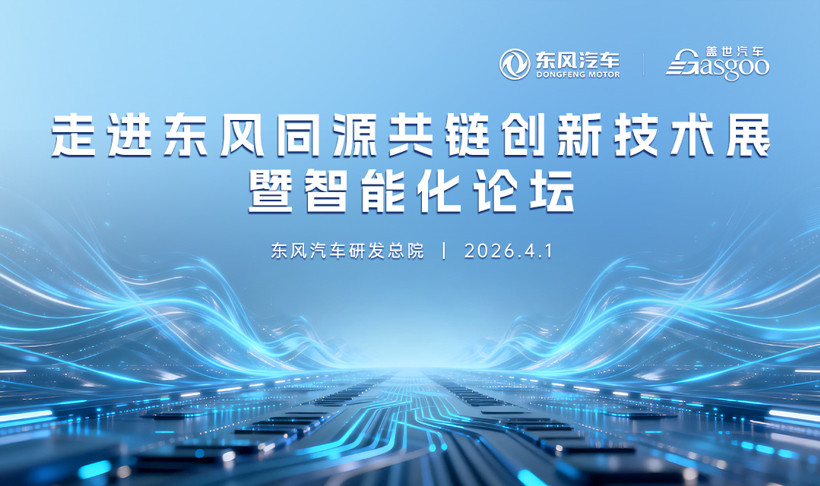
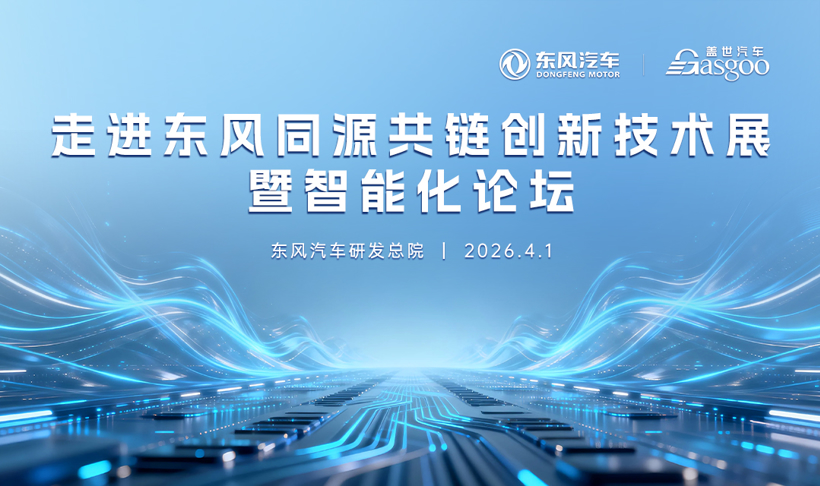
Is the era of software-defined vehicles already over? At a strategic summit in Wuhan on April 1, Dongfeng Motor—China’s second-largest state-owned automaker—officially declared the industry is entering the AI-defined vehicle age, unveiling a supply chain localization strategy that could reshape global automotive competitive dynamics.
Chen Tao, Dongfeng’s Chief Scientist for Intelligent Driving and Vice President of the R&D Institute, delivered a watershed moment in his keynote: ‘We are transitioning from software-defined vehicles to AI-defined vehicles.’ This statement, reported by Gasgoo, marks a decisive pivot for state-owned enterprises competing against agile private rivals like BYD and Tesla.
From Software to Intelligence: Understanding the Paradigm Shift
The transition Chen describes reflects a fundamental change in competitive moats. While Western markets still grapple with over-the-air software updates, China’s leading OEMs now view artificial intelligence as the central nervous system of next-generation vehicles.
- Generative AI Integration: SenseTime showcased generative autonomous driving systems that move beyond rule-based algorithms to predictive, learning-based navigation.
- Foundation Model Deployment: Alibaba Cloud presented its Qwen large language model, demonstrating full-stack automotive empowerment from cockpit interaction to manufacturing optimization.
- Edge Computing Security: Tencent’s OpenClaw architecture emphasizes enterprise-grade protection for vehicular data processing.
Dongfeng’s ‘Homology and Co-Chain’ Strategy Explained
The event’s Chinese title—’Homology and Co-Chain’—reveals Dongfeng’s strategic framework for supply chain resilience in an era of technological decoupling. ‘Homology’ refers to the convergence of automotive and emerging technology sectors, while ‘Co-Chain’ emphasizes breaking industry silos to integrate cross-domain resources.
The Supplier Ecosystem on Display
Approximately 30 Tier 1 and Tier 2 suppliers exhibited technologies spanning:
- Embodied AI: AI tactile sensors for robotic dexterity and humanoid applications
- Low-Altitude Economy: Electric vertical take-off and landing motor controllers, aligning with China’s push into urban air mobility
- Advanced Materials: Ultrasonic embedded plastic nuts and blue-light bonding technologies for lightweighting
- Cockpit Innovation: Transparent glass projection solutions and cloud-integrated software architectures
Supply Chain Localization: The Western Investor Perspective
For Western investors tracking Bloomberg’s coverage of potential semiconductor sanctions against Chinese EVs, Dongfeng’s summit offers critical intelligence. The exhibition explicitly highlighted domestic alternatives to Western automotive chips, including vehicle-grade connectors for high-voltage architectures and air suspension control systems previously dominated by European suppliers.
This aligns with Financial Times reporting on Beijing’s mandate for technological self-sufficiency in intelligent vehicles by 2025. The presence of Baidu Maps’ AI reconstruction capabilities and ByteDance’s Volcano Engine smart cockpit solutions suggests foreign tech providers face imminent exclusion from critical cockpit and ADAS architectures.
See our analysis on BYD’s vertical integration strategy and its implications for foreign suppliers
Beyond Four Wheels: The Low-Altitude Economy Play
Perhaps most intriguing for global market watchers was the prominent featuring of low-altitude economy technologies. According to Reuters, Beijing has designated the low-altitude sector as a strategic emerging industry, with projections exceeding $150 billion by 2030.
The inclusion of eVTOL motor controllers and aerial vehicle components signals that Dongfeng—like Xpeng and Geely—views the automotive supply chain as merely the foundation for a broader mobility ecosystem encompassing urban air transport. This diversification comes as traditional passenger vehicle margins compress under brutal price wars, with industry profits falling below 5% in early 2024.
Strategic Implications for Global OEMs
Dongfeng’s pivot carries three critical signals for Western automotive executives:
- AI Localization Acceleration: The deep integration of domestic LLMs and mapping AI suggests Western software providers face structural exclusion from China’s intelligent vehicle stack.
- SOE Competitive Response: State-owned manufacturers are abandoning the joint-venture dependency model in favor of indigenous innovation ecosystems, challenging assumptions that SOEs lag behind private startups.
- Supply Chain Bifurcation: The ‘Co-Chain’ concept explicitly aims to create parallel supply chains for AI hardware, potentially fragmenting global automotive standards and creating separate spheres of technological influence.
Recommended Reading
For deeper context on the geopolitical and technological forces reshaping the automotive industry, we recommend The Powerhouse: America, China, and the Great Battery War by Steve Levine. This seminal work traces how China’s strategic vertical integration in battery technology foreshadows the current AI supply chain consolidation now evident in Dongfeng’s summit.