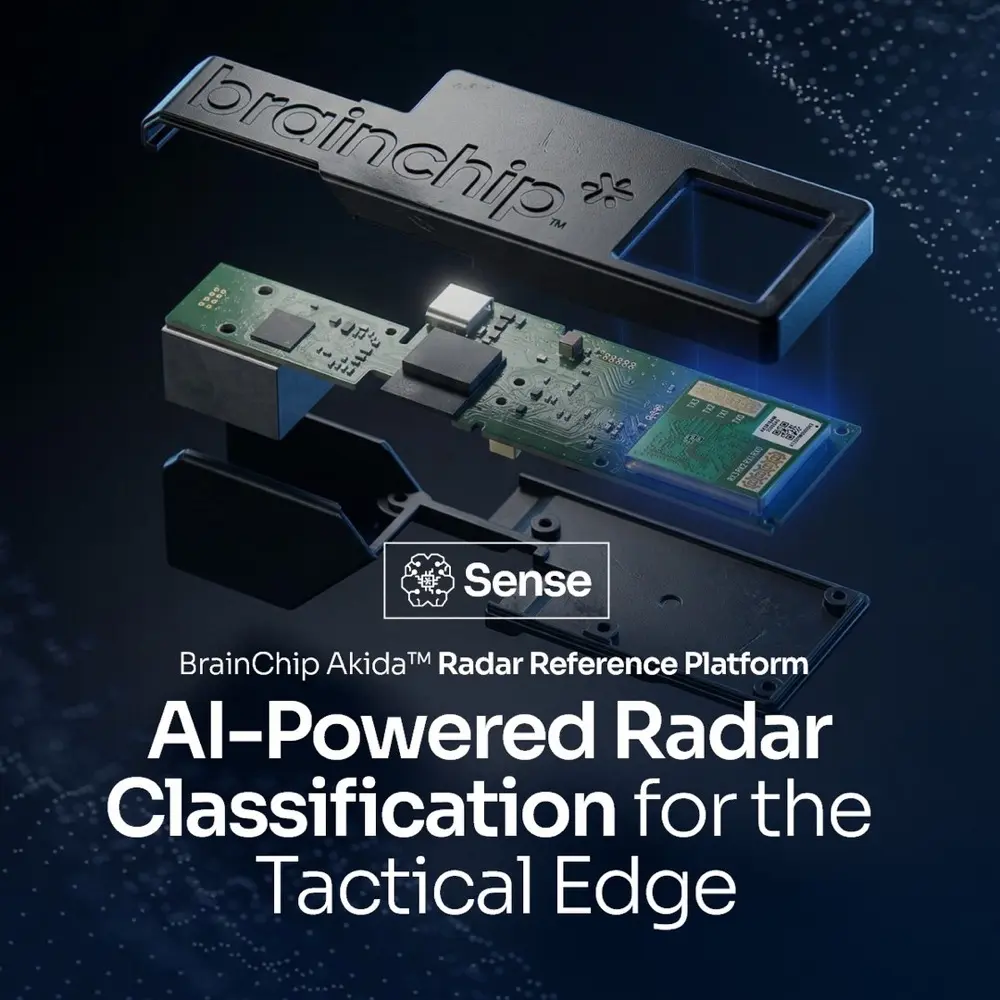
Imagine your autonomous electric vehicle slamming the brakes because it confused a plastic shopping bag for a concrete barrier, or worse, failing to detect a drone hovering at 50 meters. This is the costly reality of the recognition gap—a critical flaw where standard radar identifies that something is moving, but cannot determine what it is. On April 6, 2026, BrainChip Holdings Ltd unveiled its neuromorphic radar AI platform, a fully validated hardware and software stack designed to eliminate this ambiguity at the edge, potentially disrupting the $45 billion ADAS sensor market.
The Recognition Gap: Radar’s Billion-Dollar Blind Spot
While traditional radar excels at determining position and velocity, it fails at object classification. According to industry analysis cited by Reuters, false positives from radar limitations cost automakers billions in warranty claims and sensor redundancy. Standard systems struggle to distinguish between radar-cross-section similarities—a bird and a small drone may appear identical, yet require radically different responses in autonomous driving scenarios.
This limitation has forced EV manufacturers to rely on expensive sensor fusion stacks, combining radar with cameras and LiDAR to verify objects. However, Bloomberg reports that next-generation neuromorphic processors are challenging this paradigm by enabling real-time classification directly at the sensor edge.
How BrainChip’s Neuromorphic Radar AI Platform Works
BrainChip’s solution leverages its Akida neural processor to add a deep learning layer atop conventional radar hardware. Unlike GPU-based systems that consume hundreds of watts, this platform analyzes micro-Doppler signatures—subtle variations in radar returns caused by object vibration and rotation—to distinguish between similar targets.
Key Technical Capabilities
-
Edge-Based Classification: Real-time inference occurs on-device without cloud connectivity, critical for offline autonomous operation
-
Micro-Doppler Analysis: Detects unique vibration signatures from propellers, wings, or human gait to differentiate drones from birds or pedestrians
-
Weather Immunity: Maintains performance through smoke, dust, and heavy precipitation where camera-based systems fail
-
Ultra-Low Power: Neuromorphic architecture consumes milliwatts versus watts for traditional AI accelerators
Why Western Investors Should Care: The SWaP-C Revolution
For investors tracking the Chinese EV market and global autonomous driving trends, BrainChip’s platform addresses the Size, Weight, Power, and Cost (SWaP-C) constraints that have limited AI deployment in vehicles. The technology aligns with Reuters analysis showing automakers are demanding sub-watt AI processing to extend vehicle range.
See our analysis on Chinese EV semiconductor supply chain vulnerabilities to understand how edge AI processors fit into the broader decoupling of automotive technology.
Market Synthesis: Confirmation and Conflict
Recent coverage from Bloomberg confirms that neuromorphic computing is gaining traction as an alternative to power-hungry GPUs in automotive applications. However, some industry analysts argue that advanced 4D imaging radar from companies like Arbe Robotics and Mobileye already solves the classification problem without requiring specialized neuromorphic chips.
BrainChip counters this by emphasizing cost and efficiency. While 4D radar requires complex antenna arrays and significant processing power, the neuromorphic approach runs on standard radar inputs with minimal additional hardware. This creates a potential conflict in the market: established players betting on denser sensor arrays versus neuromorphic upstarts promising smarter software on simpler hardware.
Applications Beyond Defense
While initially targeting drone countermeasures and tactical defense, the platform has direct implications for automotive ADAS:
-
Pedestrian Classification: Distinguishing between a child and a shadow to prevent false emergency braking
-
Debris Detection: Identifying tire fragments versus plastic bags to reduce unnecessary lane changes
-
V2X Integration: Processing radar data for vehicle-to-infrastructure communication without latency-heavy cloud processing
Conclusion: The Edge AI Arms Race
BrainChip’s radar reference platform represents a shift from raw sensor data collection to intelligent edge perception. For Western investors, this signals a potential disruption in the automotive semiconductor space currently dominated by Nvidia, Mobileye, and emerging Chinese players like Horizon Robotics. As the industry moves toward Level 4 autonomy, solutions that close the recognition gap while reducing SWaP-C may define the next generation of EV architecture.